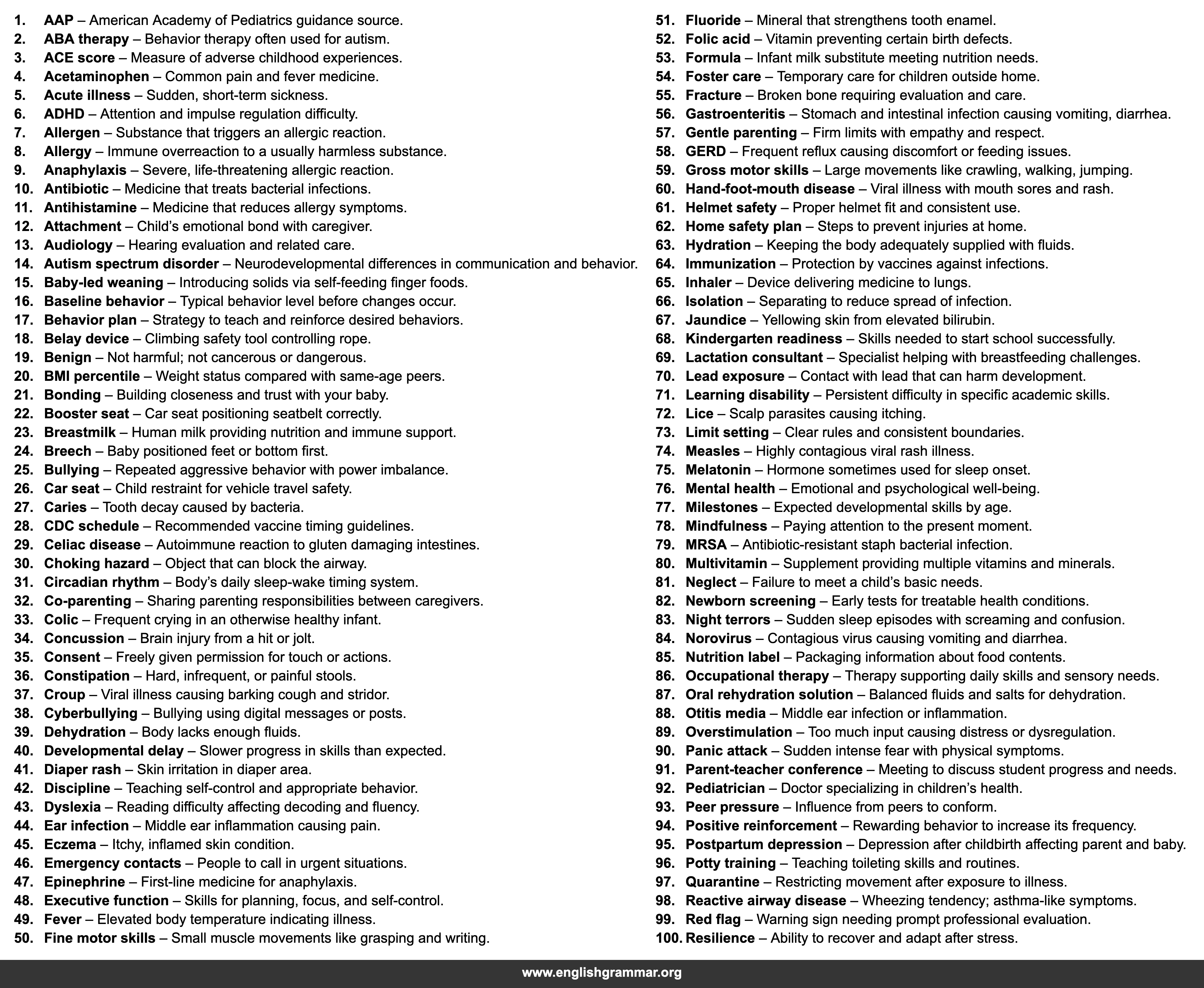
| No. | Term | Definition |
|---|---|---|
| 1. | AAP | American Academy of Pediatrics guidance source. |
| 2. | ABA therapy | Behavior therapy often used for autism. |
| 3. | ACE score | Measure of adverse childhood experiences. |
| 4. | Acetaminophen | Common pain and fever medicine. |
| 5. | Acute illness | Sudden, short-term sickness. |
| 6. | ADHD | Attention and impulse regulation difficulty. |
| 7. | Allergen | Substance that triggers an allergic reaction. |
| 8. | Allergy | Immune overreaction to a usually harmless substance. |
| 9. | Anaphylaxis | Severe, life-threatening allergic reaction. |
| 10. | Antibiotic | Medicine that treats bacterial infections. |
| 11. | Antihistamine | Medicine that reduces allergy symptoms. |
| 12. | Attachment | Child’s emotional bond with caregiver. |
| 13. | Audiology | Hearing evaluation and related care. |
| 14. | Autism spectrum disorder | Neurodevelopmental differences in communication and behavior. |
| 15. | Baby-led weaning | Introducing solids via self-feeding finger foods. |
| 16. | Baseline behavior | Typical behavior level before changes occur. |
| 17. | Behavior plan | Strategy to teach and reinforce desired behaviors. |
| 18. | Belay device | Climbing safety tool controlling rope. |
| 19. | Benign | Not harmful; not cancerous or dangerous. |
| 20. | BMI percentile | Weight status compared with same-age peers. |
| 21. | Bonding | Building closeness and trust with your baby. |
| 22. | Booster seat | Car seat positioning seatbelt correctly. |
| 23. | Breastmilk | Human milk providing nutrition and immune support. |
| 24. | Breech | Baby positioned feet or bottom first. |
| 25. | Bullying | Repeated aggressive behavior with power imbalance. |
| 26. | Car seat | Child restraint for vehicle travel safety. |
| 27. | Caries | Tooth decay caused by bacteria. |
| 28. | CDC schedule | Recommended vaccine timing guidelines. |
| 29. | Celiac disease | Autoimmune reaction to gluten damaging intestines. |
| 30. | Choking hazard | Object that can block the airway. |
| 31. | Circadian rhythm | Body’s daily sleep-wake timing system. |
| 32. | Co-parenting | Sharing parenting responsibilities between caregivers. |
| 33. | Colic | Frequent crying in an otherwise healthy infant. |
| 34. | Concussion | Brain injury from a hit or jolt. |
| 35. | Consent | Freely given permission for touch or actions. |
| 36. | Constipation | Hard, infrequent, or painful stools. |
| 37. | Croup | Viral illness causing barking cough and stridor. |
| 38. | Cyberbullying | Bullying using digital messages or posts. |
| 39. | Dehydration | Body lacks enough fluids. |
| 40. | Developmental delay | Slower progress in skills than expected. |
| 41. | Diaper rash | Skin irritation in diaper area. |
| 42. | Discipline | Teaching self-control and appropriate behavior. |
| 43. | Dyslexia | Reading difficulty affecting decoding and fluency. |
| 44. | Ear infection | Middle ear inflammation causing pain. |
| 45. | Eczema | Itchy, inflamed skin condition. |
| 46. | Emergency contacts | People to call in urgent situations. |
| 47. | Epinephrine | First-line medicine for anaphylaxis. |
| 48. | Executive function | Skills for planning, focus, and self-control. |
| 49. | Fever | Elevated body temperature indicating illness. |
| 50. | Fine motor skills | Small muscle movements like grasping and writing. |
| 51. | Fluoride | Mineral that strengthens tooth enamel. |
| 52. | Folic acid | Vitamin preventing certain birth defects. |
| 53. | Formula | Infant milk substitute meeting nutrition needs. |
| 54. | Foster care | Temporary care for children outside home. |
| 55. | Fracture | Broken bone requiring evaluation and care. |
| 56. | Gastroenteritis | Stomach and intestinal infection causing vomiting, diarrhea. |
| 57. | Gentle parenting | Firm limits with empathy and respect. |
| 58. | GERD | Frequent reflux causing discomfort or feeding issues. |
| 59. | Gross motor skills | Large movements like crawling, walking, jumping. |
| 60. | Hand-foot-mouth disease | Viral illness with mouth sores and rash. |
| 61. | Helmet safety | Proper helmet fit and consistent use. |
| 62. | Home safety plan | Steps to prevent injuries at home. |
| 63. | Hydration | Keeping the body adequately supplied with fluids. |
| 64. | Immunization | Protection by vaccines against infections. |
| 65. | Inhaler | Device delivering medicine to lungs. |
| 66. | Isolation | Separating to reduce spread of infection. |
| 67. | Jaundice | Yellowing skin from elevated bilirubin. |
| 68. | Kindergarten readiness | Skills needed to start school successfully. |
| 69. | Lactation consultant | Specialist helping with breastfeeding challenges. |
| 70. | Lead exposure | Contact with lead that can harm development. |
| 71. | Learning disability | Persistent difficulty in specific academic skills. |
| 72. | Lice | Scalp parasites causing itching. |
| 73. | Limit setting | Clear rules and consistent boundaries. |
| 74. | Measles | Highly contagious viral rash illness. |
| 75. | Melatonin | Hormone sometimes used for sleep onset. |
| 76. | Mental health | Emotional and psychological well-being. |
| 77. | Milestones | Expected developmental skills by age. |
| 78. | Mindfulness | Paying attention to the present moment. |
| 79. | MRSA | Antibiotic-resistant staph bacterial infection. |
| 80. | Multivitamin | Supplement providing multiple vitamins and minerals. |
| 81. | Neglect | Failure to meet a child’s basic needs. |
| 82. | Newborn screening | Early tests for treatable health conditions. |
| 83. | Night terrors | Sudden sleep episodes with screaming and confusion. |
| 84. | Norovirus | Contagious virus causing vomiting and diarrhea. |
| 85. | Nutrition label | Packaging information about food contents. |
| 86. | Occupational therapy | Therapy supporting daily skills and sensory needs. |
| 87. | Oral rehydration solution | Balanced fluids and salts for dehydration. |
| 88. | Otitis media | Middle ear infection or inflammation. |
| 89. | Overstimulation | Too much input causing distress or dysregulation. |
| 90. | Panic attack | Sudden intense fear with physical symptoms. |
| 91. | Parent-teacher conference | Meeting to discuss student progress and needs. |
| 92. | Pediatrician | Doctor specializing in children’s health. |
| 93. | Peer pressure | Influence from peers to conform. |
| 94. | Positive reinforcement | Rewarding behavior to increase its frequency. |
| 95. | Postpartum depression | Depression after childbirth affecting parent and baby. |
| 96. | Potty training | Teaching toileting skills and routines. |
| 97. | Quarantine | Restricting movement after exposure to illness. |
| 98. | Reactive airway disease | Wheezing tendency; asthma-like symptoms. |
| 99. | Red flag | Warning sign needing prompt professional evaluation. |
| 100. | Resilience | Ability to recover and adapt after stress. |
