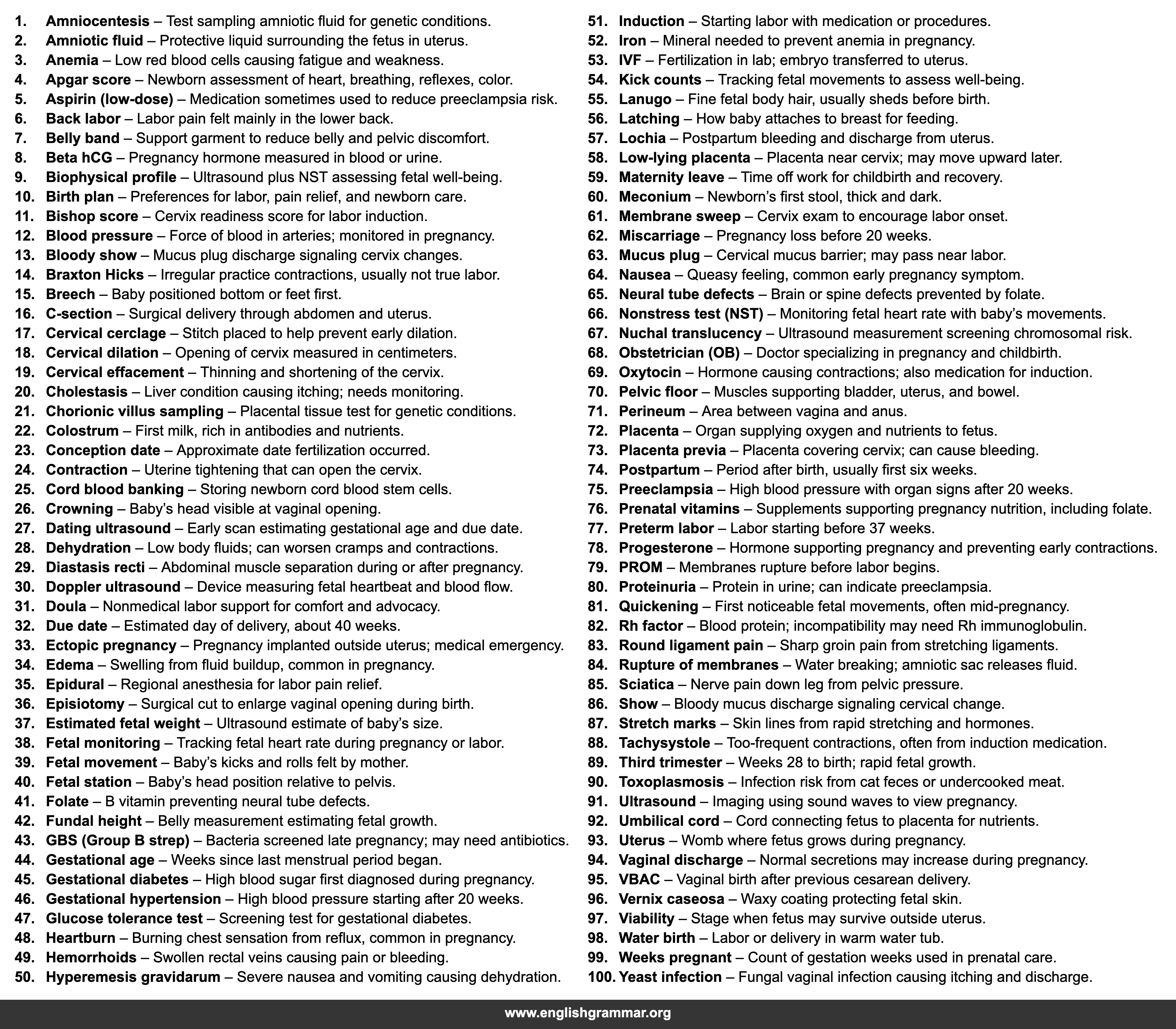
| No. | Term | Definition |
|---|---|---|
| 1. | Amniocentesis | Test sampling amniotic fluid for genetic conditions. |
| 2. | Amniotic fluid | Protective liquid surrounding the fetus in uterus. |
| 3. | Anemia | Low red blood cells causing fatigue and weakness. |
| 4. | Apgar score | Newborn assessment of heart, breathing, reflexes, color. |
| 5. | Aspirin (low-dose) | Medication sometimes used to reduce preeclampsia risk. |
| 6. | Back labor | Labor pain felt mainly in the lower back. |
| 7. | Belly band | Support garment to reduce belly and pelvic discomfort. |
| 8. | Beta hCG | Pregnancy hormone measured in blood or urine. |
| 9. | Biophysical profile | Ultrasound plus NST assessing fetal well-being. |
| 10. | Birth plan | Preferences for labor, pain relief, and newborn care. |
| 11. | Bishop score | Cervix readiness score for labor induction. |
| 12. | Blood pressure | Force of blood in arteries; monitored in pregnancy. |
| 13. | Bloody show | Mucus plug discharge signaling cervix changes. |
| 14. | Braxton Hicks | Irregular practice contractions, usually not true labor. |
| 15. | Breech | Baby positioned bottom or feet first. |
| 16. | C-section | Surgical delivery through abdomen and uterus. |
| 17. | Cervical cerclage | Stitch placed to help prevent early dilation. |
| 18. | Cervical dilation | Opening of cervix measured in centimeters. |
| 19. | Cervical effacement | Thinning and shortening of the cervix. |
| 20. | Cholestasis | Liver condition causing itching; needs monitoring. |
| 21. | Chorionic villus sampling | Placental tissue test for genetic conditions. |
| 22. | Colostrum | First milk, rich in antibodies and nutrients. |
| 23. | Conception date | Approximate date fertilization occurred. |
| 24. | Contraction | Uterine tightening that can open the cervix. |
| 25. | Cord blood banking | Storing newborn cord blood stem cells. |
| 26. | Crowning | Baby’s head visible at vaginal opening. |
| 27. | Dating ultrasound | Early scan estimating gestational age and due date. |
| 28. | Dehydration | Low body fluids; can worsen cramps and contractions. |
| 29. | Diastasis recti | Abdominal muscle separation during or after pregnancy. |
| 30. | Doppler ultrasound | Device measuring fetal heartbeat and blood flow. |
| 31. | Doula | Nonmedical labor support for comfort and advocacy. |
| 32. | Due date | Estimated day of delivery, about 40 weeks. |
| 33. | Ectopic pregnancy | Pregnancy implanted outside uterus; medical emergency. |
| 34. | Edema | Swelling from fluid buildup, common in pregnancy. |
| 35. | Epidural | Regional anesthesia for labor pain relief. |
| 36. | Episiotomy | Surgical cut to enlarge vaginal opening during birth. |
| 37. | Estimated fetal weight | Ultrasound estimate of baby’s size. |
| 38. | Fetal monitoring | Tracking fetal heart rate during pregnancy or labor. |
| 39. | Fetal movement | Baby’s kicks and rolls felt by mother. |
| 40. | Fetal station | Baby’s head position relative to pelvis. |
| 41. | Folate | B vitamin preventing neural tube defects. |
| 42. | Fundal height | Belly measurement estimating fetal growth. |
| 43. | GBS (Group B strep) | Bacteria screened late pregnancy; may need antibiotics. |
| 44. | Gestational age | Weeks since last menstrual period began. |
| 45. | Gestational diabetes | High blood sugar first diagnosed during pregnancy. |
| 46. | Gestational hypertension | High blood pressure starting after 20 weeks. |
| 47. | Glucose tolerance test | Screening test for gestational diabetes. |
| 48. | Heartburn | Burning chest sensation from reflux, common in pregnancy. |
| 49. | Hemorrhoids | Swollen rectal veins causing pain or bleeding. |
| 50. | Hyperemesis gravidarum | Severe nausea and vomiting causing dehydration. |
| 51. | Induction | Starting labor with medication or procedures. |
| 52. | Iron | Mineral needed to prevent anemia in pregnancy. |
| 53. | IVF | Fertilization in lab; embryo transferred to uterus. |
| 54. | Kick counts | Tracking fetal movements to assess well-being. |
| 55. | Lanugo | Fine fetal body hair, usually sheds before birth. |
| 56. | Latching | How baby attaches to breast for feeding. |
| 57. | Lochia | Postpartum bleeding and discharge from uterus. |
| 58. | Low-lying placenta | Placenta near cervix; may move upward later. |
| 59. | Maternity leave | Time off work for childbirth and recovery. |
| 60. | Meconium | Newborn’s first stool, thick and dark. |
| 61. | Membrane sweep | Cervix exam to encourage labor onset. |
| 62. | Miscarriage | Pregnancy loss before 20 weeks. |
| 63. | Mucus plug | Cervical mucus barrier; may pass near labor. |
| 64. | Nausea | Queasy feeling, common early pregnancy symptom. |
| 65. | Neural tube defects | Brain or spine defects prevented by folate. |
| 66. | Nonstress test (NST) | Monitoring fetal heart rate with baby’s movements. |
| 67. | Nuchal translucency | Ultrasound measurement screening chromosomal risk. |
| 68. | Obstetrician (OB) | Doctor specializing in pregnancy and childbirth. |
| 69. | Oxytocin | Hormone causing contractions; also medication for induction. |
| 70. | Pelvic floor | Muscles supporting bladder, uterus, and bowel. |
| 71. | Perineum | Area between vagina and anus. |
| 72. | Placenta | Organ supplying oxygen and nutrients to fetus. |
| 73. | Placenta previa | Placenta covering cervix; can cause bleeding. |
| 74. | Postpartum | Period after birth, usually first six weeks. |
| 75. | Preeclampsia | High blood pressure with organ signs after 20 weeks. |
| 76. | Prenatal vitamins | Supplements supporting pregnancy nutrition, including folate. |
| 77. | Preterm labor | Labor starting before 37 weeks. |
| 78. | Progesterone | Hormone supporting pregnancy and preventing early contractions. |
| 79. | PROM | Membranes rupture before labor begins. |
| 80. | Proteinuria | Protein in urine; can indicate preeclampsia. |
| 81. | Quickening | First noticeable fetal movements, often mid-pregnancy. |
| 82. | Rh factor | Blood protein; incompatibility may need Rh immunoglobulin. |
| 83. | Round ligament pain | Sharp groin pain from stretching ligaments. |
| 84. | Rupture of membranes | Water breaking; amniotic sac releases fluid. |
| 85. | Sciatica | Nerve pain down leg from pelvic pressure. |
| 86. | Show | Bloody mucus discharge signaling cervical change. |
| 87. | Stretch marks | Skin lines from rapid stretching and hormones. |
| 88. | Tachysystole | Too-frequent contractions, often from induction medication. |
| 89. | Third trimester | Weeks 28 to birth; rapid fetal growth. |
| 90. | Toxoplasmosis | Infection risk from cat feces or undercooked meat. |
| 91. | Ultrasound | Imaging using sound waves to view pregnancy. |
| 92. | Umbilical cord | Cord connecting fetus to placenta for nutrients. |
| 93. | Uterus | Womb where fetus grows during pregnancy. |
| 94. | Vaginal discharge | Normal secretions may increase during pregnancy. |
| 95. | VBAC | Vaginal birth after previous cesarean delivery. |
| 96. | Vernix caseosa | Waxy coating protecting fetal skin. |
| 97. | Viability | Stage when fetus may survive outside uterus. |
| 98. | Water birth | Labor or delivery in warm water tub. |
| 99. | Weeks pregnant | Count of gestation weeks used in prenatal care. |
| 100. | Yeast infection | Fungal vaginal infection causing itching and discharge. |
