
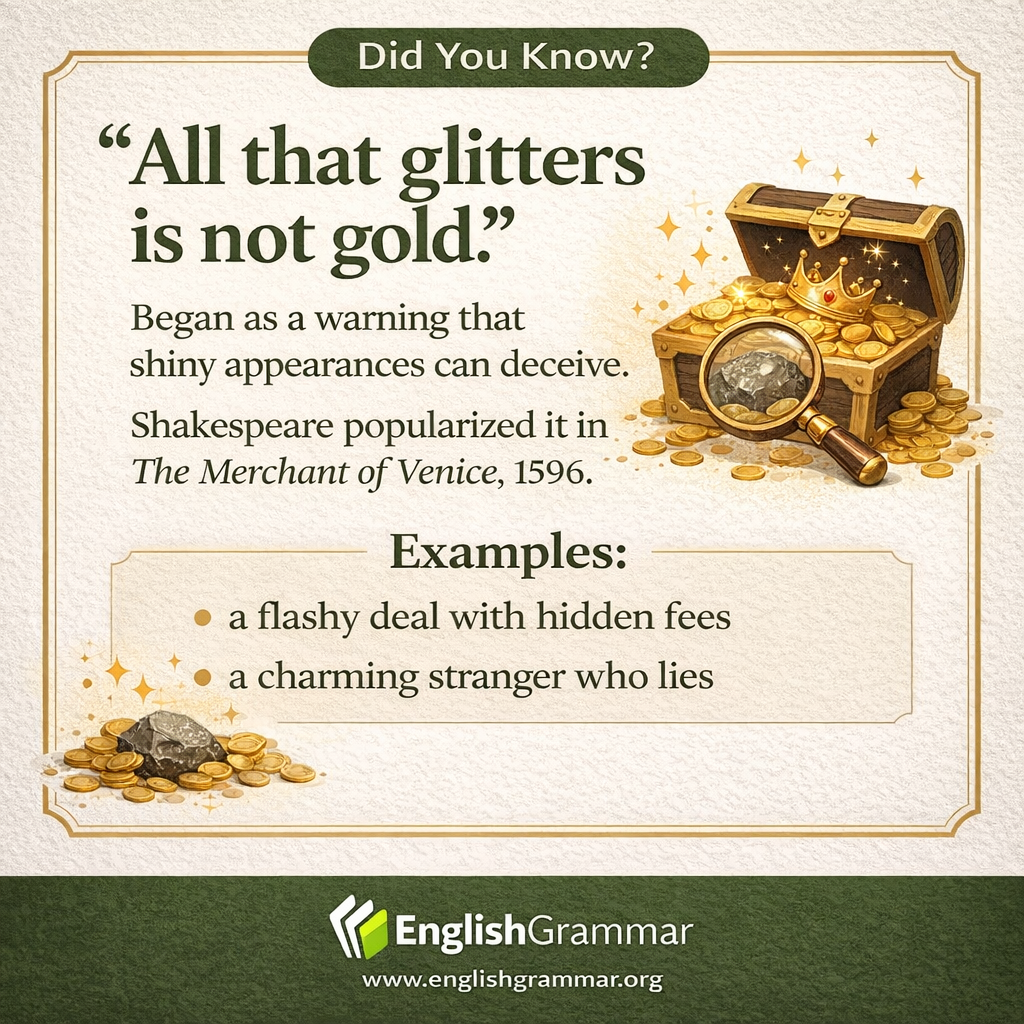
“All that glitters is not gold” means that something can look attractive or valuable without really being good, honest, or worthwhile. It is a warning not to judge by appearance alone.
Many people connect the line with Shakespeare because it appears in The Merchant of Venice, written in the late 1590s. In the play, the wording is “All that glisters is not gold”. At the time, glisters was a common form of glitters.
However, the idea is older than Shakespeare. Similar sayings existed in earlier English writing, and the basic thought goes back even further in European tradition. Shakespeare did not invent the warning, but his version helped fix it in popular memory.
- A product may have elegant packaging but poor quality inside.
- A business offer may sound impressive yet include costly hidden terms.
- A person may seem trustworthy at first and later prove dishonest.
That is why the saying has lasted. It applies to money, relationships, advertising, and everyday choices. The surface may shine, but real value needs a closer look.