
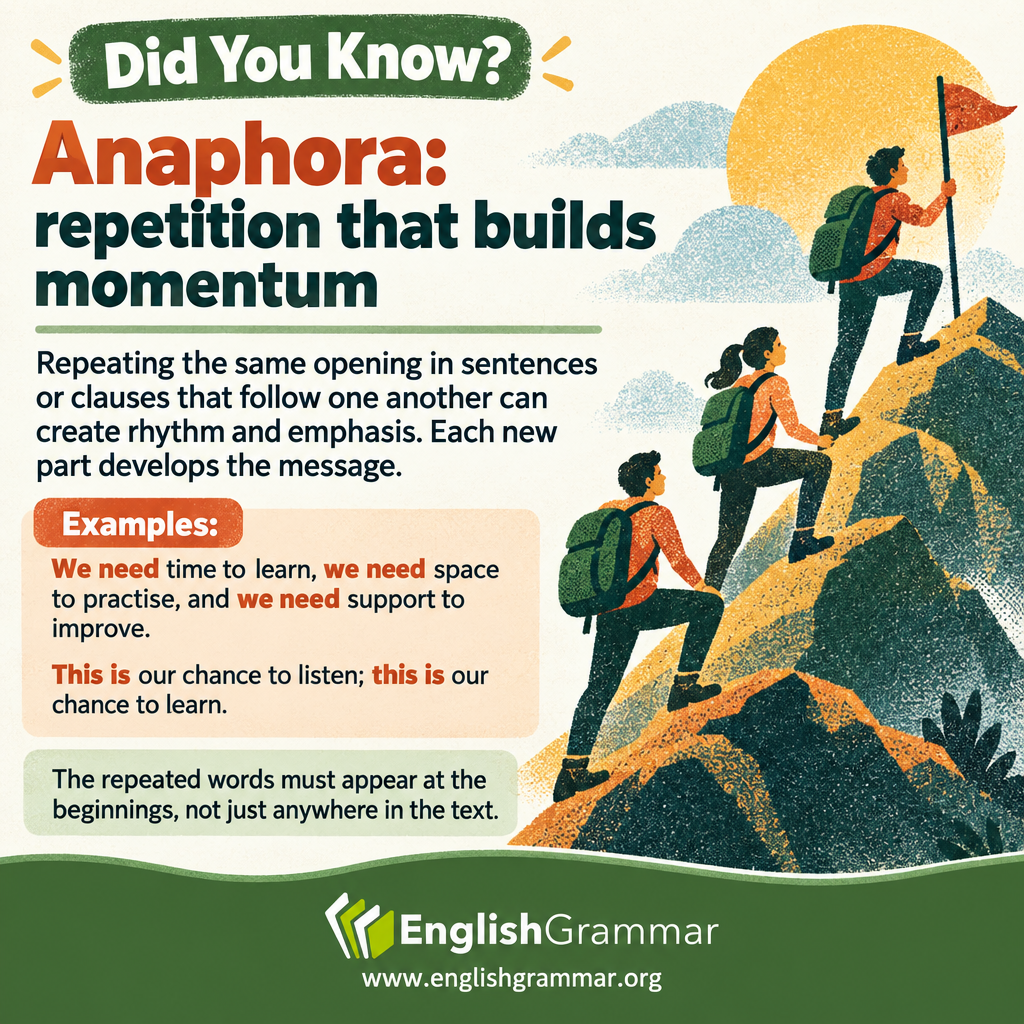
Anaphora repeats the same word or group of words at the beginning of successive clauses or sentences. Successive means they come one after another. A clause is a part of a sentence built around a verb, usually with a subject.
This repeated opening gives readers or listeners a pattern to follow. What comes after it can develop an idea, add another reason, or strengthen an emotional appeal. The effect can be energetic, serious, hopeful, or calm, depending on the words and context.
Here are two examples:
- We can share our skills. We can share our time. We can share our ideas. The repeated opening connects three ways to help.
- No one should feel forgotten; no one should feel unwelcome. The repeated opening gives both concerns similar weight.
You may notice this pattern in speeches, poetry, songs, advertising, and everyday persuasive writing. It can make a message easier to remember, but it does not have to make the message louder or more dramatic.
Position matters. In She wanted change, and change finally came, the repeated word appears in different positions. Repetition alone does not make a sentence an example of this technique.
To try it, choose a short opening and use it across two or three connected clauses or sentences. Let each new part contribute something useful. If the repetition adds no emphasis or connection, a simpler sentence may work better.