
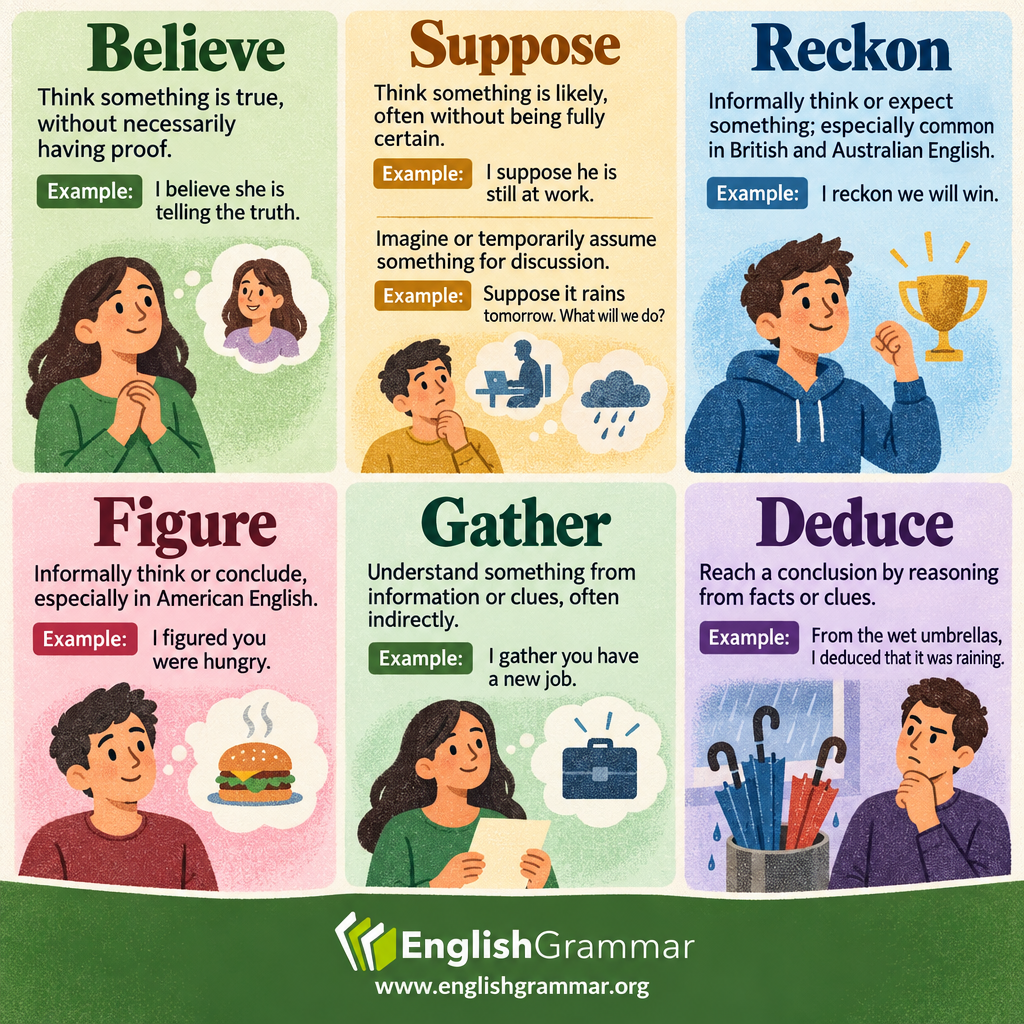
These six verbs can introduce what someone thinks, but they highlight different ways of reaching that thought. They are not a fixed scale from uncertain to certain.
- Believe means to think something is true. It can express a firm view or a polite, cautious statement: I believe this is your seat. It does not necessarily mean you have proof.
- Suppose often introduces a tentative opinion: I suppose we could walk. It can also ask someone to imagine a situation or accept something temporarily for discussion: Suppose the shop is closed. What will we do?
- Reckon is an informal way to express an opinion or expectation: I reckon the tickets will sell out. This use is especially common in British and Australian English, though it is not exclusive to them.
- Figure can informally mean to think or conclude, especially in American English: I figured you would need a lift. It often suggests some consideration, but not necessarily careful reasoning.
- Gather suggests forming an understanding from what you have heard, read or noticed: I gather the meeting went badly. The information may be indirect rather than explicitly stated.
- Deduce highlights reaching a conclusion by reasoning from facts or clues: From the missing keys, she deduced that someone had left. It sounds more formal, and the conclusion can still be mistaken.
Compare I believe he is home with I gather he is home: the second points more clearly to information or clues behind the view.