
• Skip to primary navigation
  • Skip to main content
  • Skip to primary sidebar
Home of English Grammar
  • Home
  • Course
  • Exercises
  • Grammar Rules
  • Matches
  • Posts
  • Tools
    • Grammar Checker
    • Very Replacer
    • Word Counter
  • Vocabulary Lists
  • Archives
    • Social Media Posts
    • Writing Guides
  • Join free

What “blow off steam” means and where it comes from

August 21, 2026

The origin of "blow off steam"

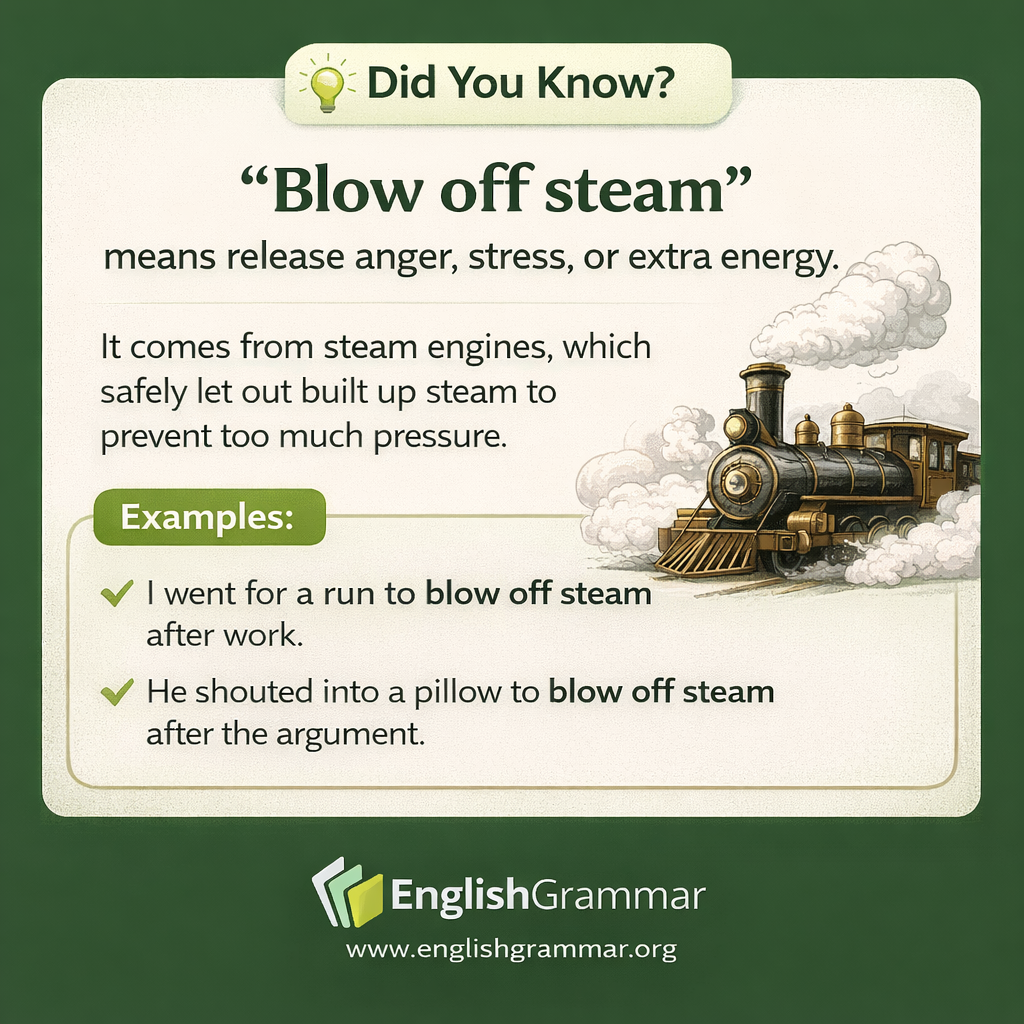
“Blow off steam” means to release built up anger, stress, frustration, or extra energy. People use it when someone needs a safe way to calm down or let strong feelings out.

The image comes from steam engines and other steam powered machines. When steam pressure built up inside, it had to be released safely so the system would not become too pressurized. That physical idea became a metaphor for people. If emotions build up like pressure, a person may need to “blow off steam.”

Today, the phrase usually suggests doing something that helps you feel better without causing harm. It can describe exercise, talking, shouting in private, or doing another activity that reduces tension.

  • I went for a long walk to blow off steam after the meeting.
  • She plays basketball to blow off steam when she feels stressed.
  • If you need to blow off steam, take a break before answering that email.

This idiom is informal and very common in everyday English. It does not usually mean solving the problem itself. It means releasing the emotional pressure so you can think more clearly afterward.

Improve your English grammar, vocabulary and writing

We take you step by step from beginner to advanced, even if you struggled with English at school or have always had trouble remembering the rules.

  • 10 modules, 105 lessons and 688 questions
  • Just log in and learn anytime and anywhere
  • Your progress is saved in your account
  • Download the 2027 Grammar Guide (PDF)
Join free

Already have an account? Sign in

See what’s in the course

Primary Sidebar

2.4M761.4K165.8K

Free 2027 Grammar Guide

  • Download Grammar Guide (PDF)
  • Online grammar course, A1 to C2
  • Weekly exercises and vocabulary
  • Join over 3 million English learners

We respect your privacy. Unsubscribe anytime.

Already have an account? Sign in

Grammar Checker - Try Now

Latest Posts

  • 100 Best Synonyms for “Shadow” October 19, 2026
  • 100 Best Synonyms for “Addicted” October 19, 2026
  • Grumpy vs. grouchy vs. cranky vs. irritable vs. surly vs. cantankerous October 19, 2026
  • Flirt, charm, woo, court, beguile, and seduce: How to choose October 19, 2026
  • 100 Best Synonyms for “Isolated” October 19, 2026
  • 100 Best Synonyms for “Conversely” October 19, 2026
  • 100 Best Synonyms for “Sentiment” October 19, 2026
  • Course Vocabulary Exercise October 19, 2026
  • 100 Best Synonyms for “Wronged” October 19, 2026
  • 100 Best Synonyms for “Seen” October 19, 2026
Home of English Grammar

Free English grammar exercises, rules and vocabulary lists, with new exercises every week. Join the leading English grammar site with over 3 million followers.

Join free

Learn

  • Exercises
  • Matches
  • Grammar rules
  • Vocabulary lists
  • Writing guides
  • Online tools

More

  • Top social media posts
  • Various posts
  • Contact

Account

  • Join free
  • Grammar Course
  • Free grammar guide (PDF)

Copyright © 2026 EnglishGrammar.org

  • Disclaimer
  • Privacy policy
  • Terms
  • Sitemap