
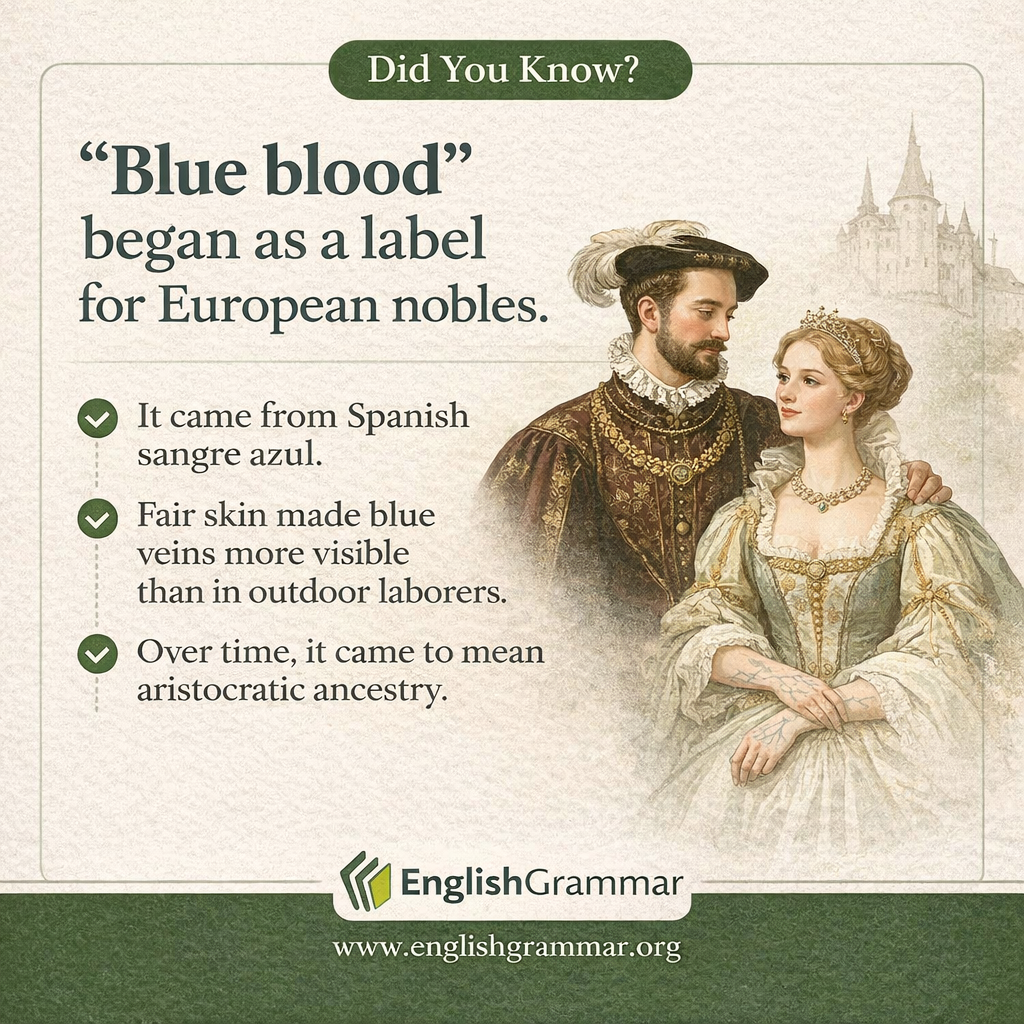
The phrase blue blood refers to noble or aristocratic ancestry, not to the actual color of anyone’s blood. In English, it came from the Spanish expression sangre azul, which was associated with high ranking families.
One common explanation is that pale skin helped make veins look bluish. Nobles often spent less time doing outdoor labor, so their skin stayed lighter than that of many workers. Because of that contrast, blue looking veins became linked with elite status.
The phrase then shifted from a visual description to a social one. Instead of talking about skin and veins, people used it to mean that someone came from an old, privileged family.
- Original sense: a visible sign associated with pale skinned nobility.
- Later sense: a person from an aristocratic family line.
- Example: “The novel follows a young blue blood who rebels against family tradition.”
So the expression is really about class history and inherited status, not biology. It is a reminder that many everyday phrases began as social labels before becoming figurative language.