
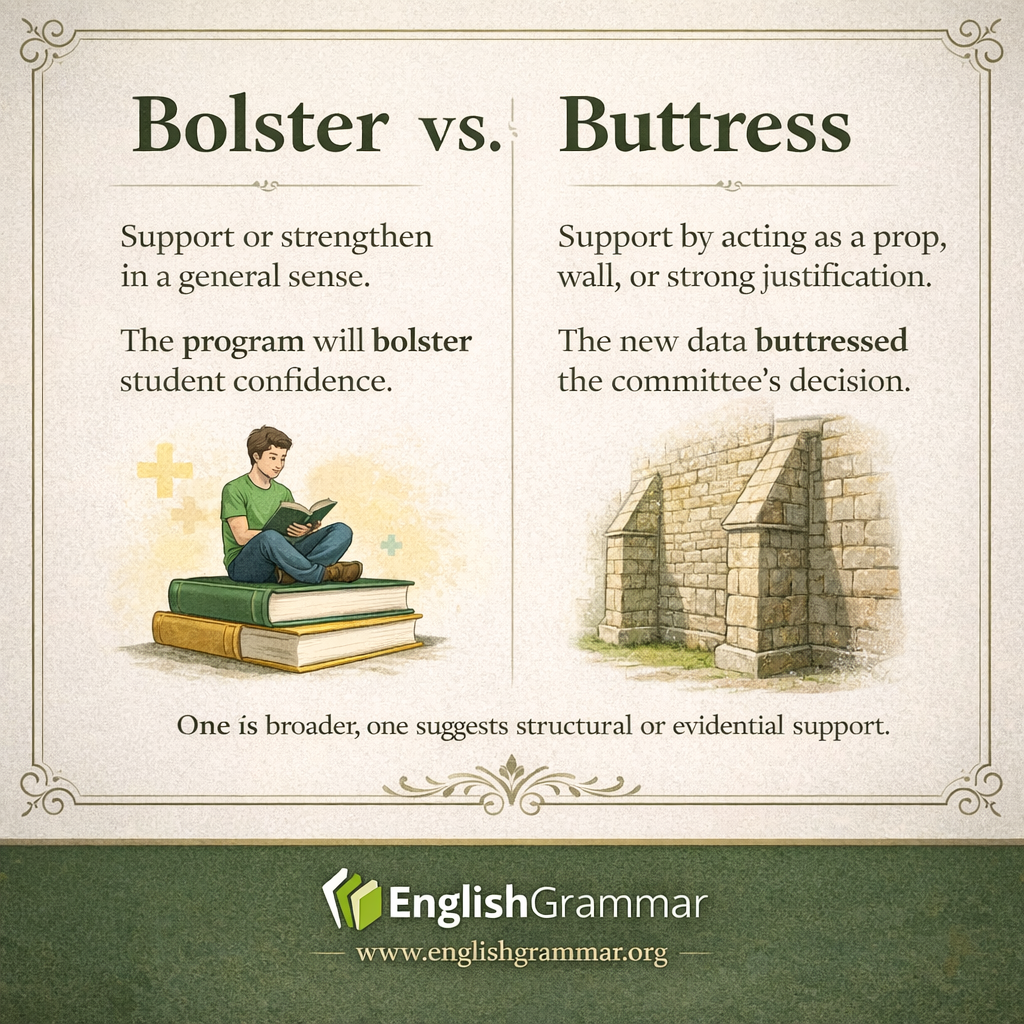
Bolster and buttress both relate to support, but they are not used in exactly the same way.
Bolster is the broader, more flexible choice. It usually means to strengthen, encourage, or improve something. You can bolster confidence, bolster an argument, or bolster a team’s chances. Example: The mentor’s feedback helped bolster her confidence.
Buttress often suggests firmer support, either literal or figurative. In literal use, it can refer to a structure that supports a wall. In figurative use, it often means to support something with strong evidence, reasoning, or reinforcement. Example: The new survey data buttressed the researchers’ conclusion.
- Use bolster for general strengthening or encouragement.
- Use buttress when the support feels more structural, formal, or evidence based.
A simple way to remember it is this: bolster is everyday strengthening, while buttress often sounds more architectural or analytical.