
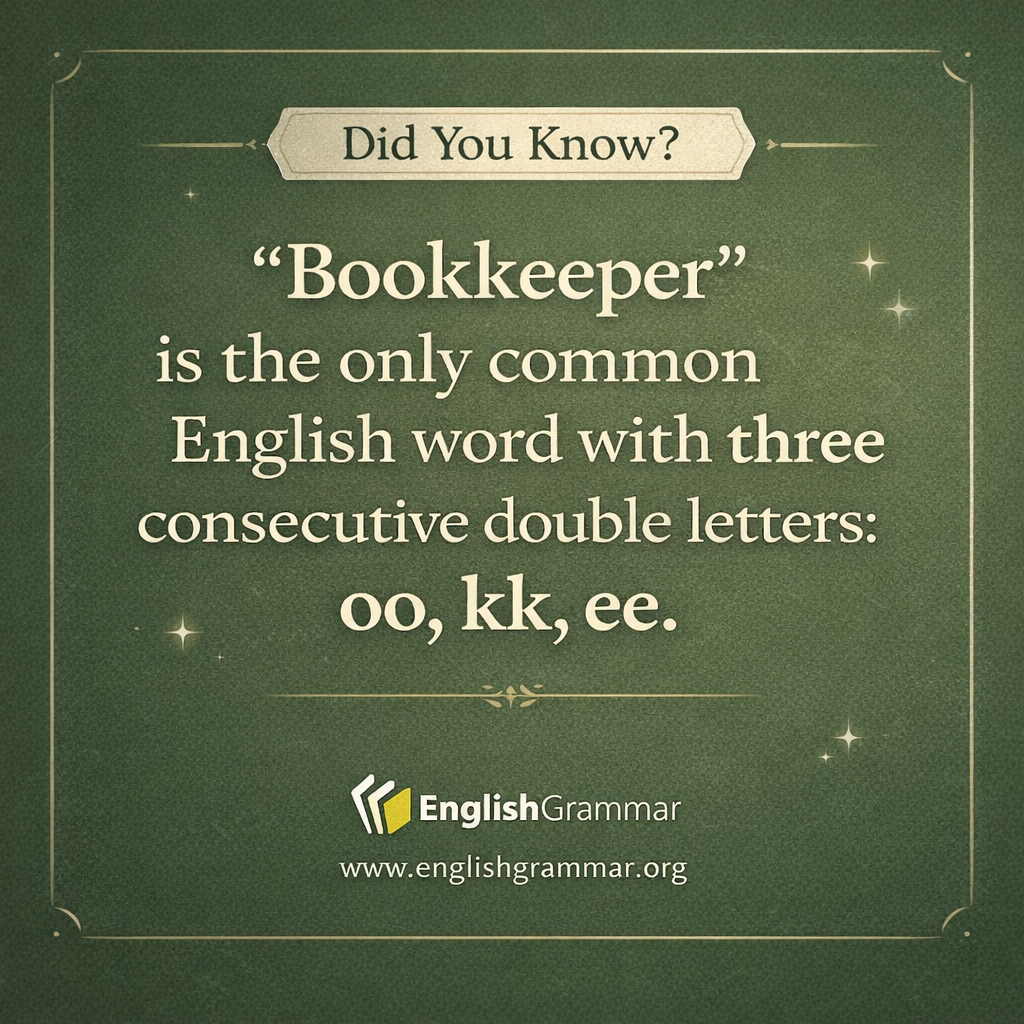
Bookkeeper is famous among spelling fans because it contains three consecutive double letters: oo, kk, ee. In other words, you get six letters in a row that form three pairs.
This happens because the word is built from two parts: book + keeper. When these parts combine, English keeps the original spelling of each chunk, so the double k from book meets the double e from keeper, and the oo in book stays too.
In everyday use, this makes bookkeeper one of the few familiar words that looks like it has a “spelling traffic jam,” even though it is completely regular once you see the parts.
- Example sentence: Our bookkeeper reconciled the accounts before payday.
- Contrast: beekeeper has double letters, but not three pairs in a row.
- Contrast: bookkeeping keeps the same triple pairing inside the longer word.
If you ever doubt the spelling, remember the structure: it really is a keeper of books, and the letters from both pieces stay intact.
