
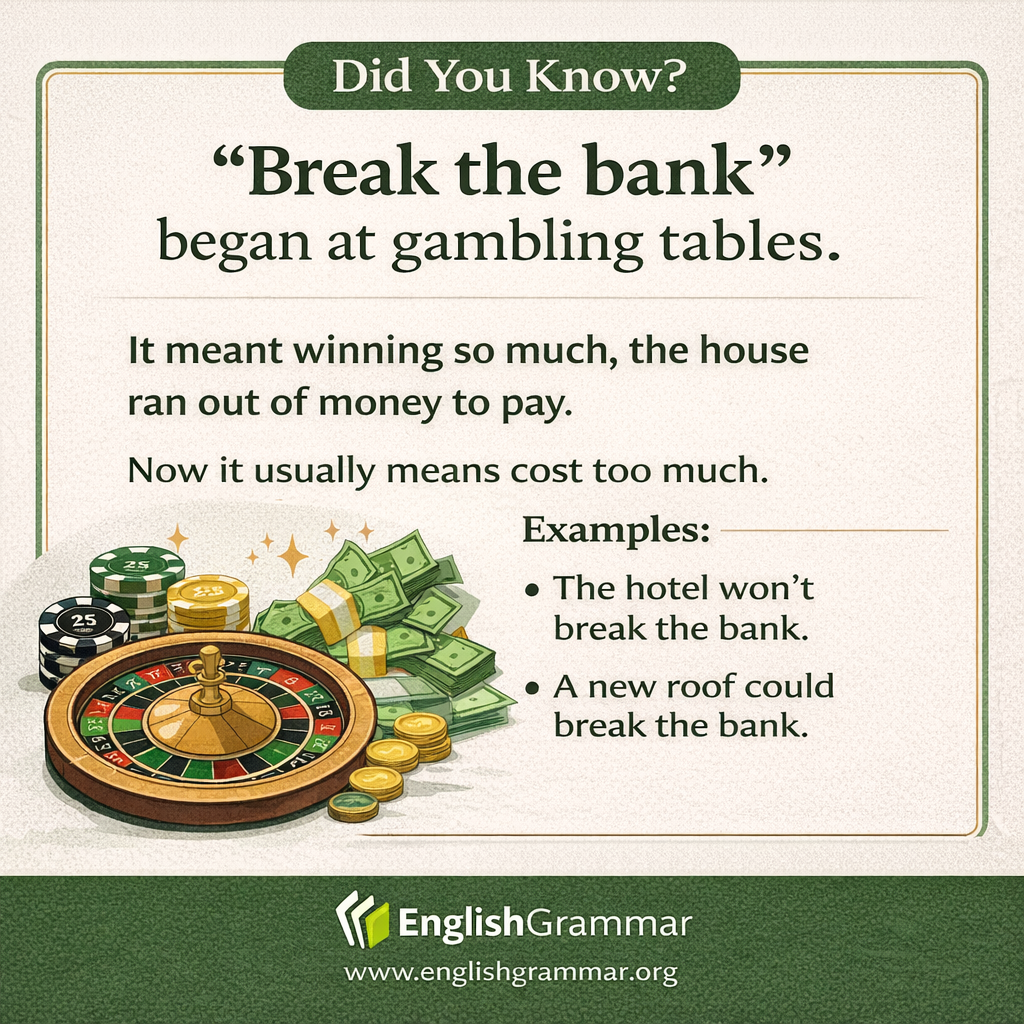
“Break the bank” did not start as a general money phrase. It came from gambling. In games such as roulette, the bank was the money the house kept on hand to pay winners. If a player won an unusually large amount, they could break the bank, meaning the house could not cover the payout from that fund.
Over time, the expression moved into everyday English. Now it usually means that something is too expensive, or would use up more money than you can comfortably spend.
- Original sense: A gambler won so much that the house fund was exhausted.
- Modern sense: A price is very high for your budget.
- Example: “We want a nice sofa, but nothing that breaks the bank.”
This shift is common in English idioms. A phrase can begin in a very specific setting, then widen into a general idea. So when someone says a vacation package will not break the bank, they are not talking about a casino. They simply mean it is affordable.