
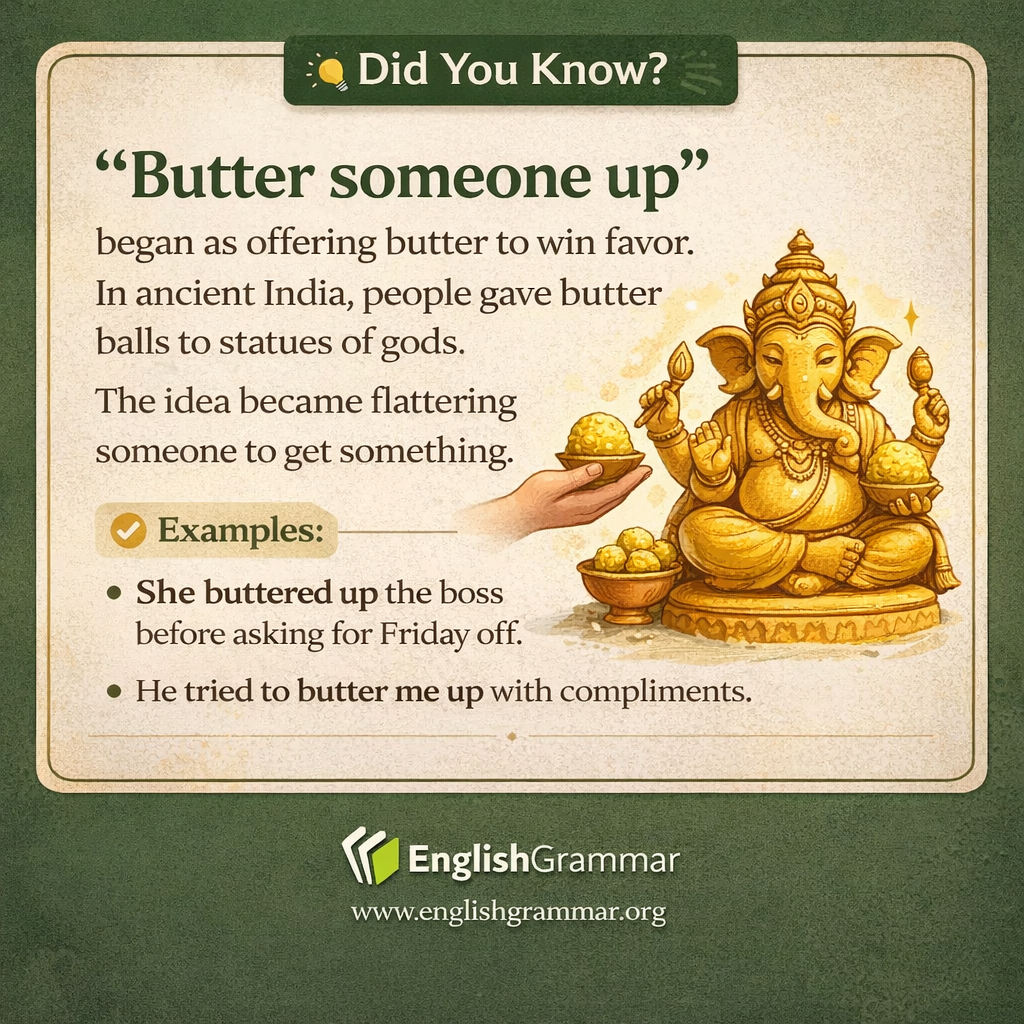
“Butter someone up” means to flatter someone, usually because you want a favor, approval, or some other benefit. Today it is clearly figurative, but one popular explanation for the phrase points to an older, more literal custom.
A commonly repeated origin story connects the expression to ancient India, where people offered balls of butter to statues of gods as a way to seek favor or blessing. Whether that story fully explains the modern English idiom is debated, but it matches the basic idea well: give something pleasing in hopes of getting something back.
Over time, the phrase came to describe verbal flattery instead of an actual gift. In modern use, it usually suggests praise with a purpose, not simple kindness.
- Neutral praise: “She thanked her teacher for the helpful feedback.”
- Butter someone up: “She praised the teacher’s class right before asking for an extension.”
That contrast matters. The idiom usually implies strategy. If someone is buttering a person up, they are not just being nice, they are trying to improve their chances of hearing “yes.”