
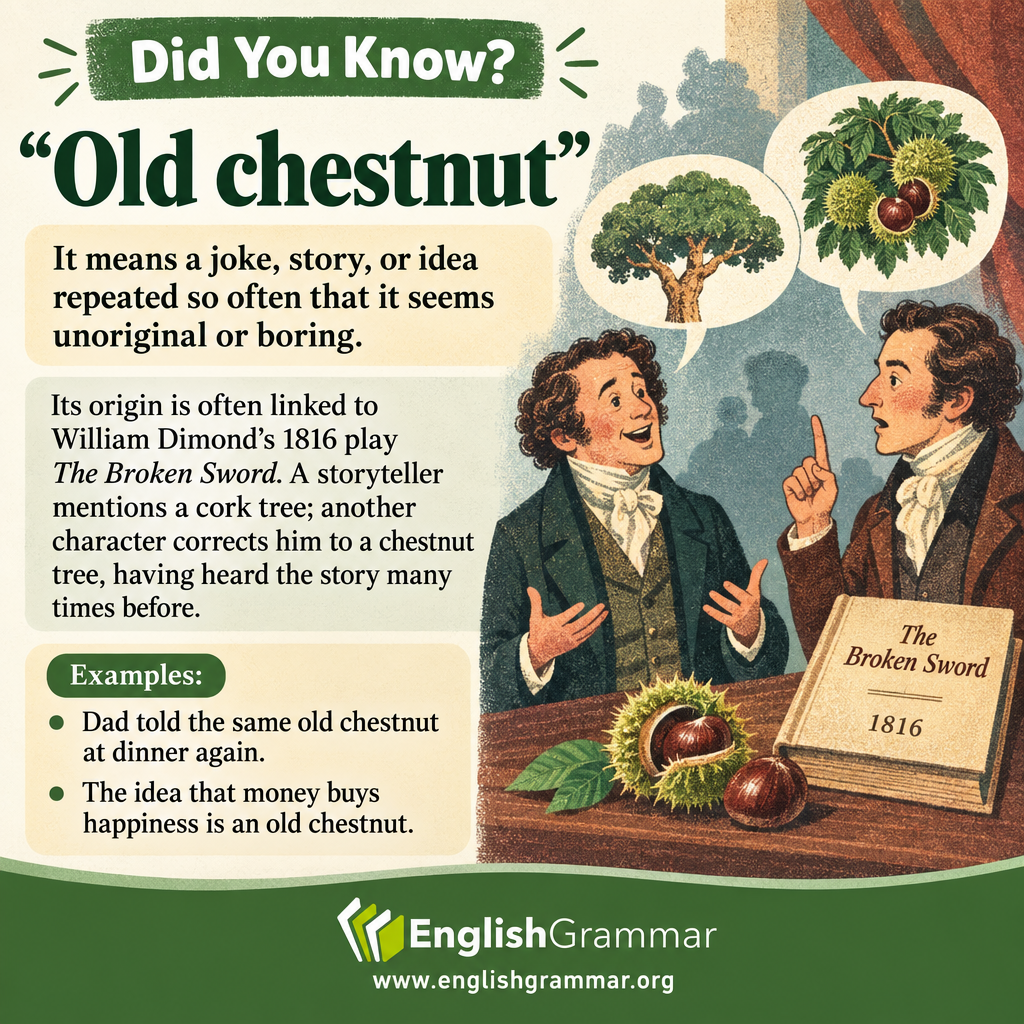
An “old chestnut” is a joke, story, or idea that people have heard many times before. It often suggests that the speaker finds it boring or no longer original. However, the expression can also sound affectionate: a familiar joke may still make people smile.
The origin is often linked to The Broken Sword, an 1816 play by William Dimond. In one scene, a character tells a familiar story and mentions a cork tree. Another character interrupts to say that it was a chestnut tree, explaining that he has heard the story repeatedly.
The connection is easy to understand: the chestnut tree becomes a detail that gives away an overused story. This scene is a commonly cited explanation, although the exact route from the play to the everyday expression is less certain.
Today, the expression is not limited to jokes. It can describe a repeatedly told anecdote or an idea that keeps returning in conversation.
- A familiar joke: “Grandad told us an old chestnut, but we laughed anyway.”
- A repeated idea: “The claim that young people never work hard is an old chestnut.”
Use it with some care. Calling someone’s story an old chestnut can sound dismissive because it suggests that you have heard it before and do not find it fresh or interesting.