
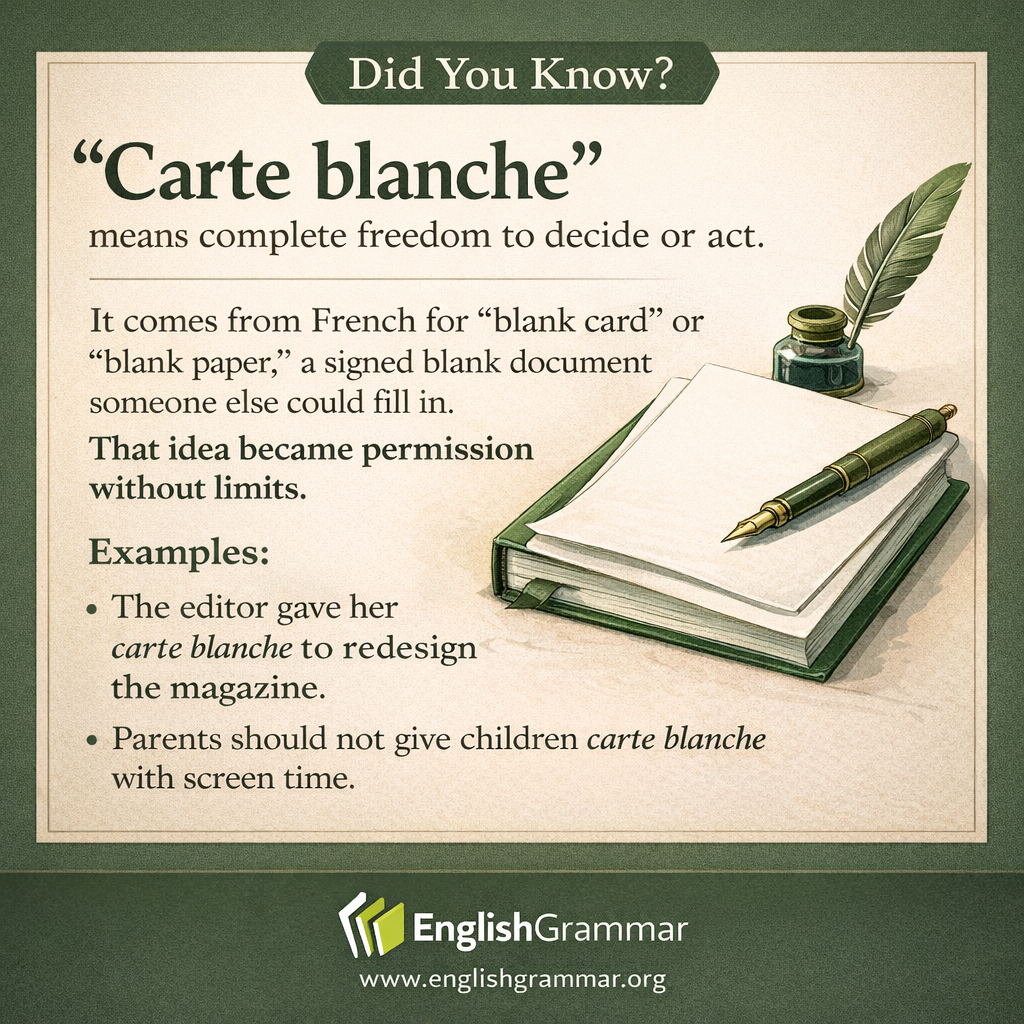
Carte blanche means complete freedom to decide, choose, or act. If someone gives you carte blanche, they are giving you very broad authority, often with few restrictions.
The phrase comes from French and literally means blank card or blank paper. Historically, it referred to a document that was signed but left otherwise blank, so the other person could fill in the terms. That image helps explain the modern meaning: permission to decide the details yourself.
In modern English, the phrase is often used in work, politics, parenting, and creative decisions.
- The director gave the costume team carte blanche for the new production.
- The board did not give the CEO carte blanche, so major spending still needed approval.
This second example shows an important point: the phrase usually suggests a high level of trust, but it can also imply too little control. Because of that, it often appears in discussions about power and limits.
Use it when you mean full discretion, not just a small amount of flexibility.
