
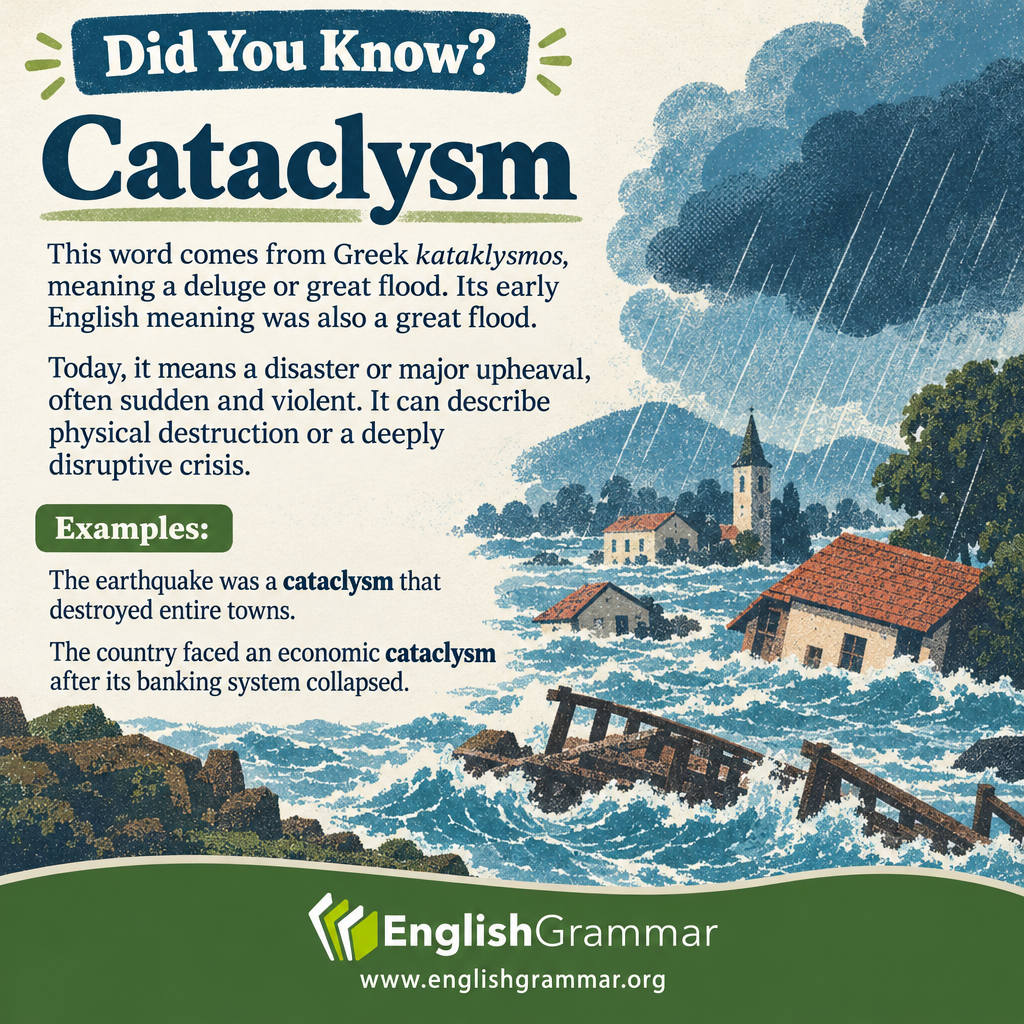
A great flood can destroy buildings, reshape land, and change people’s lives. That helps explain how a word for flooding developed a much broader meaning.
“Cataclysm” comes from the Greek kataklysmos, meaning a deluge or inundation: water flowing over and covering land. Its early English meaning was a great flood. Over time, its use widened beyond water to include other destructive events.
Today, it means a disaster or major upheaval, often involving sudden, violent change. The connection with flooding belongs to the word’s history; a modern event does not need to involve water to fit the meaning.
The word can describe physical destruction or, figuratively, a crisis that deeply disrupts a society or system:
- Physical destruction: “The earthquake was a cataclysm that left much of the city in ruins.”
- Figurative use: “The banking collapse triggered an economic cataclysm.”
In the second example, the damage is financial and social rather than a landscape being physically destroyed. The word still suggests consequences on a very large scale.
Choose it for serious disruption. It sounds stronger and more dramatic than problem or setback. Missing a bus would not normally deserve this description, unless the speaker was deliberately exaggerating for humour. For an ordinary difficulty, a simpler word will usually communicate the situation more accurately.