
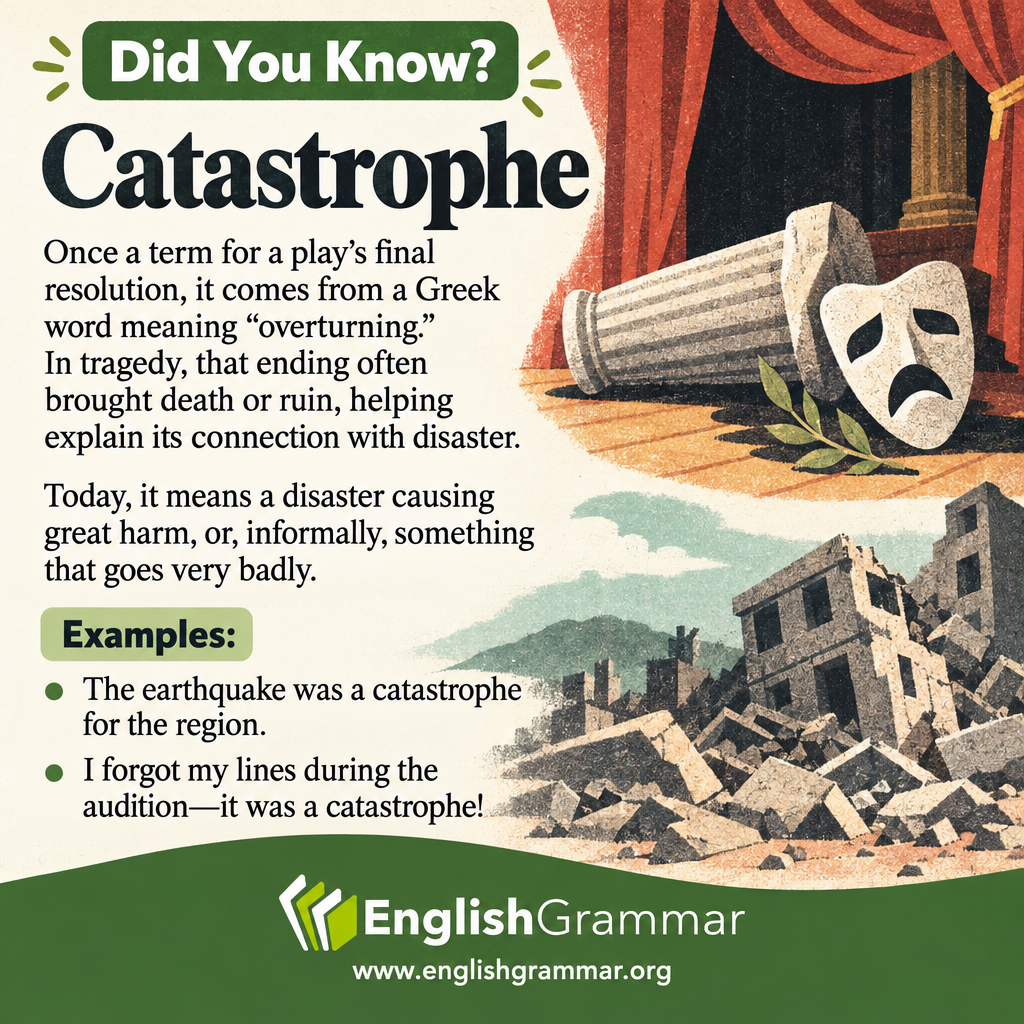
Before its familiar connection with disasters, catastrophe had a theatrical meaning: the final resolution of a play, when the main action reached its conclusion. It referred to how the story ended, not simply to the moment the performance stopped.
The word comes from Greek katastrophē, meaning an overturning or sudden turn. In dramatic use, it could describe the final change that settled the characters’ fortunes. This was especially associated with tragedy, where the ending might bring death, ruin, or another terrible outcome.
That connection helps explain the shift toward the modern meaning: a disaster or an event that causes great harm. The older theatrical meaning was not simply another word for a real-world emergency.
Today, people use the word both seriously and with deliberate exaggeration. The surrounding situation helps you judge how strong the meaning is.
- Serious use: The earthquake was a catastrophe for the region, destroying homes and roads.
- Exaggerated everyday use: I forgot my lines during the audition—it was a catastrophe!
In the second example, the speaker probably means that the experience went very badly, not that it caused widespread destruction. This dramatic use is common in informal speech.
For learners, the practical point is that this is a strong word. If you only mean a small problem, mistake, setback, or inconvenience may fit better—unless you want to sound deliberately dramatic.