
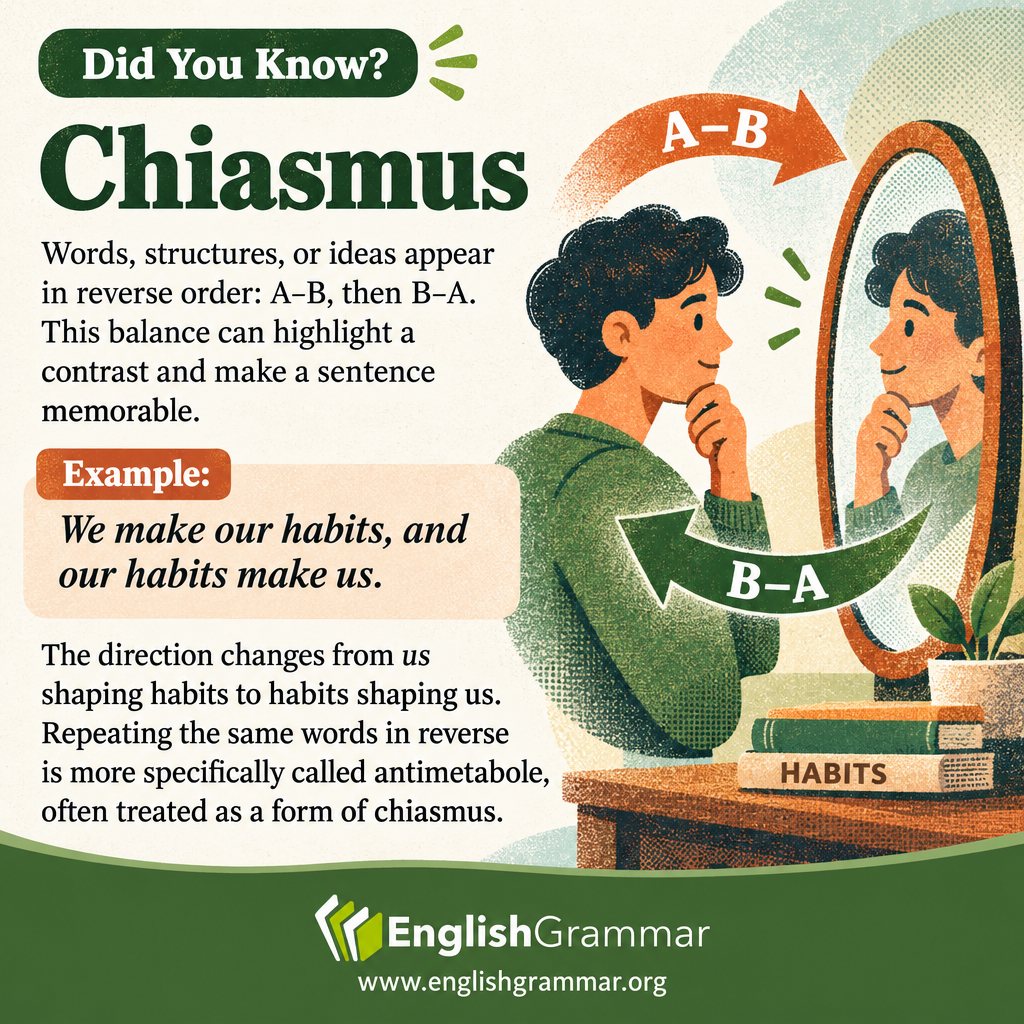
Chiasmus arranges words, grammatical structures, or ideas in a reversed pattern. Think of two parts arranged as A–B, then B–A: the second part turns back toward the first.
This reversal can make a sentence sound balanced and carefully designed. It also invites readers to compare the two halves. When the relationship changes, the sentence may reveal a contrast, a surprise, or a different way of seeing something familiar.
Consider this example:
- We make our habits, and our habits make us.
The first half moves from us to habits; the second moves from habits to us. The reversal highlights two directions of influence: our choices create routines, but those routines also affect who we become.
There is a useful technical distinction. Repeating the same words in reverse order is more specifically called antimetabole. It is often discussed as a form of chiasmus, though some definitions distinguish the two. Chiasmus can reverse a structure or an arrangement of ideas without repeating identical words.
Writers and speakers use these patterns to:
- Make a contrast easier to notice.
- Give two related ideas a balanced shape.
- Create a line that readers can easily remember.
However, a neat reversal is not proof that an idea is true. The wording can sound persuasive even when the claim needs evidence. When writing your own, choose a meaningful relationship first; do not reverse words merely to sound clever.