
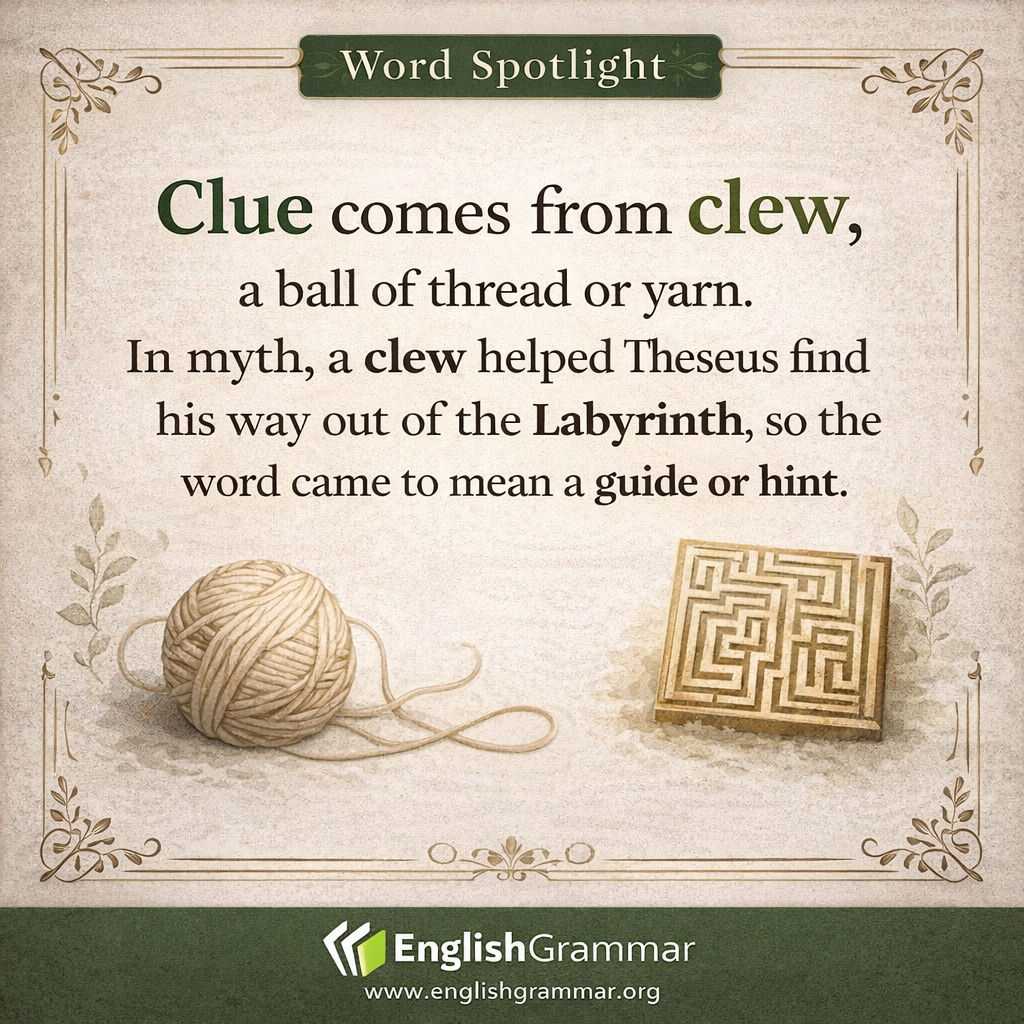
Clue did not start out as a detective word. It comes from the older English word clew, which meant a ball of thread or yarn.
The shift in meaning makes sense when you know a famous story from Greek myth. Ariadne gave Theseus a clew so he could unwind the thread as he entered the Labyrinth and follow it back out again. Because a clew could guide someone through a confusing place, the word gradually came to mean anything that helps you find your way.
By later English, clue became the common spelling, and its meaning widened from a literal guide to a figurative one. Today, a clue is a hint, a piece of evidence, or anything that helps solve a problem.
- Old meaning: a ball of thread or yarn
- Later meaning: something that guides or helps explain
- Modern use: a hint in a mystery, puzzle, or investigation
Example: The muddy footprints were the clue that led the police to the back door.
So when you say clue, you are using a word that once meant a real thread, the kind that could help someone find the way out.
