
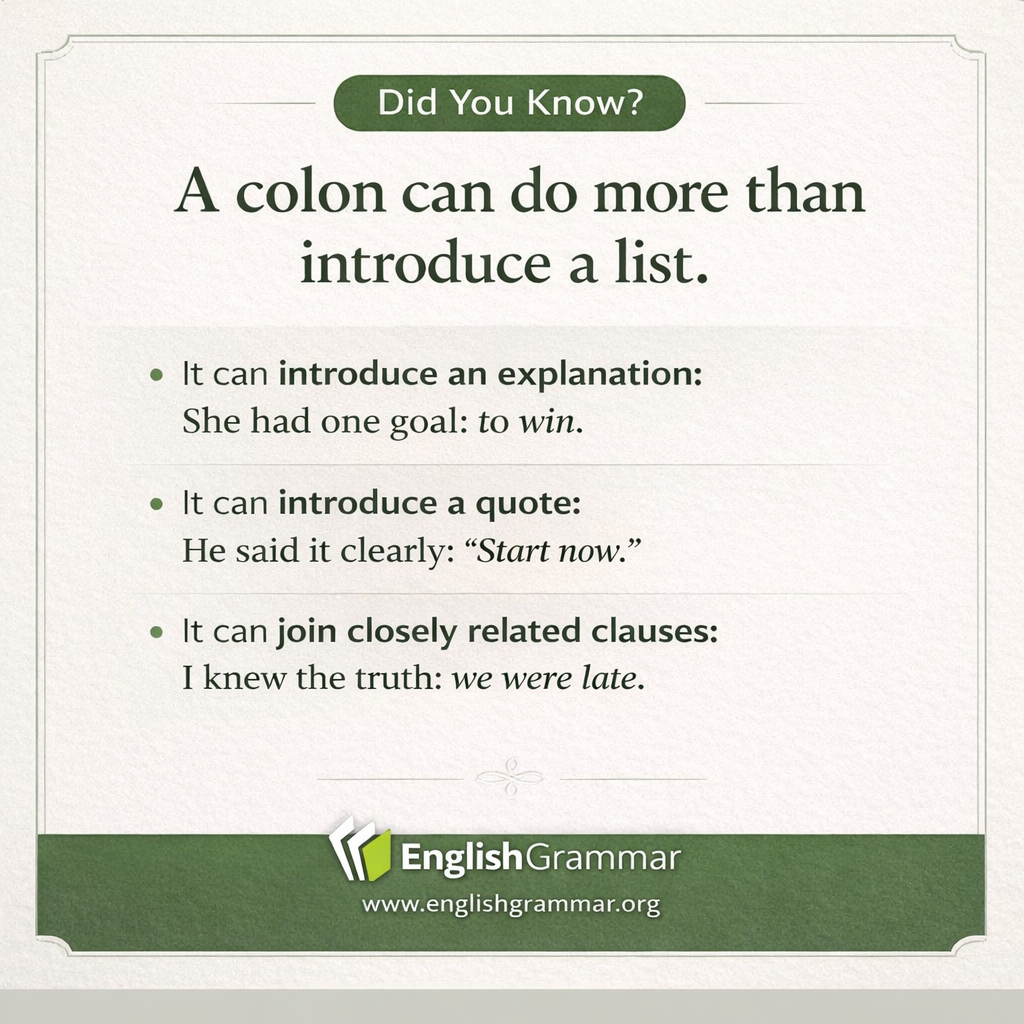
Many writers learn the colon as a way to introduce a list, but that is only one of its jobs. A colon signals that something important is coming next, often an explanation, an example, a quote, or a fuller statement.
Use a colon after a complete clause when the second part explains or develops the first. For example: She had one goal: to win. The first part can stand alone, and the second part tells us more.
A colon can also introduce a quote, especially when the quote is presented formally. For example: He said it clearly: “Start now.”
It can also join two closely related clauses when the second clause explains the first. For example: I knew the truth: we were late. This use is slightly more formal than a comma and more direct than starting a new sentence.
- List: Bring three things: a pen, paper, and water.
- Explanation: She had one goal: to win.
- Quote: He said it clearly: “Start now.”
- Related clauses: I knew the truth: we were late.
The key rule is simple: the words before the colon should usually form a complete thought.
