
• Skip to primary navigation
  • Skip to main content
  • Skip to primary sidebar
Home of English Grammar
  • Home
  • Course
  • Exercises
  • Grammar Rules
  • Matches
  • Posts
  • Tools
    • Grammar Checker
    • Very Replacer
    • Word Counter
  • Vocabulary Lists
    • My Word Lists
  • For Teachers
  • Archives
    • Social Media Posts
    • Writing Guides
  • Sign in
  • Join free

Complain, whine, moan, gripe, grouse, and rant: how to choose

November 15, 2026

Complain vs. Whine vs. Moan vs. Gripe vs. Grouse vs. Rant

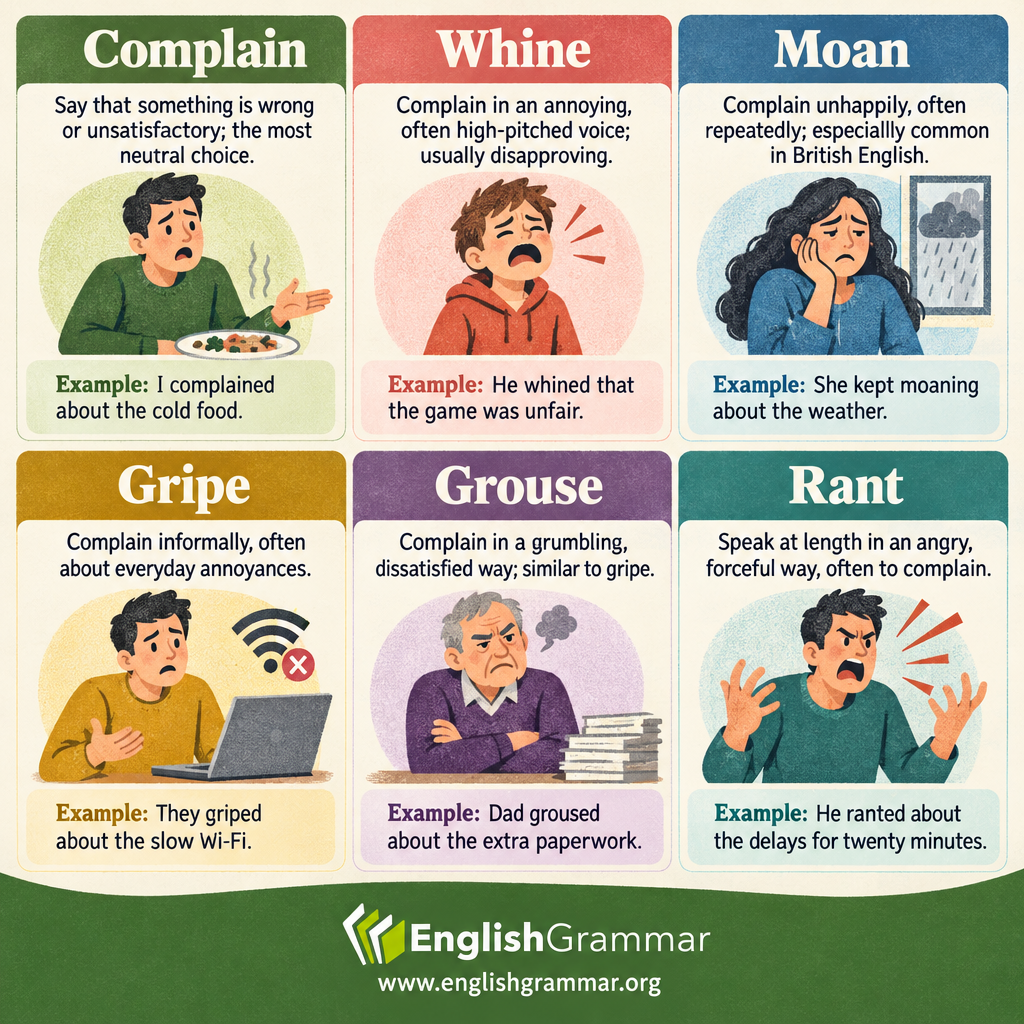
These six verbs can describe expressing dissatisfaction, but they suggest different tones and styles. Their meanings overlap: the same complaint might fit several words, depending on how someone delivers it.

  • Complain is the most neutral choice. It means saying that something is wrong or unsatisfactory, without necessarily suggesting an unreasonable reaction. She complained to the manager about the broken heater.
  • Whine suggests an annoying, often high-pitched voice. It usually shows that the speaker disapproves of the complaint or the way it sounds. He whined that his sister had a bigger slice.
  • Moan, in this comparison, means complaining unhappily, often repeatedly. This use is especially common in British English. They kept moaning about the early start. It can also mean making a low sound of pain or pleasure, but that is a separate sense.
  • Gripe is informal and often concerns everyday annoyances. We griped about the rising parking fees.
  • Grouse means complaining in a grumbling, dissatisfied way. He groused about having to work on Sunday. It is close to gripe; there is no strict difference in seriousness.
  • Rant emphasizes speaking at length in an angry, forceful way. It can describe a complaint, but also an angry speech about an opinion. She ranted for ten minutes about the new policy.

For a service problem, complain is usually the safest neutral verb. The other choices add an impression of the speaker’s attitude, voice, or delivery, so they can sound judgmental.

Improve your English grammar, vocabulary and writing

We take you step by step from beginner to advanced, even if you struggled with English at school or have always had trouble remembering the rules.

  • 11 modules, 124 lessons and 819 questions
  • Just log in and learn anytime and anywhere
  • Your progress is saved in your account
  • Download the 2027 Grammar Guide (PDF)
Join free

Already have an account? Sign in

See what’s in the course

Primary sidebar

2.4M760.9K165.9K

Free 2027 Grammar Guide

  • Download Grammar Guide (PDF)
  • Online grammar course, A1 to C2
  • Weekly exercises and vocabulary
  • Join over 3 million English learners

We respect your privacy. Unsubscribe anytime.

Already have an account? Sign in

Grammar Checker - Try Now

Rankings

Home of English Grammar

Free exercises, a step-by-step grammar course, rules and vocabulary lists, with new exercises every week. Join the leading English grammar site with over 3 million followers.

Join free

Learn

  • Exercises
  • Grammar course
  • Level test
  • Matches
  • Grammar rules
  • Vocabulary lists
  • Writing guides
  • Online tools

More

  • Top social media posts
  • Various posts
  • For teachers
  • Contact

Account

  • Join free
  • My word lists
  • Free grammar guide (PDF)

Copyright © 2026 EnglishGrammar.org

  • Disclaimer
  • Privacy policy
  • Terms
  • Sitemap