
These six verbs can describe what happens as an activity or difficult situation develops, but they emphasize different things.
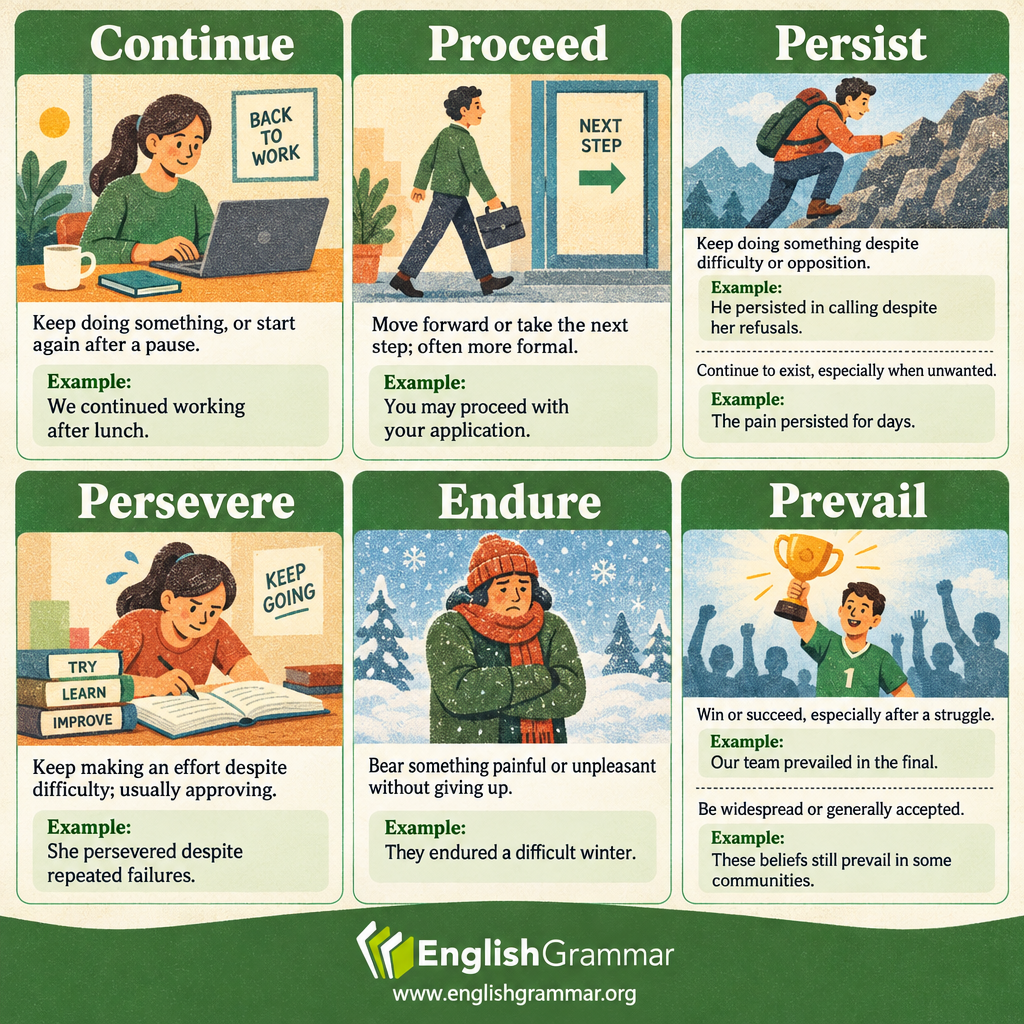
- Continue is the neutral choice for keeping an activity going or starting it again after a pause. We continued our conversation after lunch. It does not necessarily suggest difficulty.
- Proceed means to move forward or take the next step. It often sounds more formal. Once everyone agrees, we can proceed with the booking. Use proceed with before a noun and proceed to before a verb.
- Persist emphasizes continuing despite difficulty, opposition, or requests to stop. He persisted in asking for a refund. It can sound positive or negative, depending on the situation. A problem can also persist: The noise persisted all evening.
- Persevere emphasizes sustained effort despite difficulty and usually expresses approval. She persevered with her training despite several setbacks. Unlike persist, it does not normally describe a continuing symptom or problem.
- Endure means to experience something painful or unpleasant without giving up or being overcome. They endured months of uncertainty. The focus is on bearing the experience, not necessarily making progress.
- Prevail means to win or succeed, especially after a struggle. The smaller team eventually prevailed. It can also mean to be widespread or generally accepted: A cautious attitude prevailed among the staff.
Someone may persevere through a challenge and endure discomfort without ultimately prevailing: effort, suffering, and success are different parts of the story.