
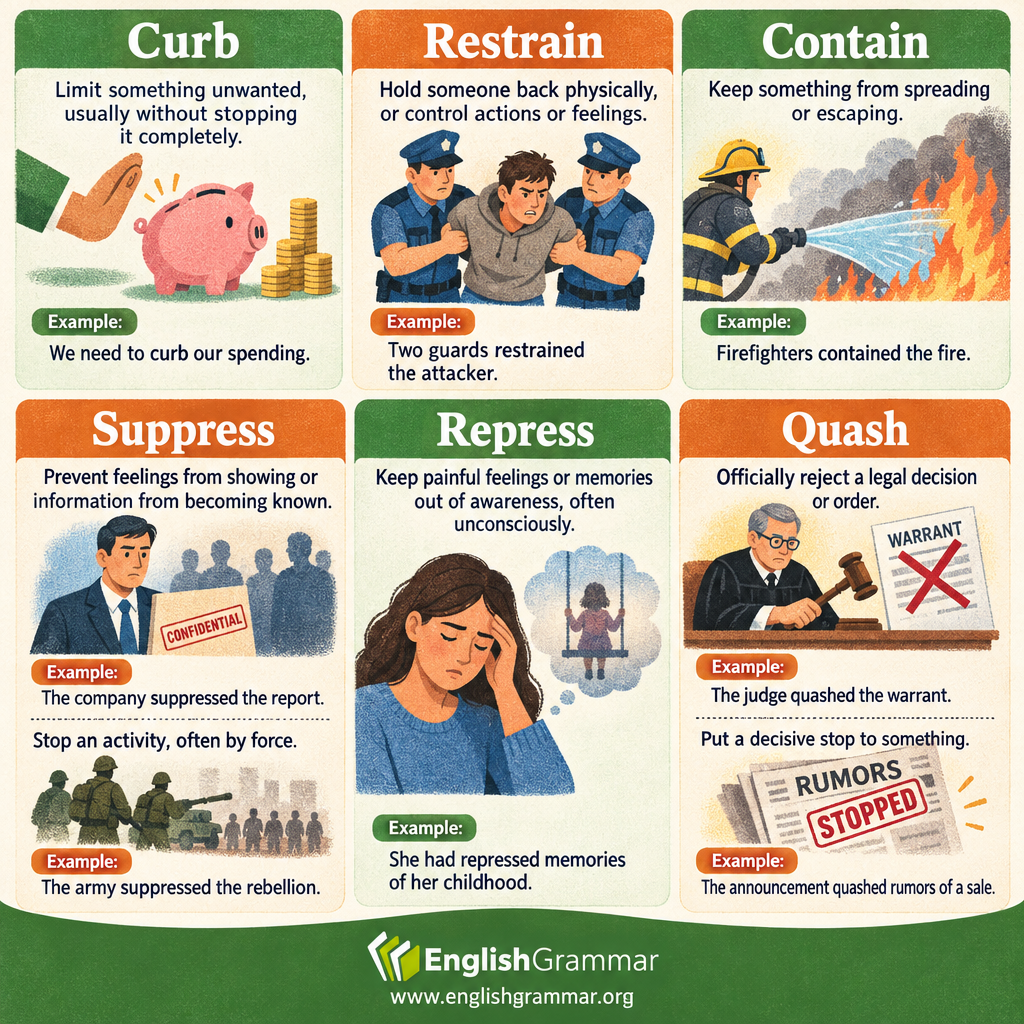
These six verbs involve control, but they emphasize different things. Choose according to what is being controlled and what happens to it.
- Curb means limit something, especially unwanted behavior or growth. The city raised parking fees to curb traffic. The aim is usually reduction, not complete removal.
- Restrain means hold someone or something back, physically or through self-control. He restrained himself from interrupting. It can also describe physically preventing someone from moving or acting.
- Contain means stop something from spreading or escaping. Workers contained the oil spill. The problem may still exist, but it stays within limits.
- Suppress can mean prevent feelings from showing or information from becoming known. She suppressed a laugh during the speech. It also means stop an activity, often by force: Soldiers suppressed the uprising.
- Repress, when discussing emotions, often means keep painful feelings or memories outside conscious awareness. He had repressed memories of the accident. Unlike deliberately hiding a reaction, this may happen unconsciously, although everyday uses overlap.
- Quash means officially reject a legal decision or order, or decisively stop something. The court quashed the conviction. Outside law, someone might quash a rumor by providing clear evidence.
Context matters more than strength alone. A policy might curb price increases without stopping them, while emergency action might contain a crisis without solving it. These verbs are not simply steps on one scale from mild to forceful.