
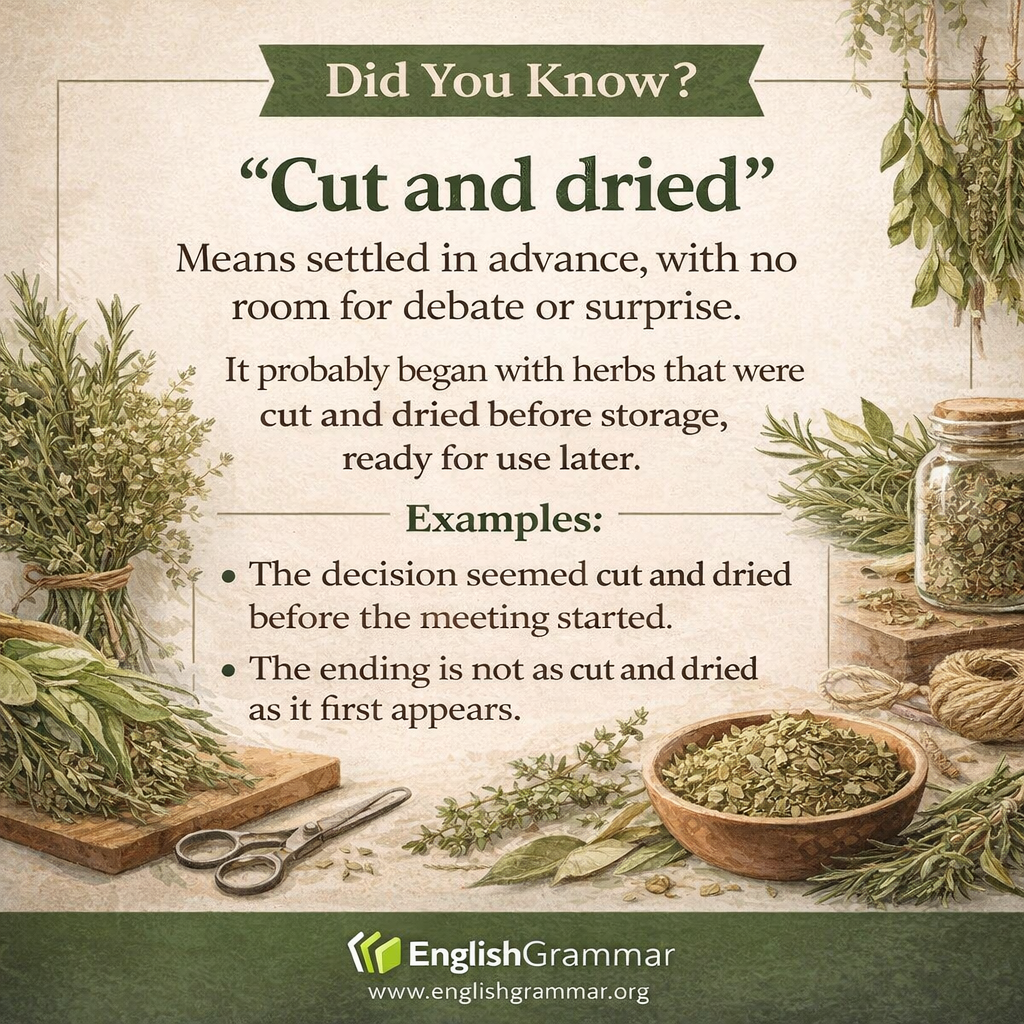
“Cut and dried” usually means already decided, fixed, or fully settled. If something is cut and dried, there is little uncertainty and not much chance that the outcome will change.
The phrase is widely believed to come from preparing herbs or plants. They were cut and then dried so they could be stored and used later. Because they had already been prepared in advance, the expression came to suggest something ready, settled, and no longer open to change.
Today, it often describes decisions, judgments, or situations. For example, The decision seemed cut and dried before the meeting started. In that sentence, the speaker suggests that the discussion was probably not going to affect the result.
It can also appear in negative form when a situation is more complicated than it first looks. For example, The ending is not as cut and dried as it first appears. Here, the meaning is that the answer is not simple or fully settled.
- Use it for outcomes that seem fixed in advance.
- Use it negatively when something turns out to be less certain than expected.
- It is an informal everyday expression, common in speech and writing.