
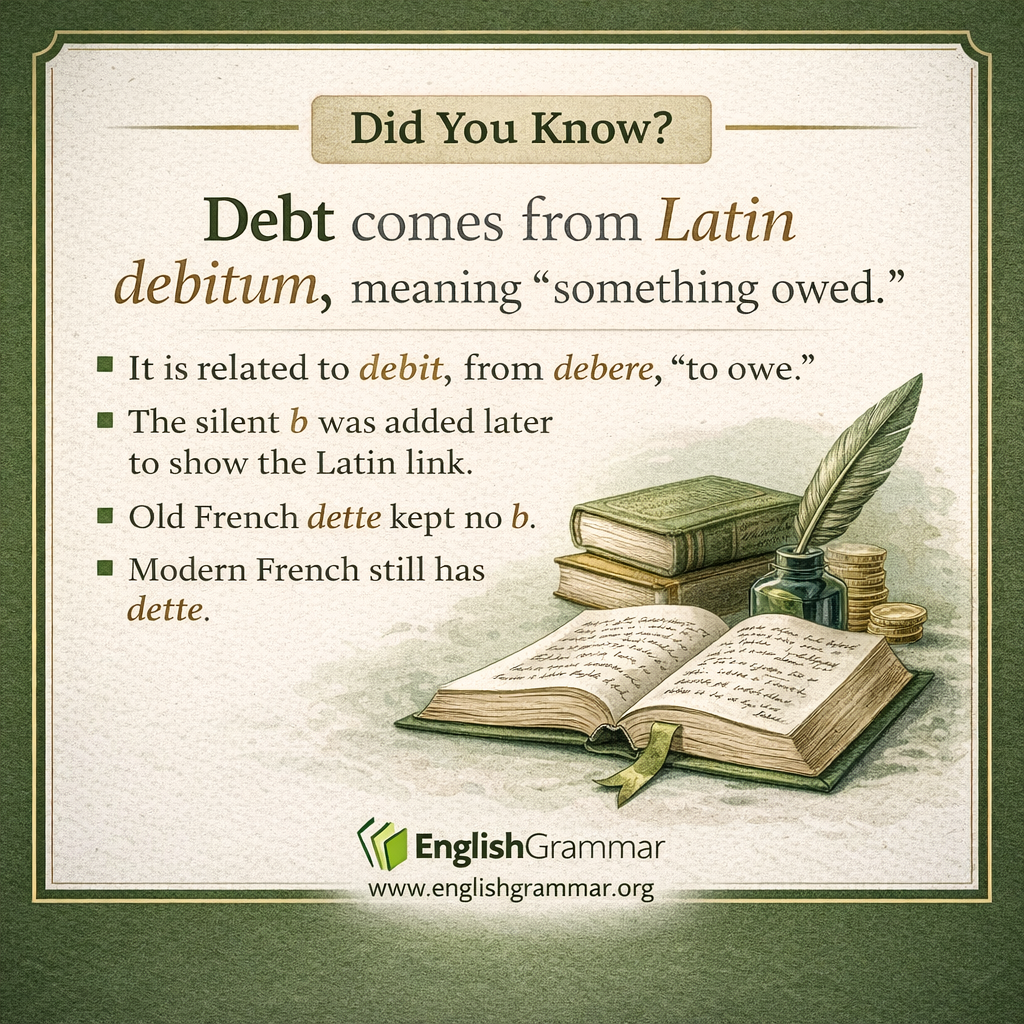
The English word debt ultimately comes from Latin debitum, which meant something owed. It is part of the same family as debit, both tracing back to the Latin verb debere, meaning to owe.
But if the word came through French, why is there a b in the modern spelling? In Old French, the word was spelled dette, without a pronounced b. English borrowed forms of the word from French, but later scribes and scholars restored the b in spelling to make the Latin origin more visible.
That is why English now writes debt with a silent b. The letter reflects the word’s history, not its pronunciation.
- Latin: debitum, something owed
- Old French: dette, no pronounced b
- English: debt, b restored in spelling
A useful contrast is debit, where the b is pronounced. Both words share the idea of owing, but English preserved that Latin letter in different ways.
