
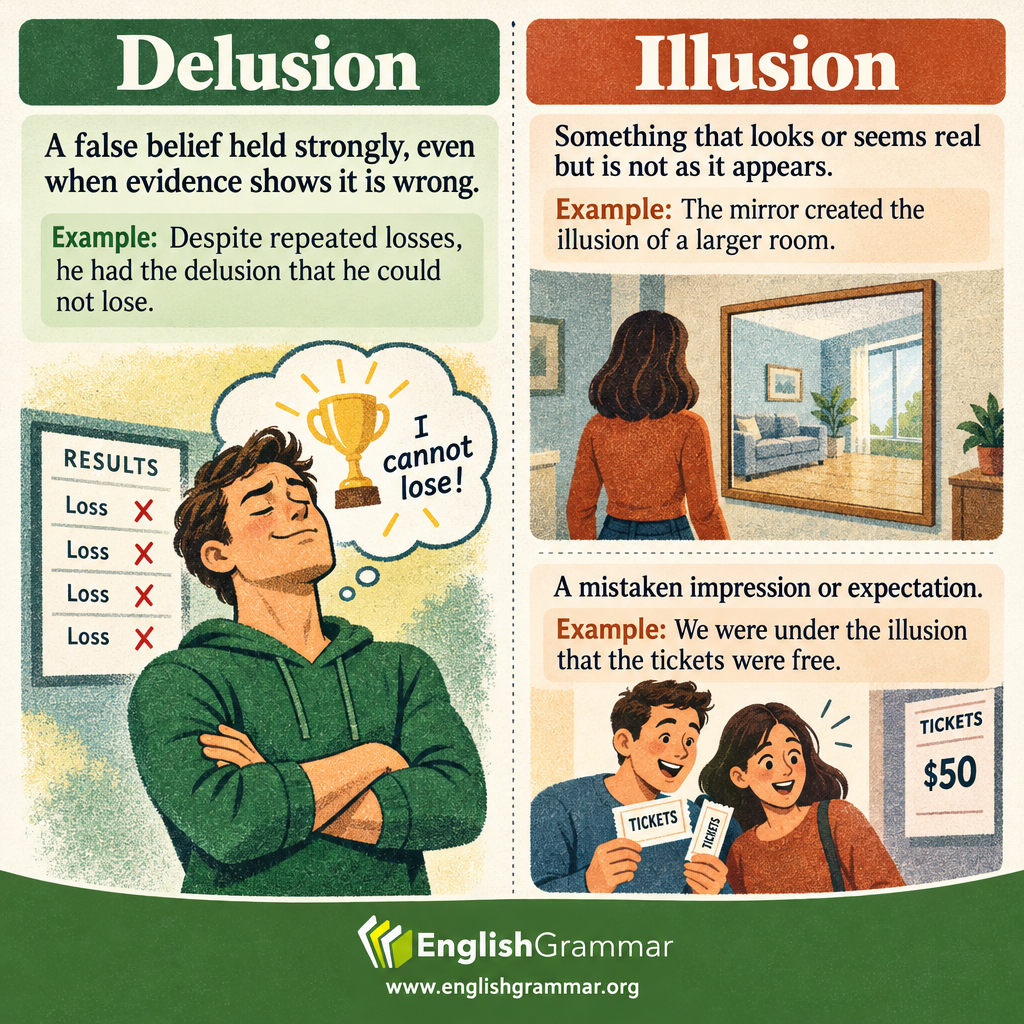
Delusion and illusion both involve something that is not true or not as it seems. The useful difference is usually between a strongly held false belief and a misleading appearance or impression.
A delusion is a false belief that someone holds strongly, even when evidence shows it is wrong. The word often suggests more than an ordinary mistake.
- She clung to the delusion that her business was thriving, despite months of unpaid bills.
This wording emphasizes her refusal to accept the evidence. The word also has a clinical use, so avoid casually using it to diagnose someone or describe any opinion you disagree with.
An illusion can be something that misleads your senses. A picture, reflection, or lighting effect may make something look different from how it really is.
- The painted ceiling created the illusion of an open sky.
It can also mean a mistaken impression or expectation, without any visual trick.
- We were under the illusion that breakfast was included in the room price.
Here, under the illusion that means the speakers believed something that turned out to be false. It does not necessarily suggest they continued believing it after learning the truth.
The meanings can overlap. Choose illusion for a deceptive appearance or mistaken impression; choose delusion when you want to emphasize a false belief held firmly despite contrary evidence.