
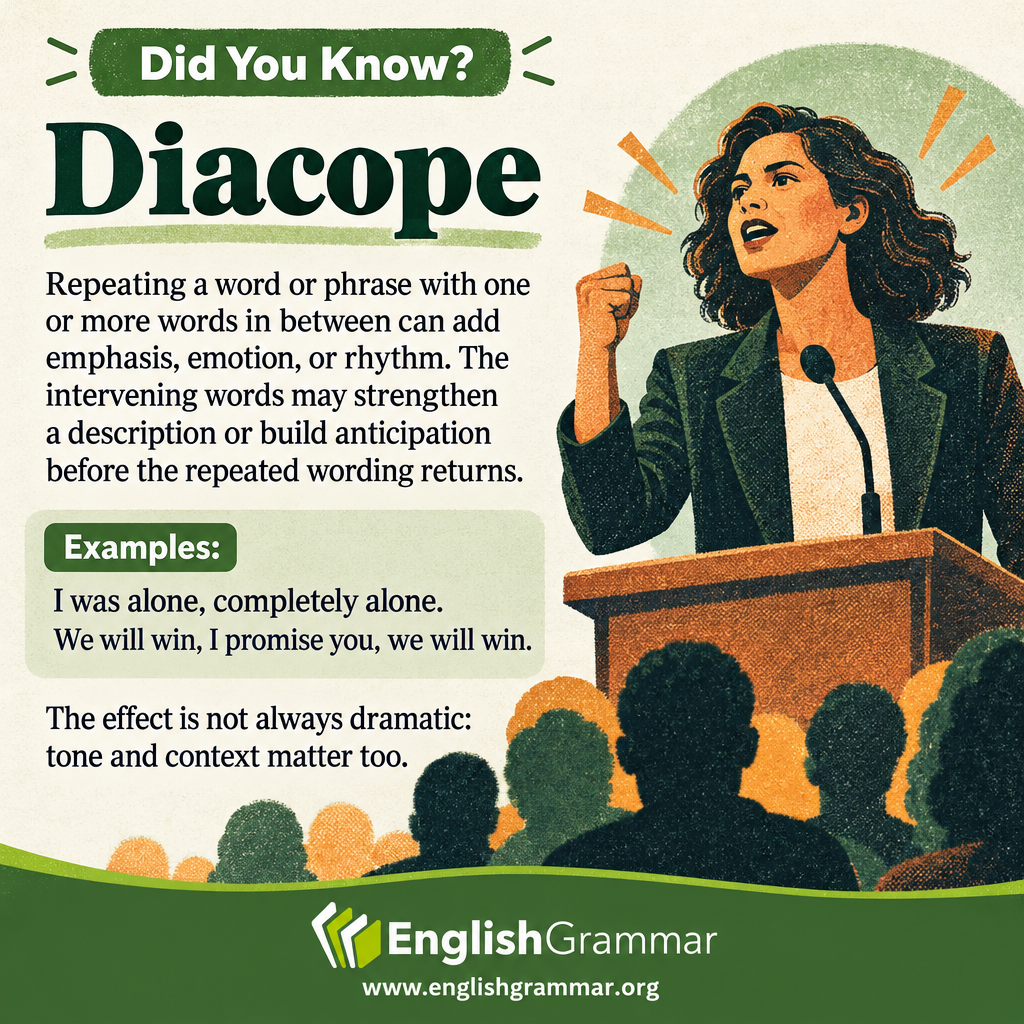
Diacope is the repetition of a word or phrase with one or more words between its appearances. The gap lets a speaker add detail, address someone, or build anticipation before returning to the repeated wording.
That return can make a sentence sound more emotional or dramatic. Compare “I need a break” with “I need a break, a proper break.” The second version stresses that just any pause will not be enough.
The words in the gap help shape the effect:
- Adding intensity: “It was cold, painfully cold.” The added word strengthens the description.
- Addressing someone: “Listen, Sam, listen!” The name makes the appeal personal, while the repetition adds urgency.
- Reinforcing a promise: “I will return, whatever happens, I will return.” Repeating the whole phrase makes the promise sound firm.
The pattern does not always create drama. In “It was a good day, a very good day,” the repetition can simply express warm satisfaction. Context, punctuation, and the speaker’s tone all influence how it sounds.
The key feature is the interruption between repeated words. “Wait, wait!” repeats a word immediately, so it does not show this particular pattern.
You can use this technique in dialogue, speeches, or personal writing when a feeling deserves extra emphasis. Use it selectively: frequent repetition may distract readers instead of helping them notice your main point.