
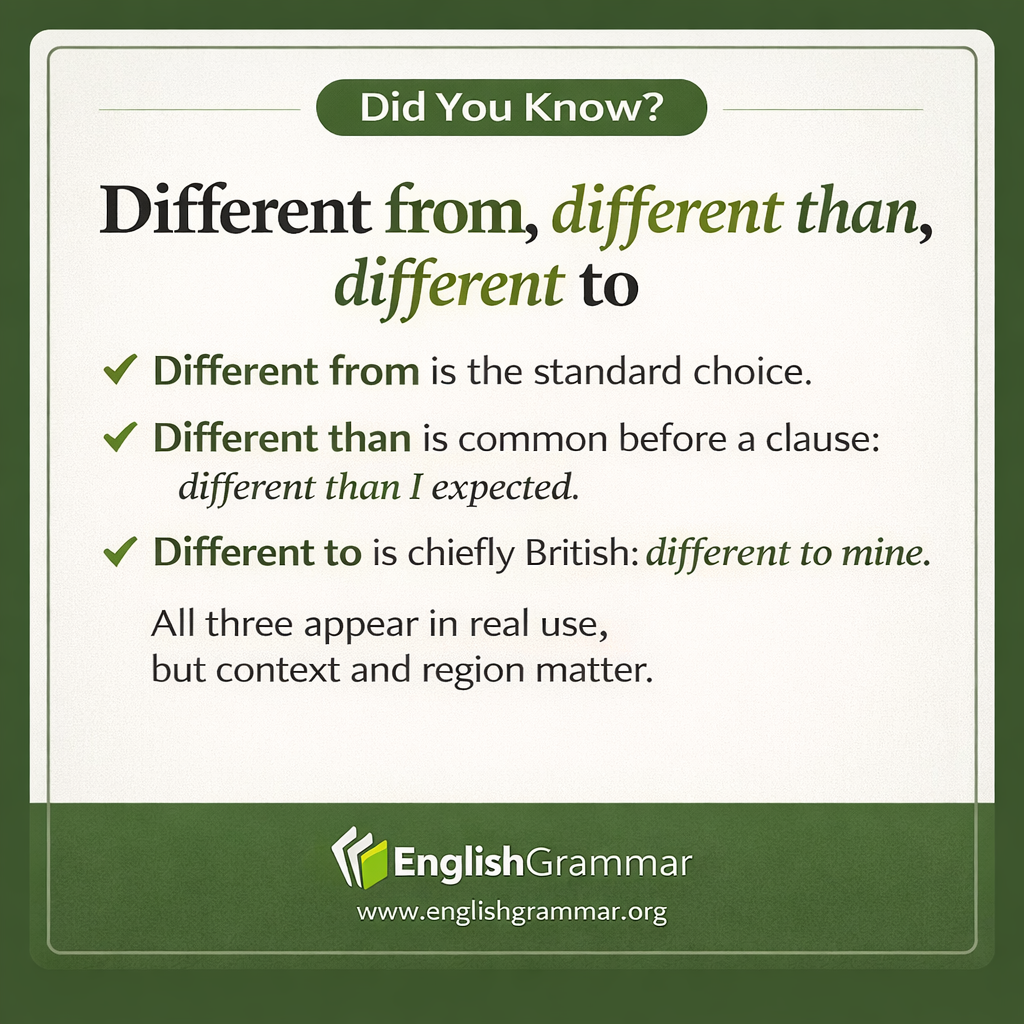
Different from is the most widely accepted and neutral choice in English. If you want the safest option in formal or general writing, use it: Your answer is different from mine.
Different than is common, especially in American English, when a full clause follows. It can sound smoother than rewriting the sentence: The trip was different than I expected. Many editors still prefer different from what I expected, but different than is common in real usage.
Different to is chiefly used in British English and is less common in American English. For example: This one looks different to the old version. In many international contexts, different from will sound more natural to the widest audience.
- Use different from for the safest general choice.
- Use different than especially before a clause.
- Use different to mainly in British English.
If you are unsure, choose different from. It is clear, standard, and works well in almost every situation.