
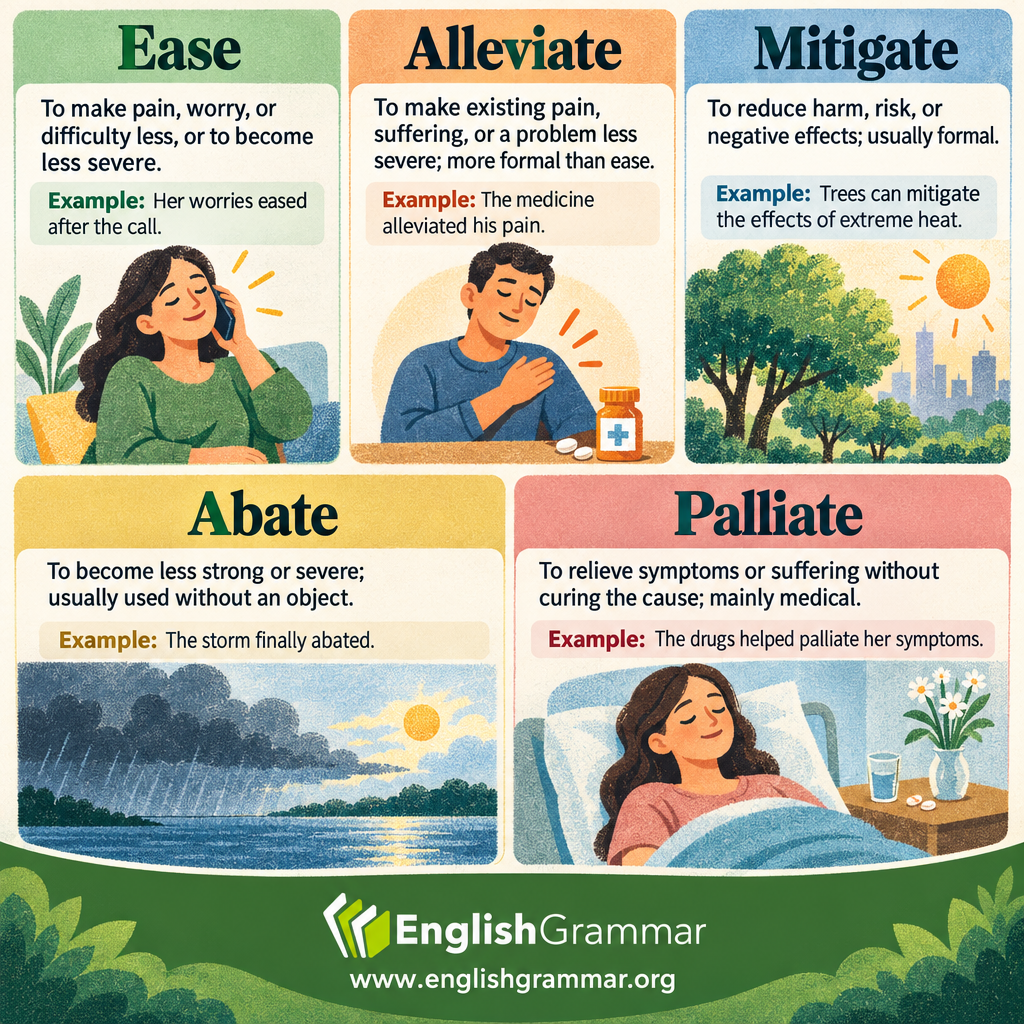
These five verbs all describe some kind of reduction, but they emphasize different things. The best choice depends on what is being reduced and how you describe the change.
- Ease is the broad, everyday choice for making pain, worry, or difficulty less. It can take an object or describe a change: A clear checklist eased the task. The tension eased.
- Alleviate usually sounds more formal. Use it for reducing existing pain, suffering, or a problem, without necessarily removing it: The extra buses helped alleviate overcrowding. Unlike ease, it normally needs an object.
- Mitigate focuses on reducing harm, risk, or negative effects. It is common in formal writing about plans and protective measures: Better drainage can mitigate flood damage. It can describe limiting future harm, not just reducing an existing problem.
- Abate usually describes something becoming less intense. In everyday usage, the thing that weakens is the subject: The wind abated overnight. This does not mean the change must happen without outside help. Uses with an object exist, especially in technical or legal contexts.
- Palliate is mainly medical in this sense. It means relieving symptoms or suffering without curing the underlying cause: The treatment aims to palliate breathlessness. It is not the usual everyday substitute for ease.
Some overlap is natural. A policy might alleviate hardship while also mitigating economic harm. The first phrase emphasizes an existing burden; the second emphasizes limiting damaging effects. These are useful tendencies, not rigid boundaries.