
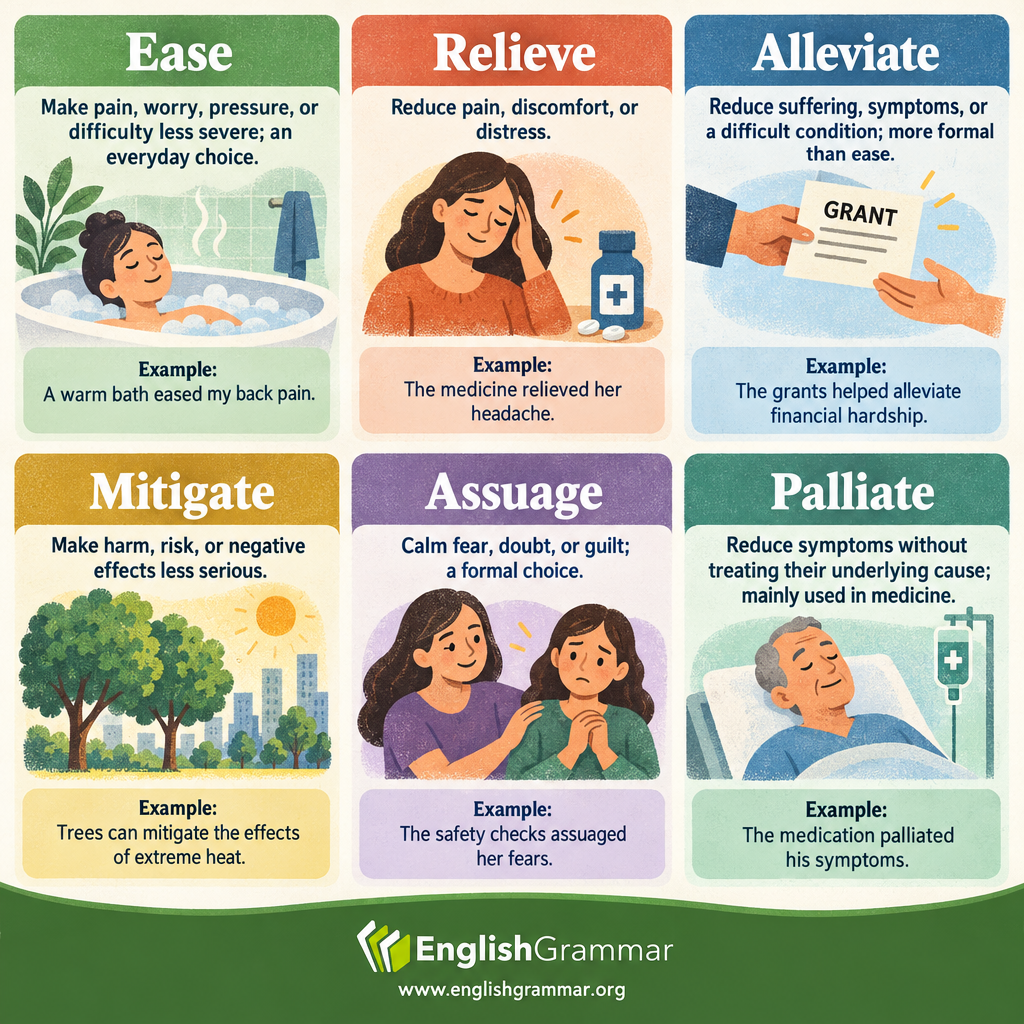
These six verbs overlap: all can describe making something less unpleasant or severe. The best choice often depends on what you are reducing and how formal the situation is.
- Ease is a flexible, everyday choice for making pain, worry, pressure, or difficulty less severe. A clear schedule can ease the pressure on staff.
- Relieve commonly describes reducing pain, discomfort, or distress. The eye drops relieved her irritation. It also works with a person: I was relieved to hear that everyone was safe.
- Alleviate is more formal and commonly appears with suffering, symptoms, and difficult conditions. The new housing program aims to alleviate overcrowding. It suggests improvement, not necessarily a complete solution.
- Mitigate usually focuses on making harm, risk, or negative effects less serious. The barriers helped mitigate flood damage. It is common in professional, legal, and policy writing.
- Assuage is formal and often describes calming fear, doubt, or guilt. Her explanation did little to assuage his doubts. It can also describe satisfying hunger.
- Palliate is formal and mainly medical: it means reducing symptoms without treating their underlying cause. The treatment can palliate symptoms but cannot cure the disease.
These are tendencies, not strict boundaries. You can ease pain, relieve pain, or alleviate pain. The first two sound more everyday; the third sounds more formal. None of these three verbs, by itself, promises a cure.