
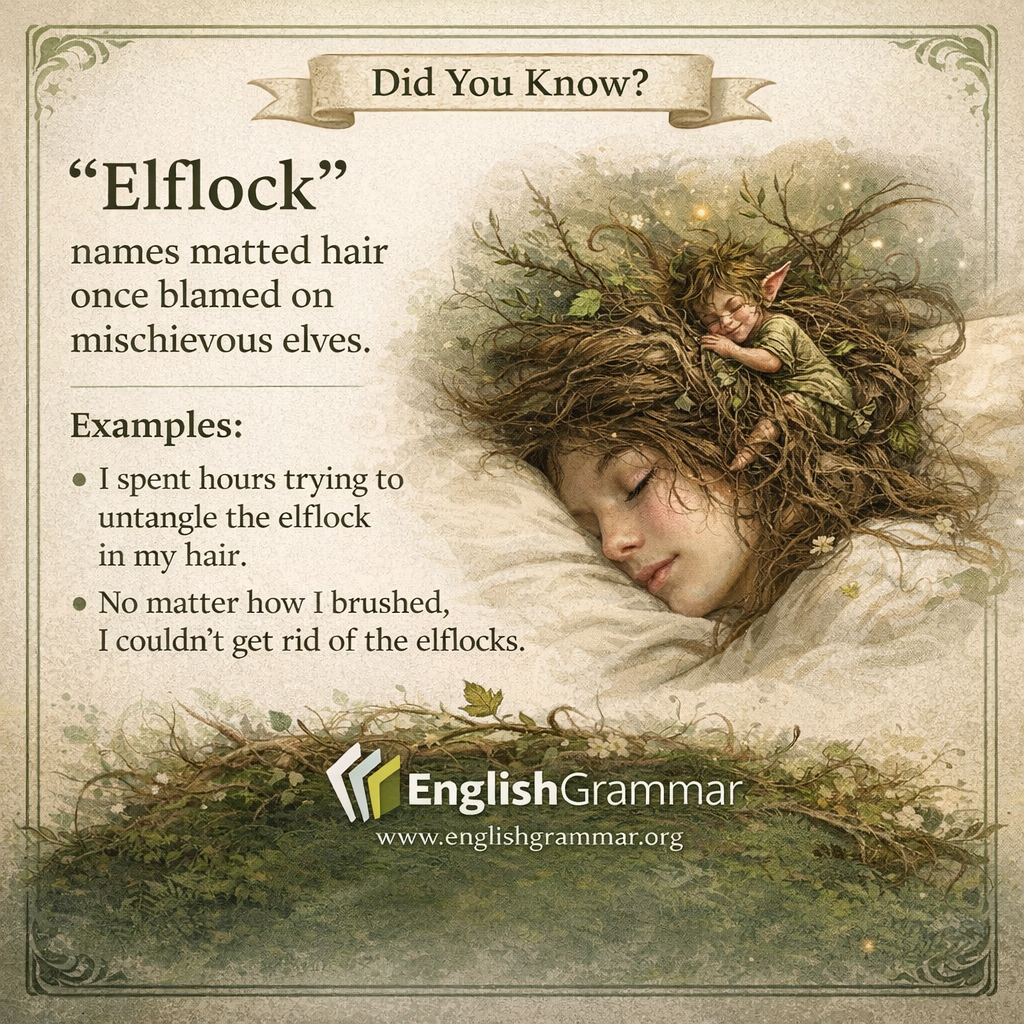
Elflock is an old noun for a lock or mass of hair that has become tangled and matted. Its structure is simple: elf plus lock, where lock means a tress of hair rather than a fastening device.
The name comes from folklore. When people woke with stubborn knots in their hair, or found similar tangles in a horse’s mane, elves could be blamed for the mischief. The word therefore records both a physical condition and an imaginative explanation for it.
William Shakespeare helped make the term memorable in Romeo and Juliet. In Mercutio’s Queen Mab speech, the fairy is said to create “elf-locks” in hair. The spelling has varied over time, and readers may encounter elflock, elf-lock, or the plural elf-locks.
In modern English, the word is rare and usually sounds literary, playful, or historical. It can be a countable noun when it refers to an individual tangle:
- After sleeping beside the open window, Mira found an elflock twisted above her ear.
- The groom patiently combed the elflocks from the pony’s mane.
For ordinary conversation, people are more likely to say tangle, knot, or matted hair. Choosing elflock adds a hint of folklore, suggesting that the mess looks too mysterious to have happened by itself.