
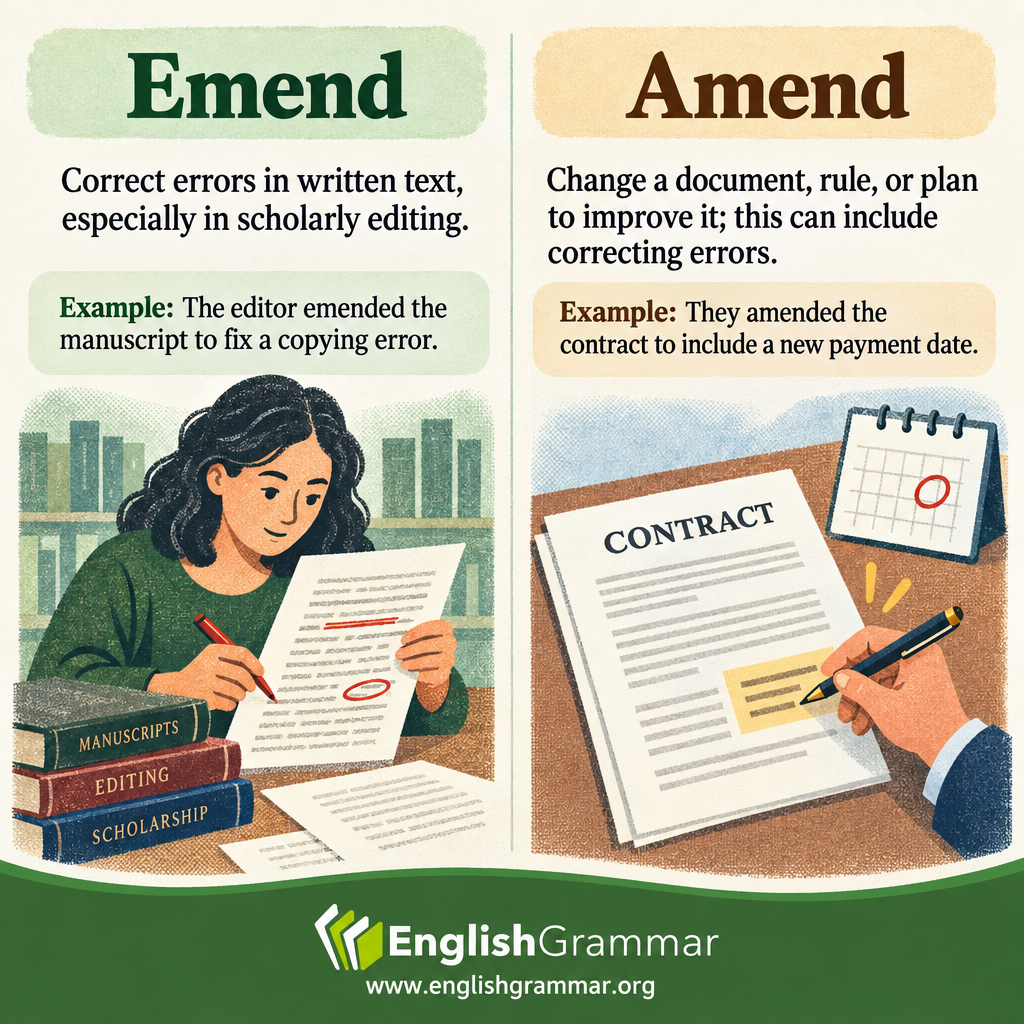
Emend and amend both involve making something better, but they have different usual uses. The key question is whether you are correcting errors in a text or making a broader change.
Emend means to correct errors in written text. It is a formal word, especially common in scholarly editing, where editors examine manuscripts and try to establish the correct wording. For example: The scholar emended the passage after comparing two early copies. Here, the purpose is to fix a problem in the text, not simply to update its message.
Amend means to change something to improve it or make it more suitable. Common objects include laws, contracts, rules, documents, and plans. For example: The committee amended the rules to allow online voting. The original rules were not necessarily mistaken; the committee wanted them to work differently.
- The editor emended the quotation to correct a copying error. The focus is textual accuracy.
- We amended our travel plans after the train strike was announced. The focus is adapting a plan.
The distinction is not absolute: amend can also refer to correcting written material. You can amend a report to fix an error or add information. Choose emend when you specifically mean correcting the text, especially in a scholarly context. In everyday writing, correct or edit may sound more natural.