
• Skip to primary navigation
  • Skip to main content
  • Skip to primary sidebar
Home of English Grammar
  • Home
  • Course
  • Exercises
  • Grammar Rules
  • Matches
  • Posts
  • Tools
    • Grammar Checker
    • Very Replacer
    • Word Counter
  • Vocabulary Lists
    • My Word Lists
  • For Teachers
  • Archives
    • Social Media Posts
    • Writing Guides
  • Sign in
  • Join free

Why “engine” once meant ingenuity

November 20, 2026

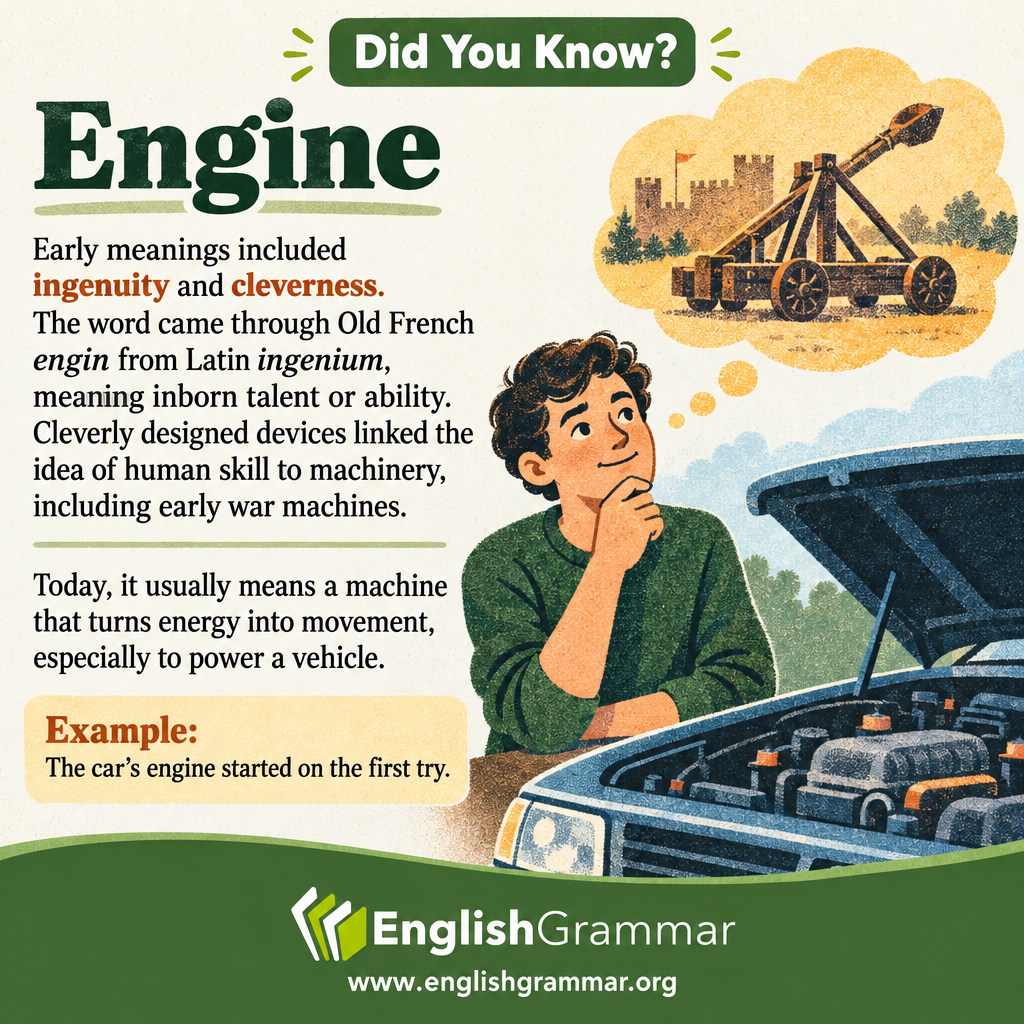
"Engine" originally meant ingenuity, not machinery.

An engine is usually a machine that turns energy into movement, often to power a vehicle. But the word’s history begins with human ability, not with fuel or moving parts.

English borrowed the word from Old French engin, which had meanings including skill, ingenuity, and a device. Behind that French word is Latin ingenium, meaning inborn talent or ability. Early English meanings also included ingenuity and cleverness.

The connection is easier to understand when you think about invention. A complicated device is something a skilled person thinks up and makes. The word could therefore refer not just to cleverness, but also to something cleverly designed. Historically, it was used for mechanical devices, including machines used in warfare, long before modern vehicle engines existed.

In modern English, context helps identify the meaning:

  • A power-producing machine: “The mechanic checked the boat’s engine before we left.” This is the familiar physical meaning.
  • A computer system that performs a particular task: “This search engine helps users find research papers.” Here, the word describes software rather than a machine with moving parts.

You may also hear it used figuratively for something that drives progress: “Small businesses are an engine of local growth.” The businesses do not produce mechanical movement; they help economic activity develop. In everyday conversation about cars, boats, or aircraft, however, the physical machine is usually the intended meaning.

Improve your English grammar, vocabulary and writing

We take you step by step from beginner to advanced, even if you struggled with English at school or have always had trouble remembering the rules.

  • 11 modules, 124 lessons and 819 questions
  • Just log in and learn anytime and anywhere
  • Your progress is saved in your account
  • Download the 2027 Grammar Guide (PDF)
Join free

Already have an account? Sign in

See what’s in the course

Primary sidebar

2.4M760.9K165.9K

Free 2027 Grammar Guide

  • Download Grammar Guide (PDF)
  • Online grammar course, A1 to C2
  • Weekly exercises and vocabulary
  • Join over 3 million English learners

We respect your privacy. Unsubscribe anytime.

Already have an account? Sign in

Grammar Checker - Try Now

Rankings

Home of English Grammar

Free exercises, a step-by-step grammar course, rules and vocabulary lists, with new exercises every week. Join the leading English grammar site with over 3 million followers.

Join free

Learn

  • Exercises
  • Grammar course
  • Level test
  • Matches
  • Grammar rules
  • Vocabulary lists
  • Writing guides
  • Online tools

More

  • Top social media posts
  • Various posts
  • For teachers
  • Contact

Account

  • Join free
  • My word lists
  • Free grammar guide (PDF)

Copyright © 2026 EnglishGrammar.org

  • Disclaimer
  • Privacy policy
  • Terms
  • Sitemap