
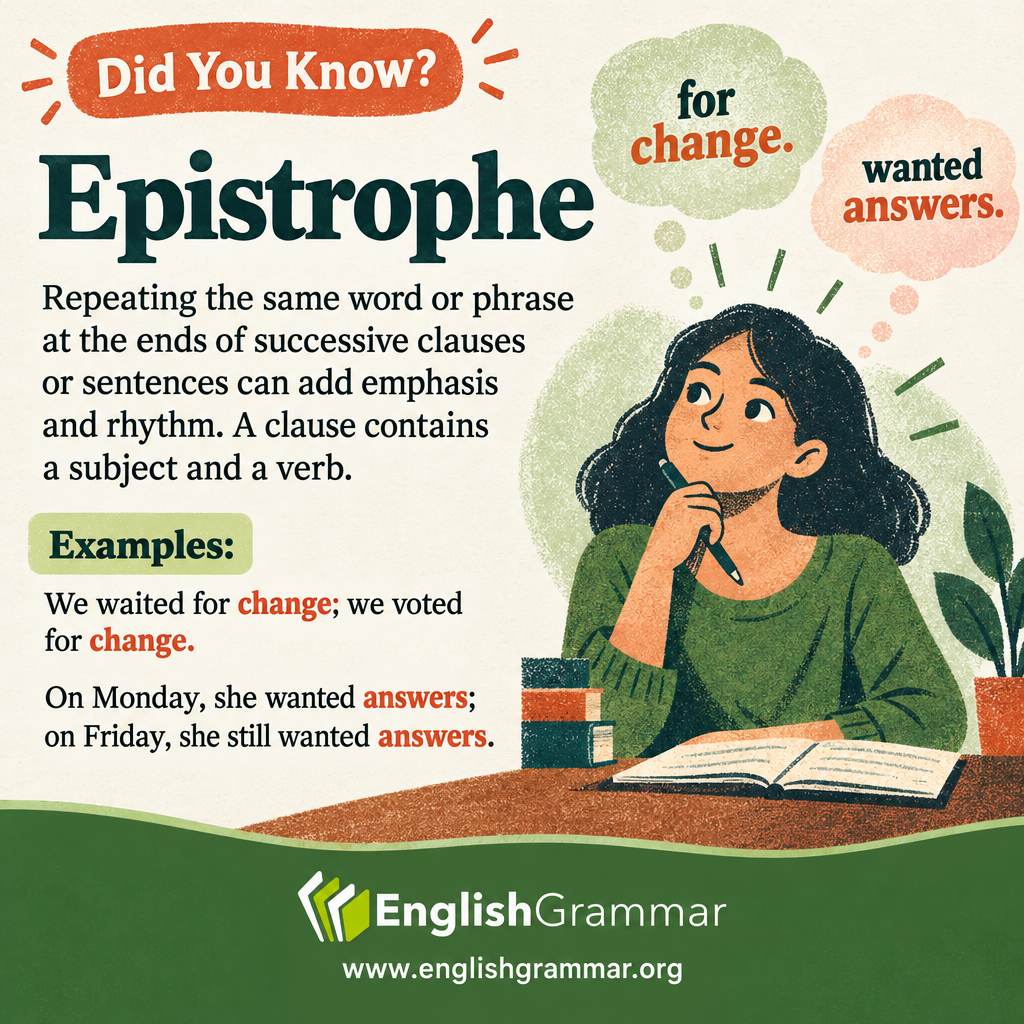
Epistrophe is the repetition of the same word or phrase at the ends of successive clauses or sentences. A clause is a group of words containing a subject and a verb. This pattern gives repeated endings extra emphasis and creates a noticeable rhythm.
The repeated words often name the idea the speaker wants the audience to remember. The beginning changes, but each part arrives at the same ending.
- We need a plan for everyone; we need housing for everyone; we need opportunities for everyone.
- The coach believed in us. Our families believed in us. Eventually, we believed in us.
In the first example, each clause ends with for everyone, emphasizing inclusion. In the second, the repeated ending believed in us builds toward the team’s growing confidence.
You may encounter this technique in speeches, songs, advertising, and persuasive writing. It can make a message sound urgent, determined, or emotional, depending on the words and situation. It is a stylistic choice, not a requirement for a correct sentence.
Compare it with anaphora, which repeats wording at the beginning: We will listen. We will learn. We will act. Here, we will introduces each sentence rather than closing it.
When checking for epistrophe, look for matching endings across nearby units. Simply using a word several times somewhere in a paragraph does not establish this particular pattern.