
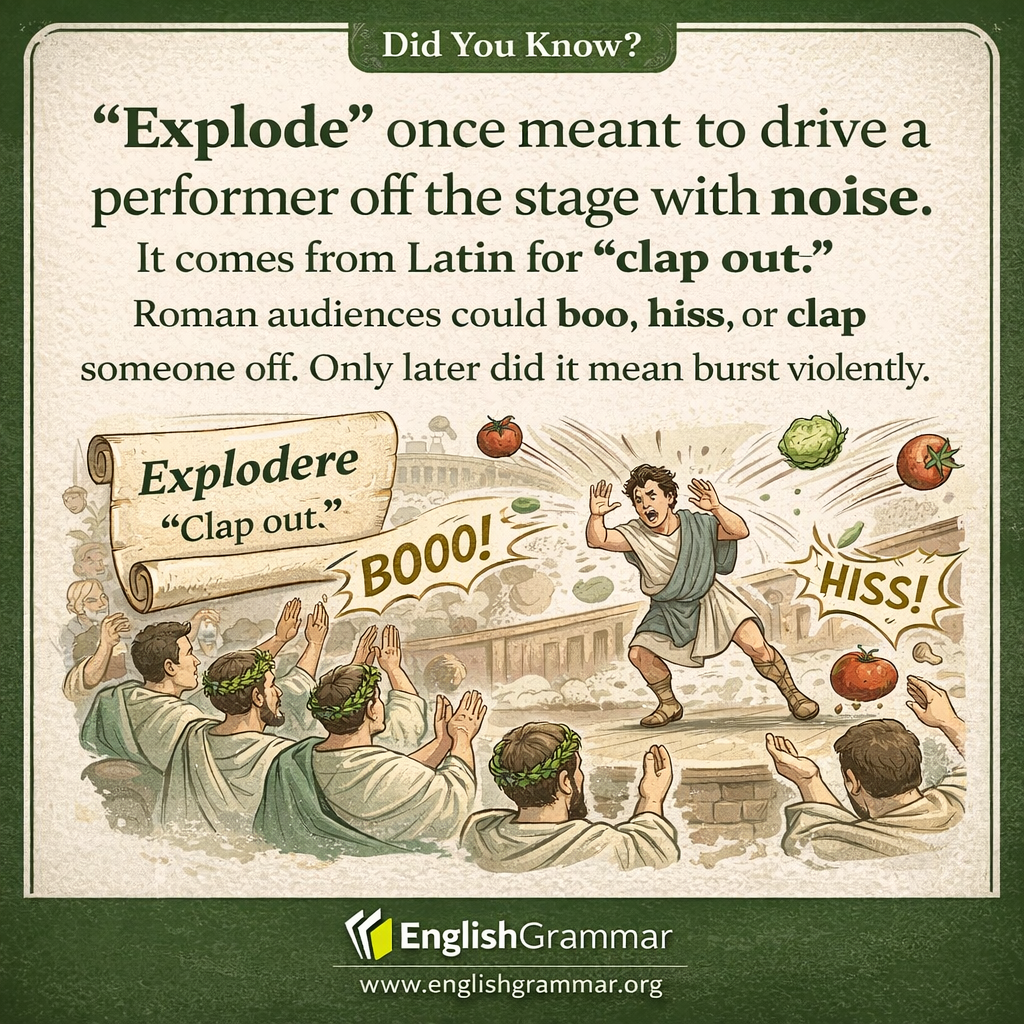
Explode did not originally refer to a blast. In earlier English, it could mean to drive a performer from the stage with noisy disapproval. That sense came through Latin explodere, which literally suggested clapping someone out.
In Roman performance culture, audiences did not always sit quietly. They might show approval, but they could also force a bad performer off with hissing, booing, or clapping meant to reject rather than praise. In that context, to explode a performer was to push them offstage through noise.
Later, the word developed the meaning most people know now, to burst violently. That newer physical sense eventually became dominant.
- Older sense: “The crowd exploded the actor from the stage.”
- Modern sense: “The boiler exploded.”
The older meaning survives mostly in word history, but it shows how meanings can shift dramatically over time. A word that once described audience reaction now usually describes a sudden burst, often with force, sound, or destruction.