
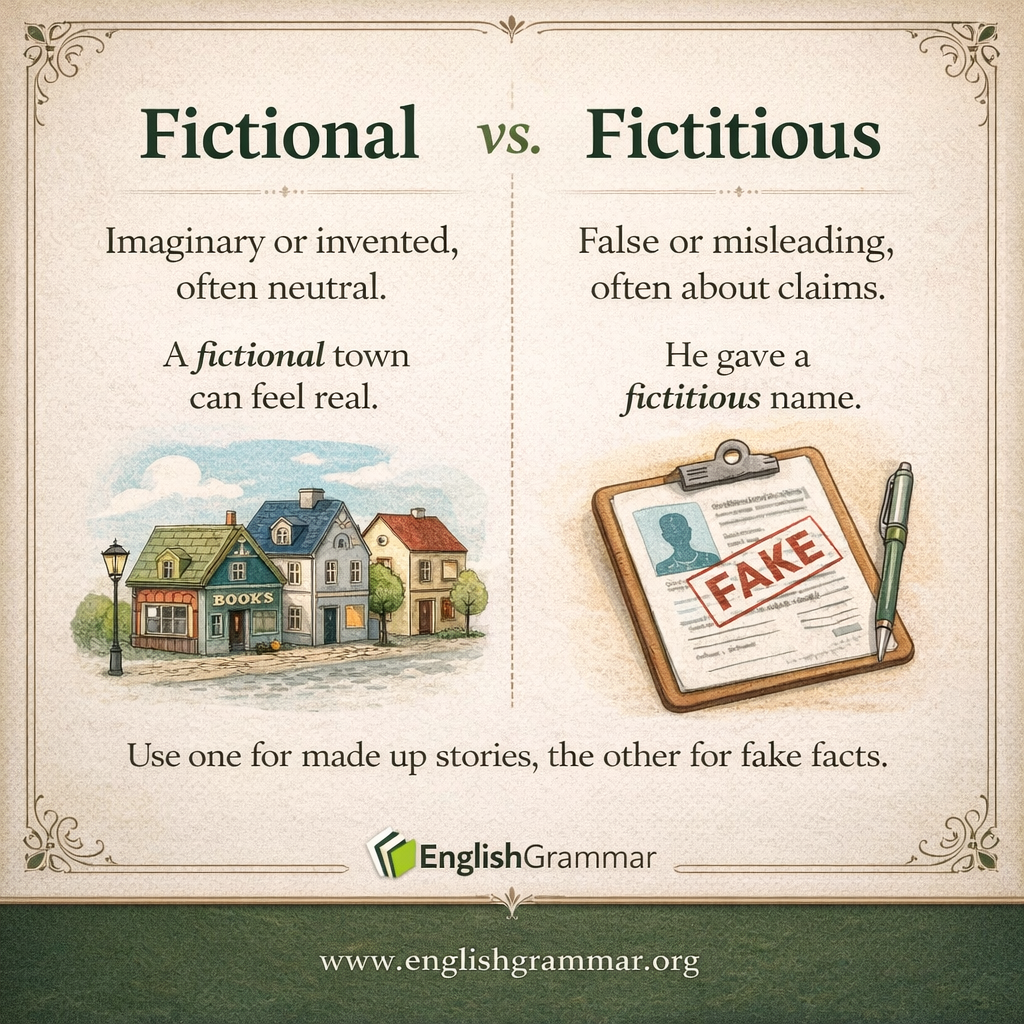
Fictional usually means invented for a story. It is the normal choice for novels, films, characters, places, and events created by imagination. If something belongs to a made up narrative, this word fits.
Example: The series is set in a fictional city.
Fictitious often means false or deliberately invented, especially when the point is that something is not real in an everyday, factual sense. It commonly appears with names, accounts, excuses, identities, and claims.
Example: He used a fictitious address on the form.
The overlap is real, because both words can refer to something invented. The difference is tone and context:
- Fictional sounds natural for creative works.
- Fictitious sounds more natural for deception, legal language, or false information.
A simple memory tip helps: use fictional for fiction, and use fictitious when something is made up in a way that may hide the truth.
So, a detective in a novel is fictional, but a name used to mislead someone is fictitious.