
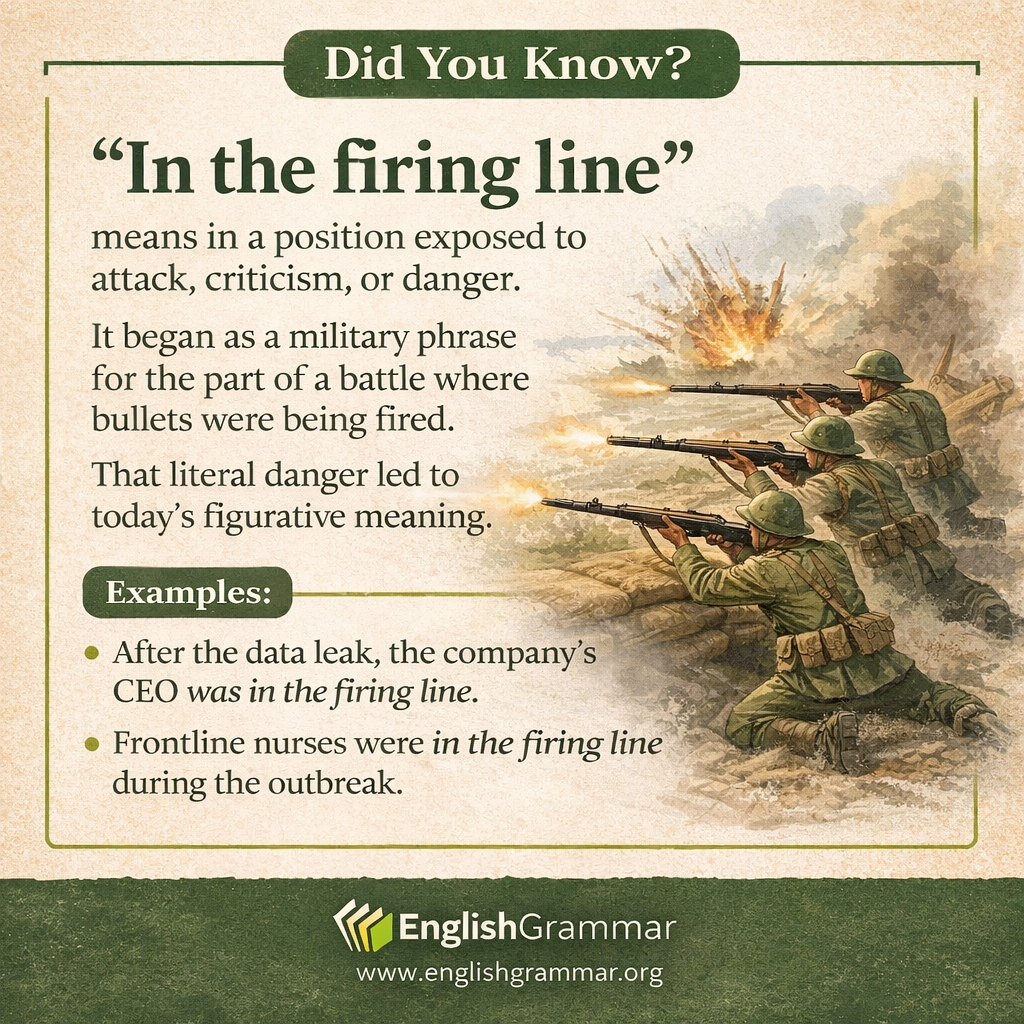
In the firing line originally referred to the area in battle where soldiers were directly exposed to gunfire. If you were in that line, you were in immediate physical danger.
That literal meaning explains the modern figurative one. Today, the phrase usually means being exposed to attack, criticism, blame, pressure, or risk. The danger is often not physical, but the image is still strong: you are the person or group most directly exposed.
It is commonly used in news, business, politics, and everyday conversation.
- After the failed product launch, the marketing team was in the firing line.
- The minister found himself in the firing line after the report was published.
- In some situations, the phrase can still suggest real physical danger, not just criticism.
This is why the expression works so well. It connects a clear battlefield image with modern situations where someone is under intense pressure or attack.