
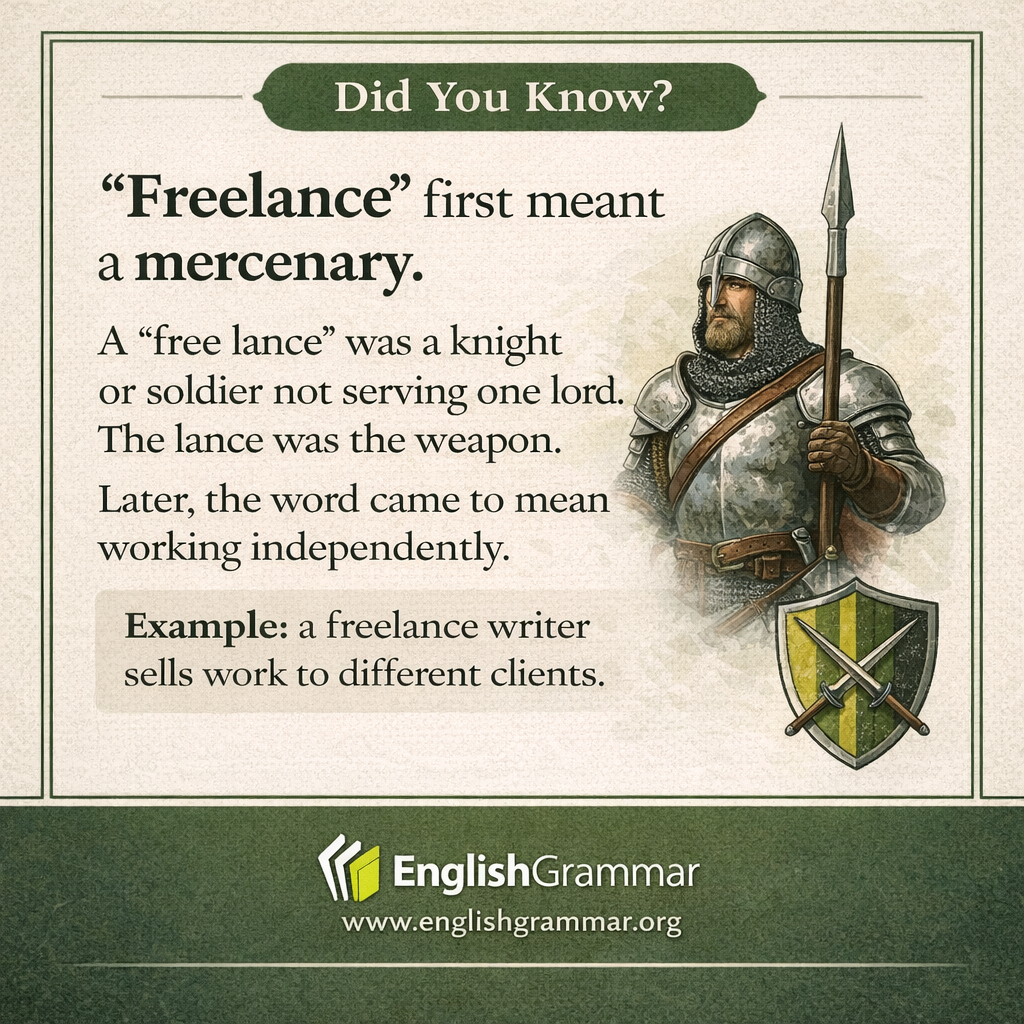
Freelance did not begin as a business word. It originally referred to a mercenary, especially a knight or soldier who was not tied to one lord and could sell military service where it was wanted.
The image behind the word is quite literal. A lance was a weapon used by mounted fighters, and a free lance was a lance available for hire. In other words, the fighter was independent, not permanently attached to one ruler or army.
Over time, the term moved away from war and into ordinary work. Today, a freelancer is someone who works independently and takes projects from different clients instead of having one long term employer.
- A medieval sense: a hired soldier serving where he was paid.
- A modern sense: a freelance writer selling articles to several publications.
- Another common example: a freelance designer working with multiple businesses.
This is a good example of how English words often keep an old core idea while changing context. The core idea in freelance is still independence, but the battlefield has been replaced by the workplace.