
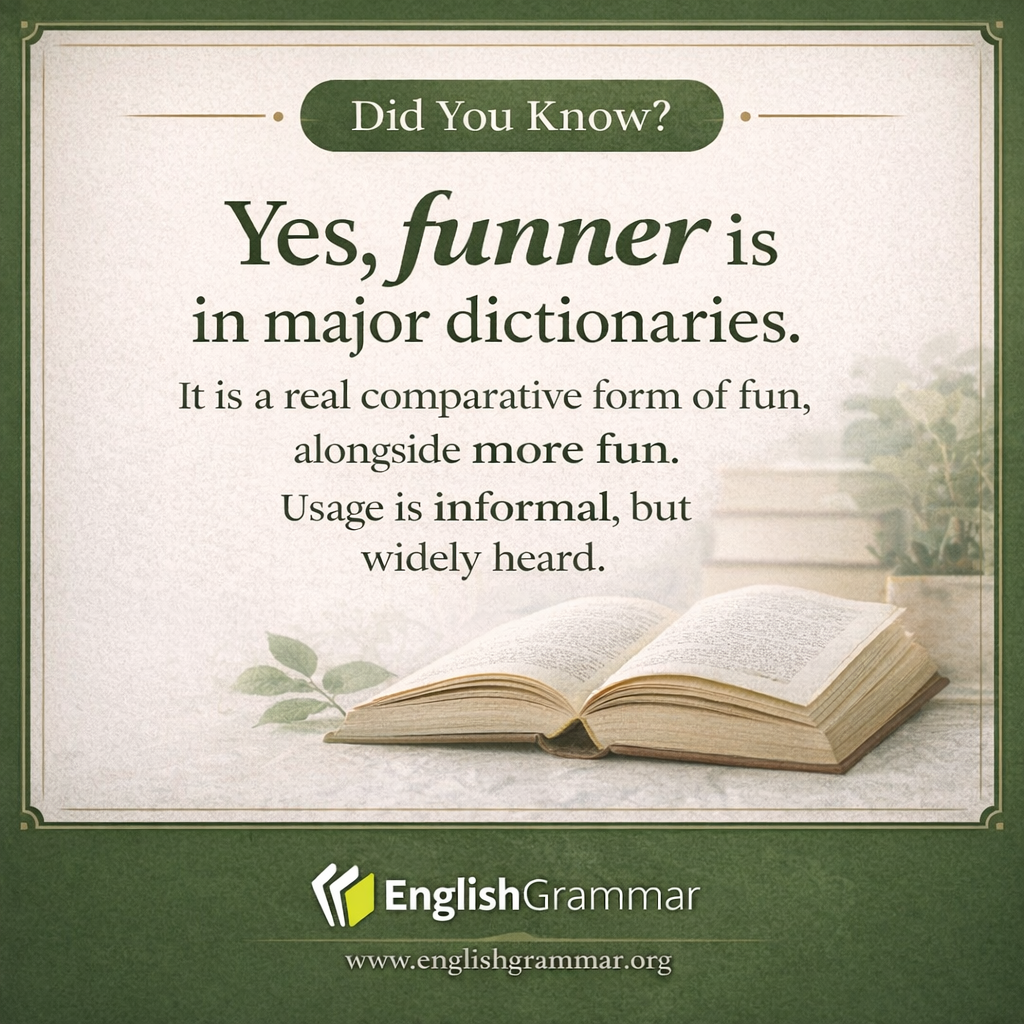
Funner shows up in major dictionaries because dictionaries record how English is actually used, not just how some people think it should be used. In everyday speech and casual writing, many speakers form the comparative of fun the same way they do with short adjectives: fun, funner, funnest.
That does not mean everyone prefers it. Many style guides and teachers still recommend more fun in formal contexts, especially in careful academic or professional writing. The key point is that both options are widely understood, and dictionary entries typically label funner as informal.
Examples:
- That game was fun, but the sequel is funner. (casual)
- The sequel is more fun than the original. (neutral to formal)
Why the debate exists: fun started as a noun, and its rise as an adjective is relatively modern compared with older adjectives. As it became more adjective like, speakers naturally tried standard adjective patterns, including adding -er and -est.
A practical tip: if you are writing for a formal audience, choose more fun. If you are aiming for a conversational voice, funner can sound natural, especially in dialogue.
