
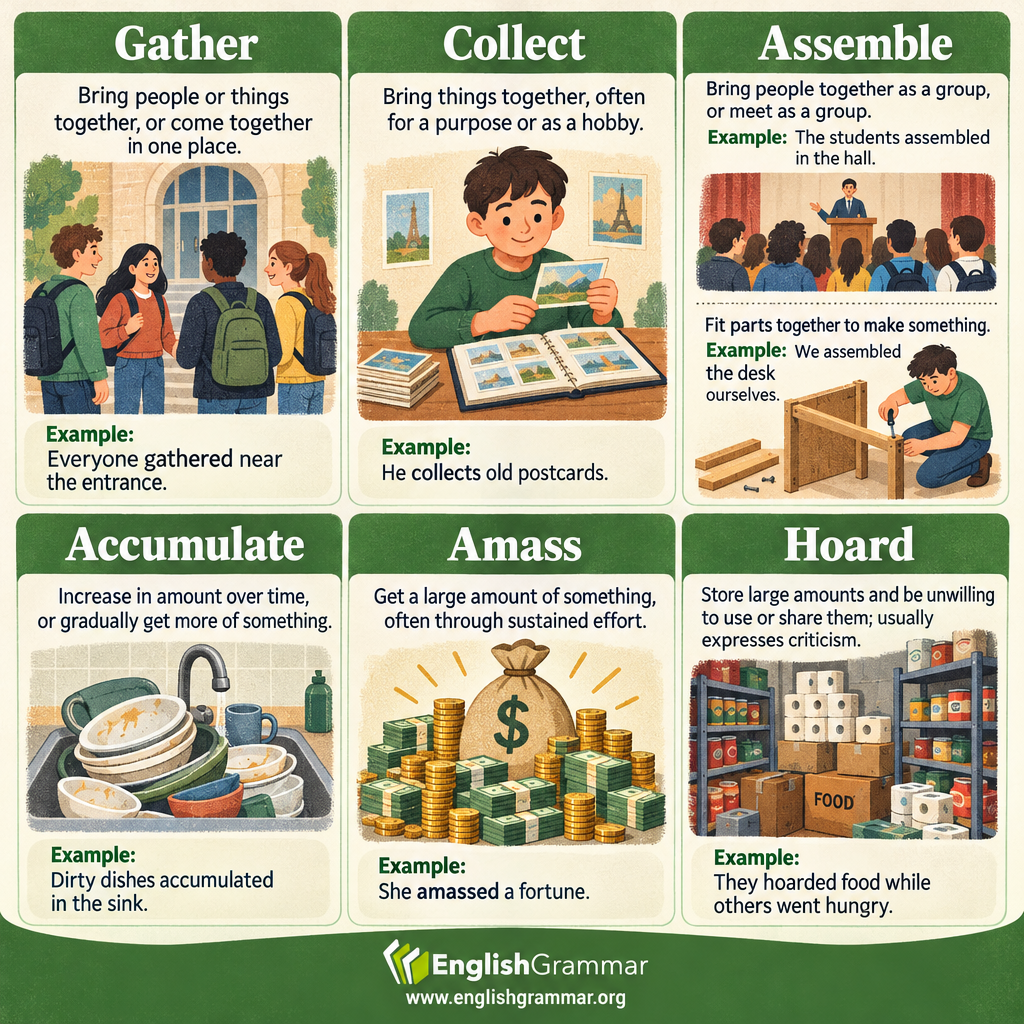
These six verbs can describe bringing things together, but they emphasize different details. Some describe people meeting; others suggest gradual growth, large quantities, or keeping too much.
- Gather is a broad choice for bringing people or things together. We gathered wood for the fire. People can also come together themselves: The neighbors gathered outside.
- Collect often suggests a purpose, such as a hobby, study, or practical task. The students collected leaves for a science project. It does not always mean keeping something permanently.
- Assemble can mean bringing people together as a group: The coach assembled the team. It also means fitting parts together: We assembled the new bookshelf.
- Accumulate emphasizes an amount increasing over time, often without a deliberate plan. Dust accumulated behind the sofa. It can also describe intentional activity: She accumulated savings over several years.
- Amass emphasizes getting a large amount, often through sustained effort. The researcher amassed a huge collection of interviews. It is stronger than simply saying that someone collected something.
- Hoard suggests storing large amounts and being unwilling to use or share them. It usually sounds critical. Some shoppers hoarded flour during the shortage.
These choices overlap. You could gather or collect information, but collect often sounds more systematic. Calling someone’s possessions a hoard, rather than a collection, changes the attitude: it suggests excessive keeping, not simply an interest or hobby.