
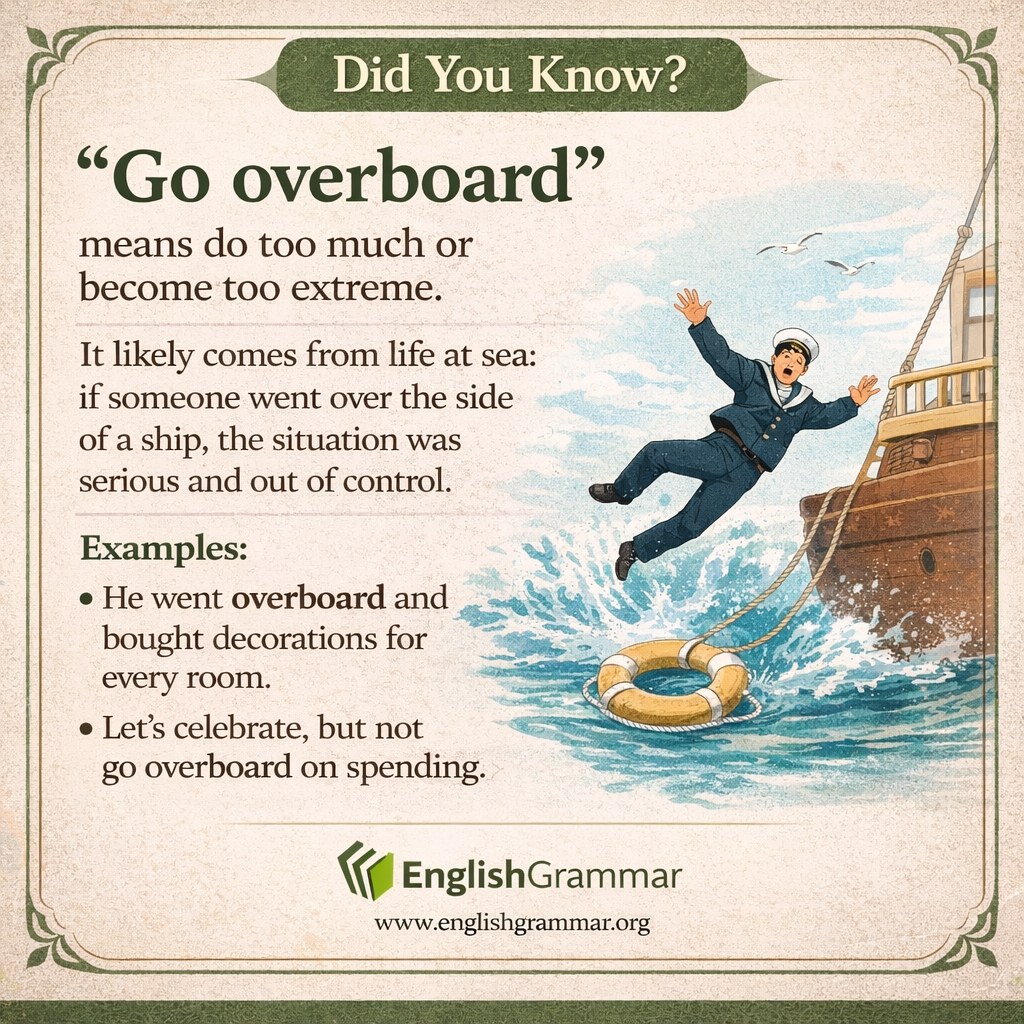
Go overboard means to do too much, react too strongly, or become excessive. It is usually used when someone passes a sensible limit.
The expression likely comes from life at sea. If a person or object went over the side of a ship, it was a serious event that was sudden, dangerous, and hard to control. That sense of something going beyond a safe boundary helps explain the modern meaning.
Today, people use it for money, emotions, planning, gifts, rules, and many other everyday situations. It often suggests that good intentions became too much.
- He went overboard and bought decorations for every room.
- The teacher wanted the project to be creative, but some students went overboard and made it far too complicated.
- It is fine to be helpful, but do not go overboard with advice people did not ask for.
This idiom is common in informal English. You can use it for both serious and light situations, usually to suggest excess rather than balance.