
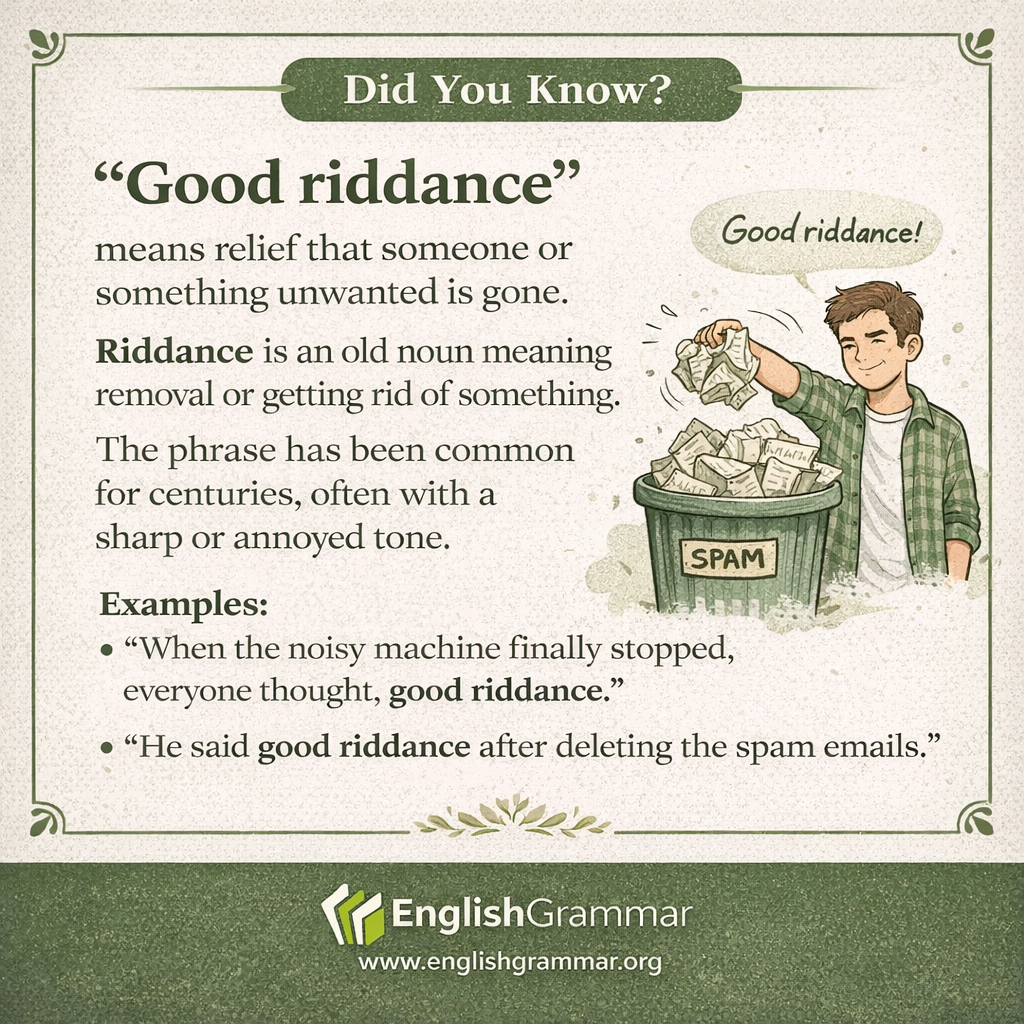
Good riddance means you are glad that a person, thing, or problem is gone. It expresses relief, but it often sounds sharp, rude, or openly annoyed.
The key word is riddance, an old noun meaning removal or getting rid of something. So the phrase literally suggests that getting rid of the thing was good. English has used it for centuries, which helps explain why it sounds fixed and idiomatic today.
People usually say it after an unpleasant situation ends, or when something unwanted disappears.
- When the broken printer was finally replaced, the staff thought, “Good riddance.”
- After I cleared out hundreds of junk messages, I muttered, “Good riddance.”
Be careful with tone. It is common and natural about spam, clutter, delays, or faulty equipment. It can sound much harsher when used about a person, because it suggests strong dislike and no regret about their departure.
A softer alternative in many situations is simply, I am glad that is over or what a relief.