
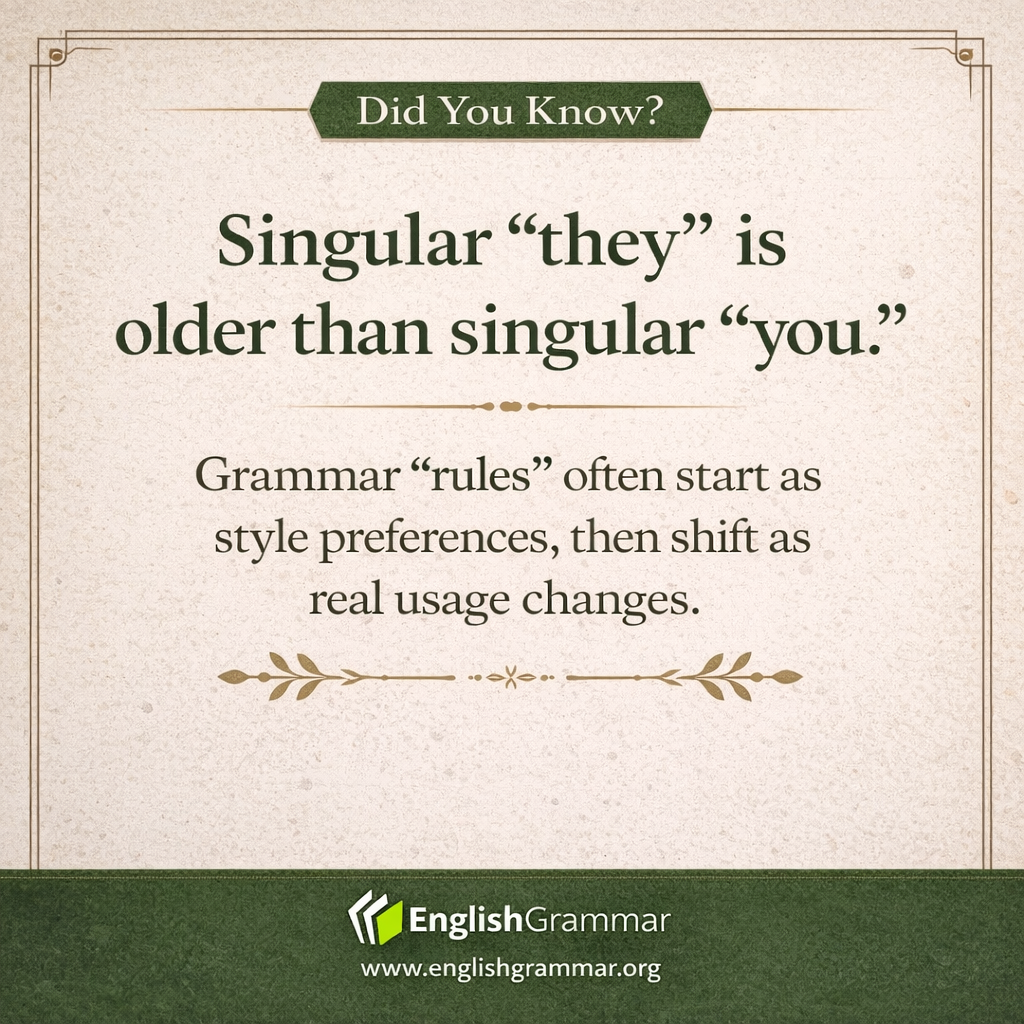
Grammar feels like a set of permanent laws, but many “rules” are better understood as shared habits that communities keep updating. As people’s speech and writing change, teachers, editors, dictionaries, and style guides often adjust their advice to match what is widely used and understood.
A classic example is singular they. It has been used for centuries to refer to an unknown or non specific person, and many modern style guides now accept it because it is clear and useful.
- Example: “If anyone calls, tell them I will ring back later.”
- Contrast: “If anyone calls, tell him I will ring back later.” (This can sound outdated or exclude some people.)
Another big shift happened with you. In earlier English, thou was singular and you was plural or formal. Over time, people used you more broadly, until it became the standard singular form in most contexts.
So when someone says “grammar rules never change,” it helps to remember that many rules started as preferences, and standards evolve as usage becomes widespread, consistent, and easy to read.
