
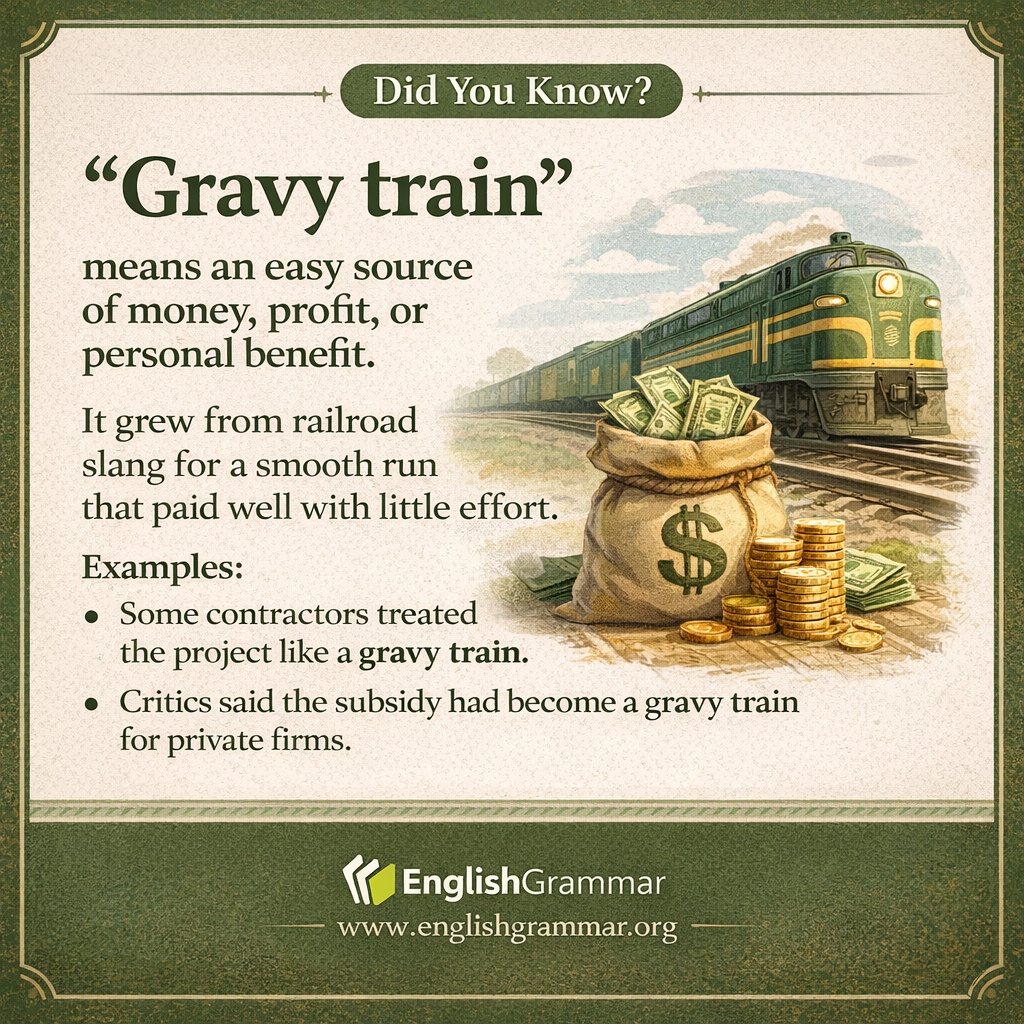
“Gravy train” means an easy, profitable situation, especially one that brings money or benefits with little effort. Today it often carries a negative tone. People use it when they think someone is getting more than they deserve, or is benefiting from a system too comfortably.
The phrase appears to have begun in American railroad slang in the late 1800s or early 1900s. Railroad workers used it for a run that was especially desirable because it was easy, smooth, or well paid. In that older sense, gravy meant extra money or something good added on top. Over time, the image widened from a pleasant train route to any arrangement that seemed unusually rewarding.
In modern English, it is common in discussions of politics, business, and public spending.
- Some investors saw the tax break as a gravy train.
- Voters complained that the contract had become a gravy train for insiders.
Because the phrase is often critical, it usually suggests unfairness, waste, or self interest, not just success. That tone is important. Calling a job or program a gravy train usually means the speaker thinks the money is too easy, too generous, or poorly controlled.