
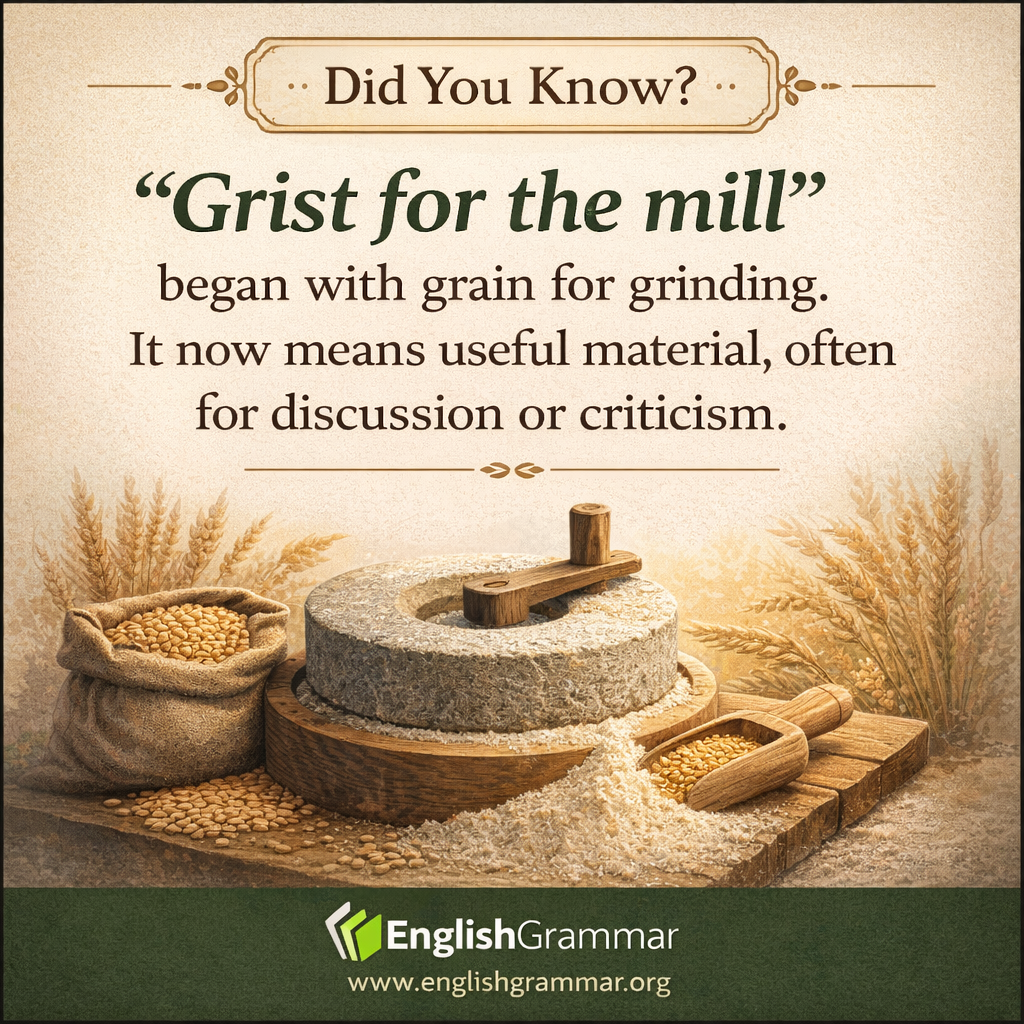
The phrase “grist for the mill” comes from a very literal source. Grist is grain brought to a mill to be ground into flour. If you had grist, the mill had something to work on.
That concrete idea became a figurative one. Today, “grist for the mill” means useful material for a process, especially for discussion, analysis, writing, or criticism. In other words, it is something that can be worked on and turned into a result.
For example, you might say, “The leaked emails were grist for the mill of political commentators.” That does not mean anyone is grinding grain. It means the emails gave commentators plenty of material to analyze and discuss.
This helps explain the tone of the phrase. It often suggests that new facts, mistakes, or events will be used by someone for their own purpose.
- Literal origin: grain for grinding
- Modern meaning: useful material to work with
- Common contexts: debate, criticism, journalism, and analysis
So the phrase keeps the old image of a mill, but uses it to talk about ideas, evidence, and events instead of grain.