
• Skip to primary navigation
  • Skip to main content
  • Skip to primary sidebar
Home of English Grammar
  • Home
  • Course
  • Exercises
  • Grammar Rules
  • Matches
  • Posts
  • Tools
    • Grammar Checker
    • Very Replacer
    • Word Counter
  • Vocabulary Lists
  • Archives
    • Social Media Posts
    • Writing Guides
  • Join free

Grumpy vs. grouchy vs. cranky vs. irritable vs. surly vs. cantankerous

October 19, 2026

Grumpy vs. Grouchy vs. Cranky vs. Irritable vs. Surly vs. Cantankerous

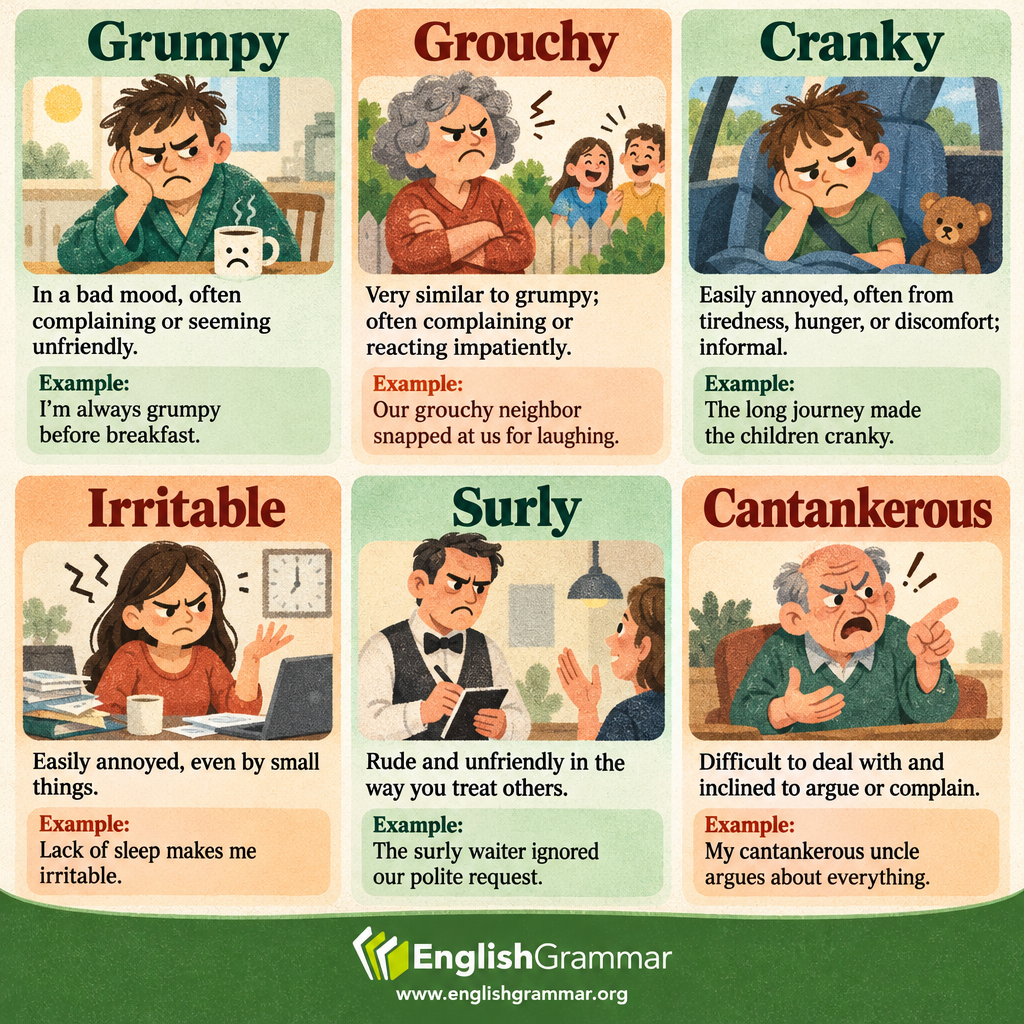
These six adjectives all suggest unpleasant moods or behavior, but they emphasize different things. They are not strict categories: several can describe the same person.

  • Grumpy describes someone in a bad mood who may complain or seem unfriendly. Dan was grumpy all morning because his plans had fallen through. It can describe a passing mood or someone’s usual personality.
  • Grouchy is very close to grumpy, often suggesting complaints or impatient reactions. My usually cheerful neighbor gets grouchy when people block his driveway. There is no firm dividing line between these two words.
  • Cranky often describes someone who is easily annoyed because they are tired, hungry, or uncomfortable. The baby became cranky after missing her nap. Adults can be cranky too; the word is informal.
  • Irritable means easily annoyed. It focuses on how readily someone reacts, not necessarily on an already obvious bad mood. The constant noise made me irritable. It is common in both everyday and health-related descriptions.
  • Surly emphasizes rude, unfriendly behavior toward others. The surly attendant refused to answer our questions politely. This is a stronger criticism of someone’s manner than simply saying they seem unhappy.
  • Cantankerous describes someone who is difficult to deal with and tends to argue or complain. The cantankerous committee member challenged every suggestion. It often suggests a recurring tendency, though it can describe temporary behavior.

Choose according to your emphasis: someone’s mood, sensitivity to annoyance, treatment of others, or tendency to resist and argue.

Improve your English grammar, vocabulary and writing

We take you step by step from beginner to advanced, even if you struggled with English at school or have always had trouble remembering the rules.

  • 10 modules, 105 lessons and 688 questions
  • Just log in and learn anytime and anywhere
  • Your progress is saved in your account
  • Download the 2027 Grammar Guide (PDF)
Join free

Already have an account? Sign in

See what’s in the course

Primary Sidebar

2.4M761.4K165.8K

Free 2027 Grammar Guide

  • Download Grammar Guide (PDF)
  • Online grammar course, A1 to C2
  • Weekly exercises and vocabulary
  • Join over 3 million English learners

We respect your privacy. Unsubscribe anytime.

Already have an account? Sign in

Grammar Checker - Try Now

Latest Posts

  • Grumpy vs. grouchy vs. cranky vs. irritable vs. surly vs. cantankerous October 19, 2026
  • Flirt, charm, woo, court, beguile, and seduce: How to choose October 19, 2026
  • 100 Best Synonyms for “Isolated” October 19, 2026
  • 100 Best Synonyms for “Conversely” October 19, 2026
  • 100 Best Synonyms for “Sentiment” October 19, 2026
  • Course Vocabulary Exercise October 19, 2026
  • 100 Best Synonyms for “Wronged” October 19, 2026
  • 100 Best Synonyms for “Seen” October 19, 2026
  • 100 Best Synonyms for “Conversation” October 19, 2026
  • Accrue vs. incur: How to talk about costs and gains October 19, 2026
Home of English Grammar

Free English grammar exercises, rules and vocabulary lists, with new exercises every week. Join the leading English grammar site with over 3 million followers.

Join free

Learn

  • Exercises
  • Matches
  • Grammar rules
  • Vocabulary lists
  • Writing guides
  • Online tools

More

  • Top social media posts
  • Various posts
  • Contact

Account

  • Join free
  • Grammar Course
  • Free grammar guide (PDF)

Copyright © 2026 EnglishGrammar.org

  • Disclaimer
  • Privacy policy
  • Terms
  • Sitemap