
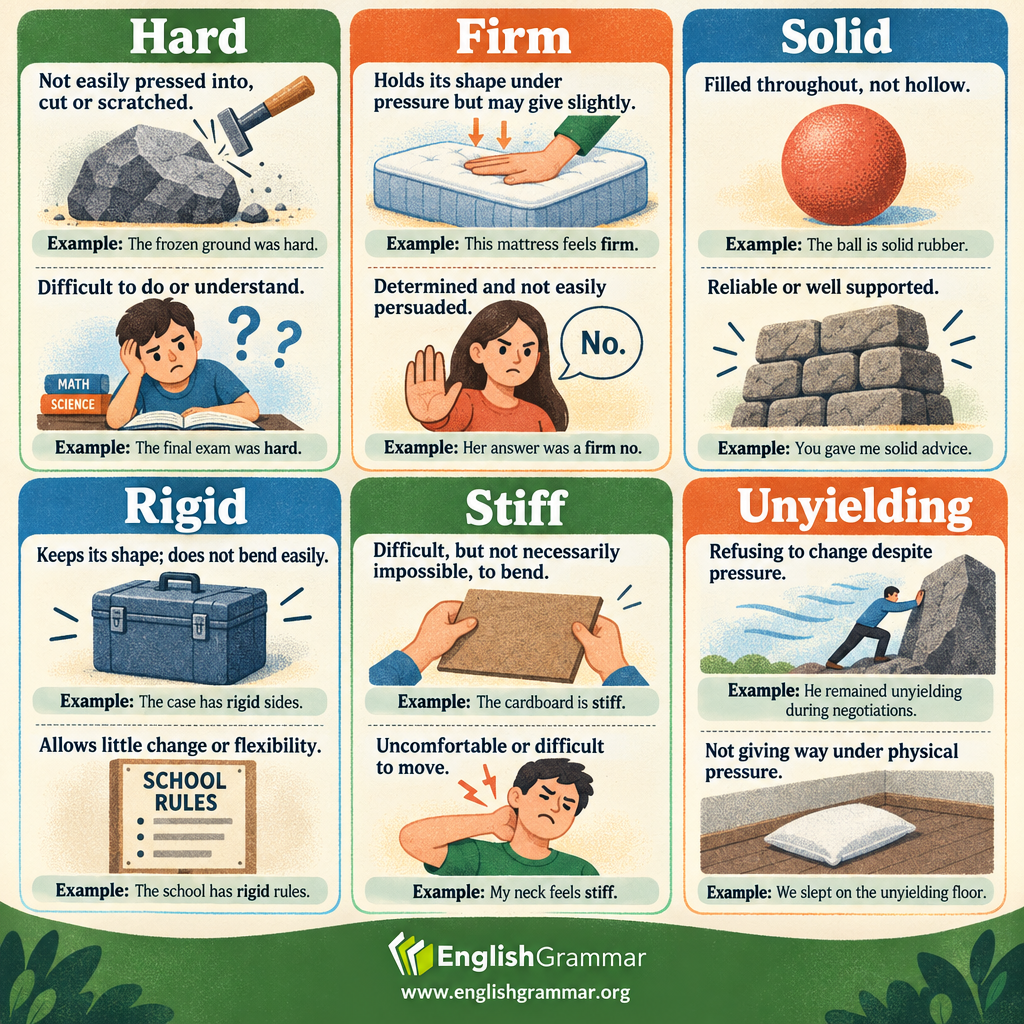
These adjectives overlap, but they emphasize different qualities. Start by asking what you mean: resistance to pressure, a filled interior, limited movement or refusal to change.
- Hard describes something that resists pressing, cutting or scratching. The bread crust is too hard to bite. It also means difficult: That was a hard question.
- Firm describes something that holds its shape under pressure without necessarily feeling completely hard. Choose a firm tomato for this recipe. For decisions or behaviour, it means determined: She gave a firm refusal.
- Solid can mean filled throughout rather than hollow. This chocolate rabbit is solid. It also describes something dependable or well supported: They have solid evidence. A solid object is not necessarily rigid; solid rubber can bend.
- Rigid emphasizes keeping a fixed shape rather than bending. A rigid frame supports the tent. Rules or systems can also be rigid when they allow little change: The company follows a rigid schedule.
- Stiff means difficult to bend or move, not necessarily impossible. The new leather belt is stiff. Muscles and joints can feel stiff when movement is uncomfortable: My knees feel stiff after sitting.
- Unyielding often describes someone who refuses to change under pressure. The landlord was unyielding about the deadline. It can also describe a surface that does not give under pressure.
Context matters: a mattress can be firm without being unpleasantly hard, while a stiff cover may bend more readily than a rigid one.