
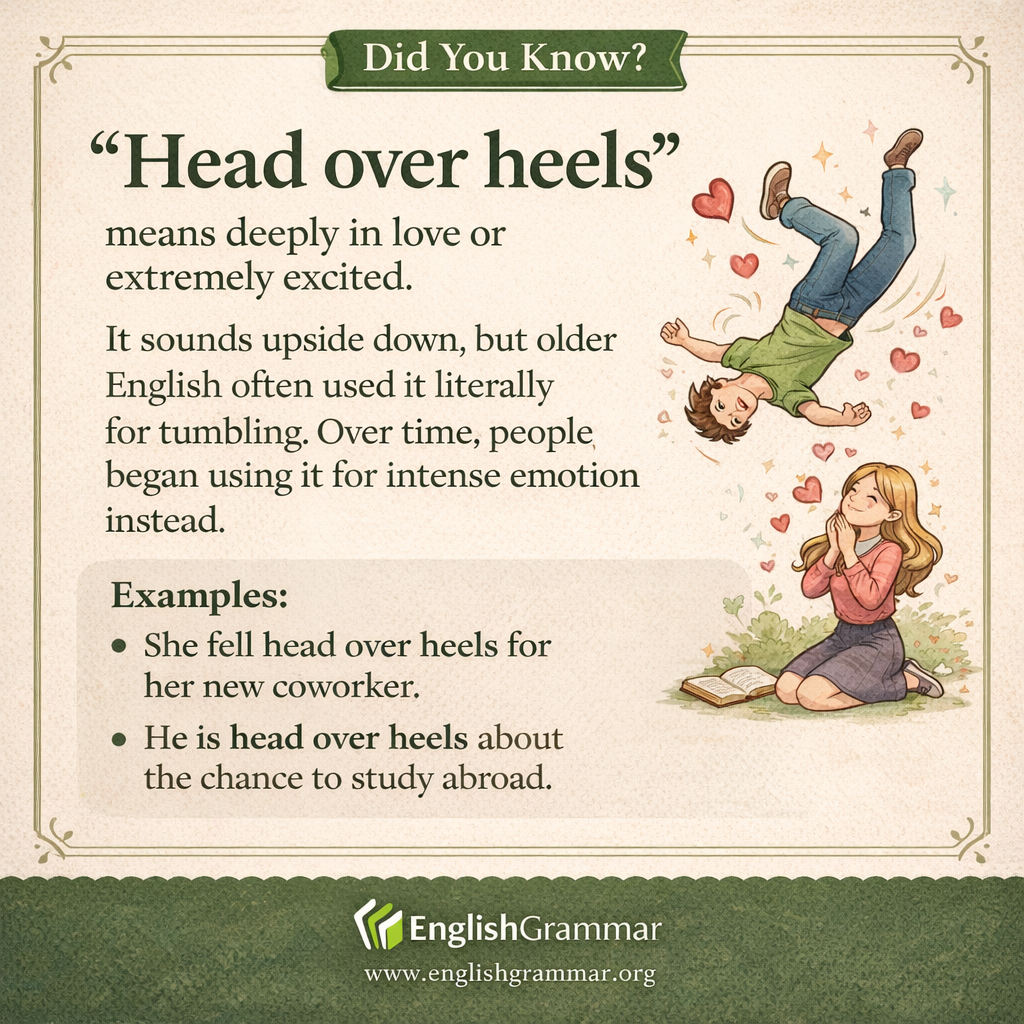
“Head over heels” usually means deeply in love. It can also mean extremely excited or enthusiastic about something.
Today, people most often use it for romance, as in She is head over heels for him. But it can also be broader, as in The team is head over heels about the new project.
The history is interesting because the image sounds odd at first. Your head is already over your heels when you stand normally. In older English, related expressions were used more literally for tumbling or turning upside down. That physical image of being flipped over helped the phrase develop into a figurative one for strong, overwhelming feeling.
In modern use, the phrase suggests intensity. It does not usually mean a calm or mild liking. It implies that emotion has taken over.
- Romantic use: He fell head over heels for his neighbor.
- Non romantic use: She is head over heels about learning Italian.
If you use it for people, it usually suggests love. If you use it for an activity, plan, or opportunity, it suggests eager excitement.