
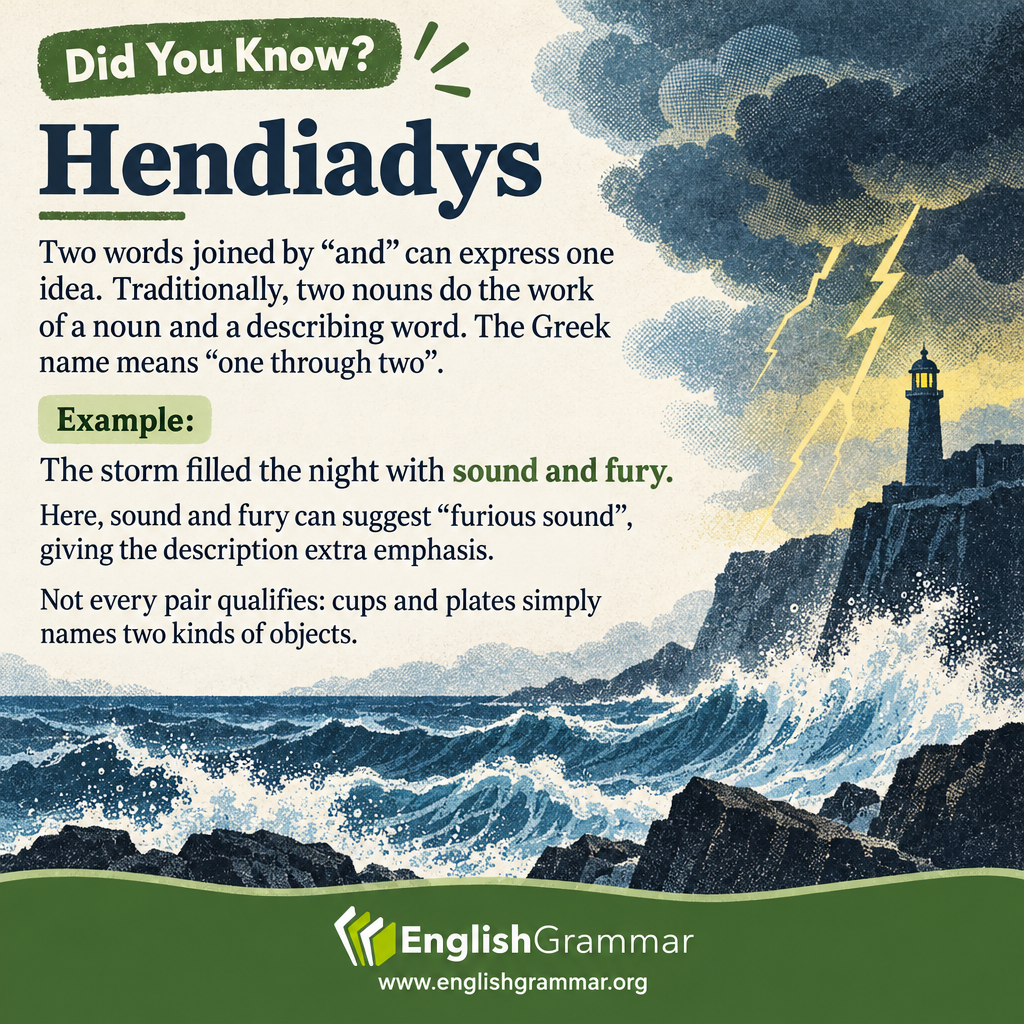
Hendiadys is a way of expressing one idea through two words joined by and. In its traditional form, it uses two nouns where we might otherwise use a noun with a describing word. The name comes from Greek words meaning “one through two”.
The important point is not simply that two words appear together. They work as one description, with one word helping to explain the quality of the other.
Consider these examples:
- The storm filled the night with sound and fury. Here, sound and fury can suggest “furious sound”: the storm’s noise has a wild, violent quality.
- He delivered his warning with force and anger. Read as hendiadys, force and anger presents “angry force” as one combined quality of his delivery.
Why use two words instead of a shorter description? Giving each noun its own place can add emphasis, rhythm, or a more dramatic feeling. The reader hears both parts distinctly while understanding them together.
Not every pair joined by and works this way. In “She bought cups and plates”, the nouns simply name two kinds of objects. Neither word describes the other.
Context matters, too. A pair may describe two separate things in one sentence but form a unified description in another. This is a flexible writing device, not a grammar rule that every reader must interpret identically.