
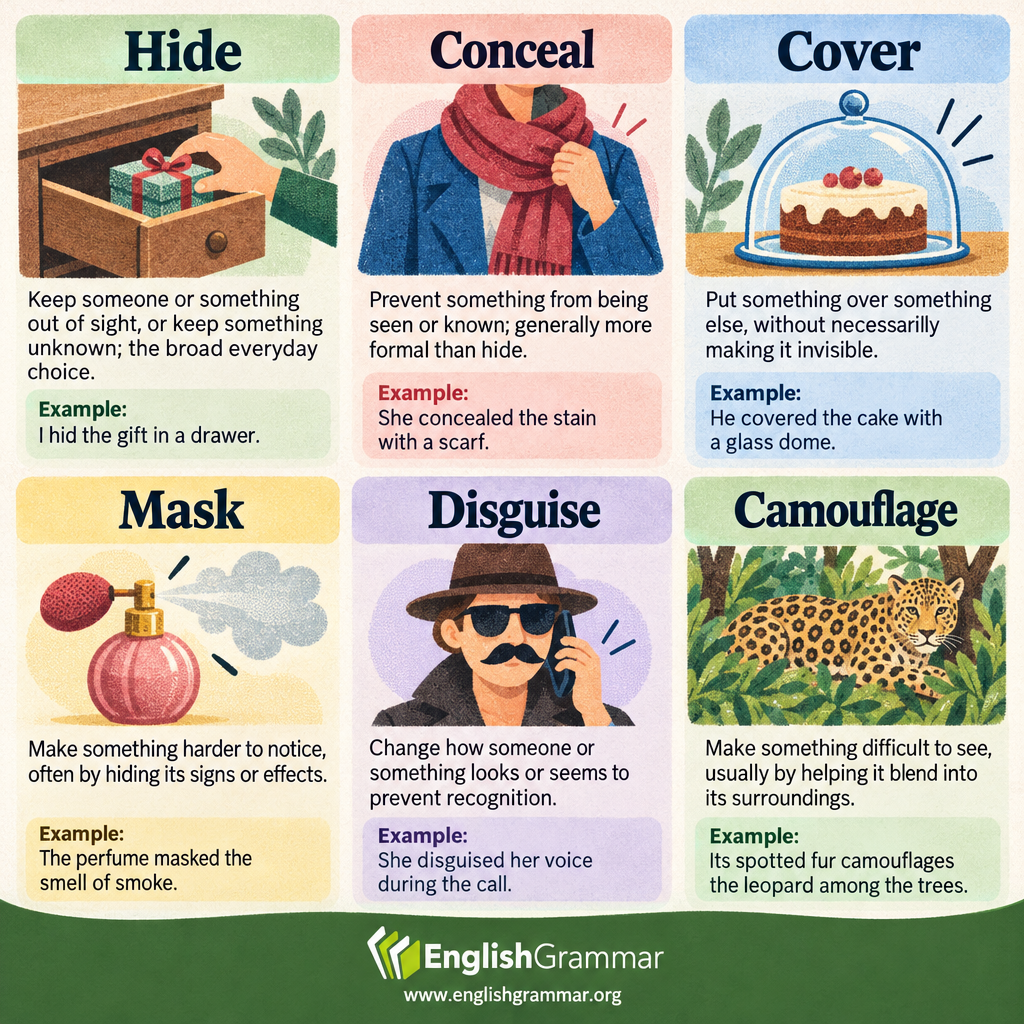
These six verbs overlap, but they emphasize different ways of keeping something from being seen, noticed, or recognized. The best choice depends on how it happens.
- Hide is the broad, everyday choice for keeping something out of sight or keeping information unknown. She hid the spare key behind a flowerpot. You can also hide your feelings.
- Conceal means to prevent something from being seen or known and is generally more formal than hide. He concealed the damage from the buyer. The two verbs often describe the same action; the difference may simply be tone.
- Cover means to put something over something else. It does not necessarily make that thing invisible. She covered the bowl with clear plastic wrap. You can still see what is inside.
- Mask emphasizes making something harder to notice, often by using something else to hide its signs or effects. The loud music masked the sound of their conversation. The conversation continued, but it was harder to hear.
- Disguise emphasizes changing how someone or something looks or seems so that people do not recognize its identity or true nature. He disguised himself as a delivery driver.
- Camouflage usually means making something difficult to see by helping it blend into its surroundings. The soldiers camouflaged the vehicle with branches.
These are not strict boundaries. A coat can both cover and conceal a bag. Choose the verb that highlights the detail you want your reader to notice.