
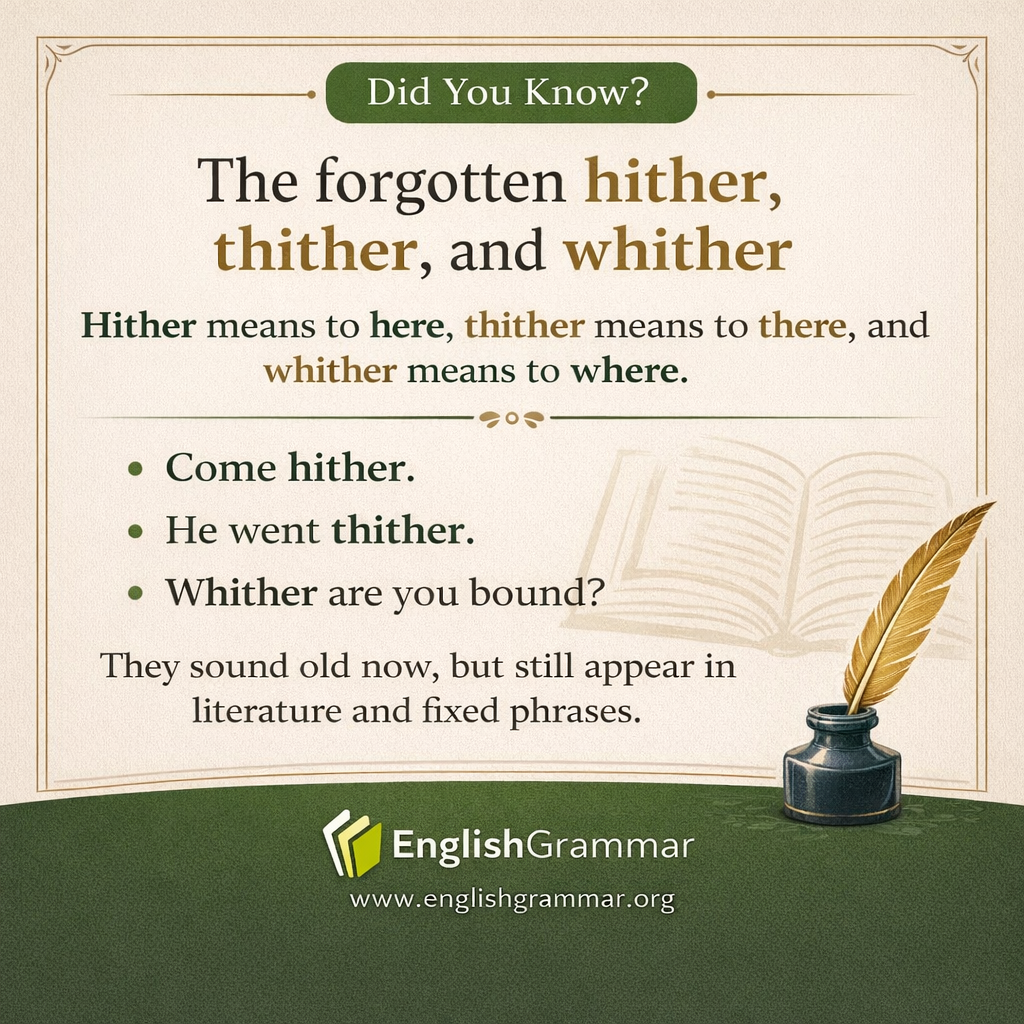
Hither, thither, and whither are old English adverbs of direction. They do not just describe place. They describe movement toward a place.
- hither means to here: “Come hither.”
- thither means to there: “He went thither.”
- whither means to where: “Whither are you bound?”
In modern English, most speakers simply say here, there, and where, often with a verb that already shows movement, such as come here or go there. That is why these older forms can sound formal, literary, or biblical today.
They are still useful to recognize when reading older texts. Whither is especially easy to confuse with where, but the older word focuses on destination, not location. Compare “Where are you?” with “Whither are you going?”
You may also meet related old forms such as hence, thence, and whence, which refer to movement away from a place. Knowing these pairs can make older writing much easier to understand.
