
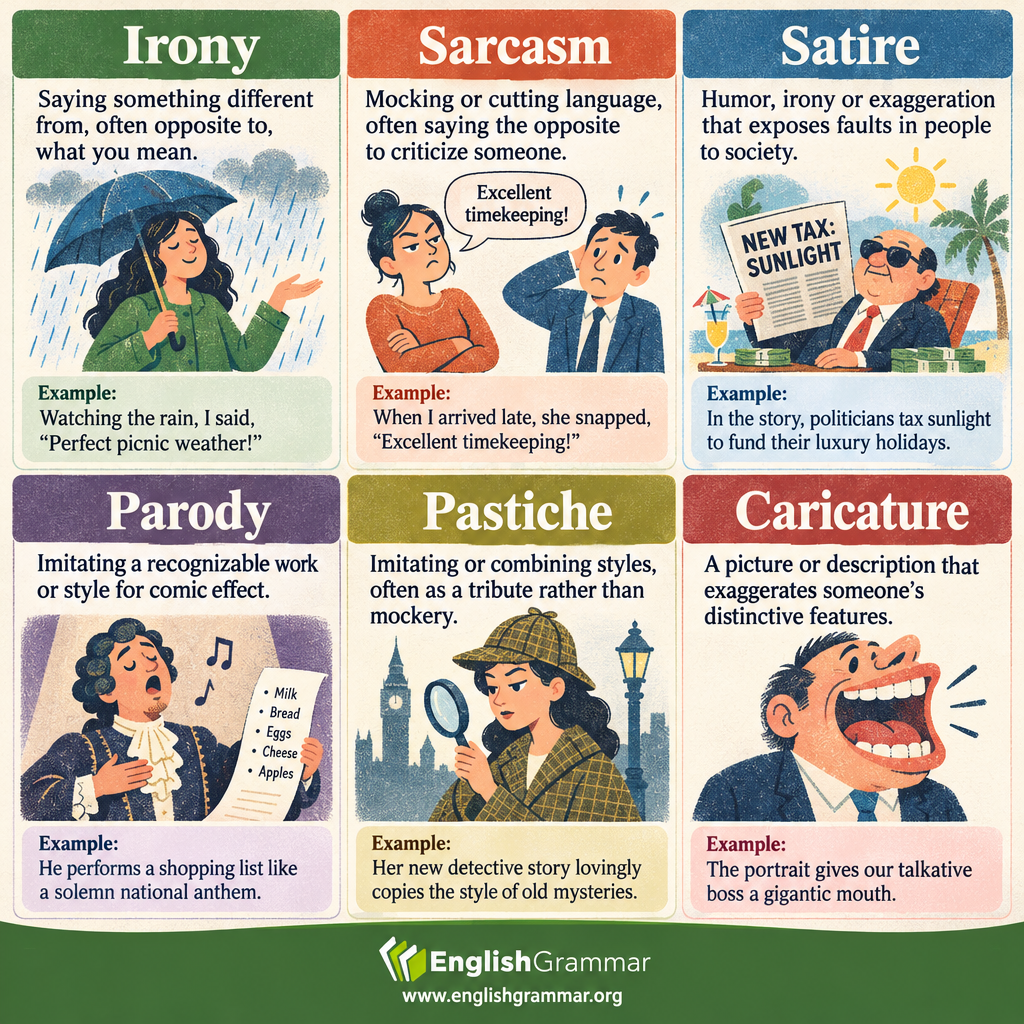
These six terms can overlap, but they describe different ways of creating meaning, humor or criticism. Choose according to what the words, artwork or situation actually do.
- Irony can involve saying something different from, often opposite to, what you mean. Looking at a huge pile of washing, you might say, “What a relaxing evening!” It can also describe a striking contrast between expectations and reality: a marriage counselor’s own marriage collapses.
- Sarcasm uses mocking or cutting language, often to criticize someone. If a friend loses your keys, “You’re a great help” could be sarcastic. It is also verbal irony, but sarcasm does not always involve saying the opposite.
- Satire uses humor, irony or exaggeration to expose faults in people, institutions or society. A fictional government that bans questions to improve public confidence could be satirical.
- Parody imitates a recognizable work or style for comic effect. A video might copy a perfume advertisement’s breathy voice and dramatic lighting to sell dish soap.
- Pastiche imitates or combines recognizable styles, often as a tribute rather than a joke. A new film might lovingly recreate the dialogue and atmosphere of older detective films.
- Caricature exaggerates distinctive features in a picture or description. A novelist might portray a nervous manager who checks every lock twenty times.
One work can use several techniques. A comic imitation of a political speech might be both parody and satire: it copies a form while criticizing political behavior.